Introduction
“What do babies actually do in school all day?” It’s a question many parents ask when they first hear about an infant care curriculum. People often assume that babies just eat, sleep, and play. And while they certainly do those things, there is a lot more thinking going on than meets the eye. A baby’s brain is like a sponge that is hungry for information. From the moment they are born, they are trying to make sense of the world. A well-designed infant care curriculum at an infant care centre isn’t about teaching in the traditional sense. It’s about providing the right fuel for that curiosity.
In the first two years of life, the brain forms more than a million new neural connections every second. This is the fastest period of growth a human will ever experience. Because of this, the quality of an infant’s environment matters immensely. Choosing a centre with a research-backed infant care curriculum ensures that these precious months aren’t just spent, but are used to build a strong foundation for future learning. It’s about turning every nap time, meal time, and play time into a moment of discovery.
The Science of Early Curiosity
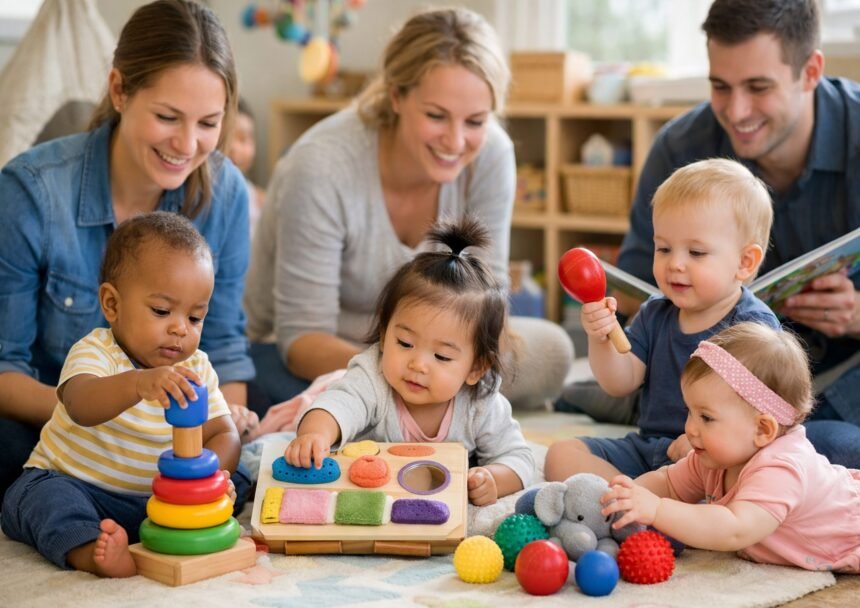
Curiosity is the engine of all learning. When an infant reaches out to touch a textured book or watches a bubble float across the room, they are performing a scientific experiment. They are asking, “What is this? What does it do?” A professional infant care curriculum is designed to encourage this questioning behaviour. Instead of giving a child a toy that only does one thing, educators provide low-tech materials that can be used in many ways. A simple wooden block can be a tower, a car, or even a telephone.
In the context of infant care, this approach helps babies develop cognitive flexibility. They learn that there are many ways to solve a problem or interact with an object. This brain-building is essential for later skills like logic and creativity. It’s about fostering a mindset of exploration. When a baby is allowed to lead their own play, they become more resilient and persistent. They don’t give up when a block tower falls. They become curious about why it fell and try to build it again.
Developing Language and Social Bonds
While infants might not be talking yet, they are communicating from day one. A vital part of any infant care curriculum is language immersion. This doesn’t mean flashcards. It means serve-and-return conversations. When a baby babbles, a caregiver responds with words, eye contact, and gestures. This dance of communication is how the brain learns the patterns of language.
In the diverse environment of infant care in Singapore, children are often exposed to multiple languages, which has been shown to improve executive function in later years.
Social development is another key pillar. Even at six months old, babies are becoming aware of the people around them. They start to mirror the emotions of their caregivers and interact with their peers. The curriculum includes small-group activities that encourage these early social experiences. Whether it’s passing a ball back and forth or sitting together for a music circle, these moments teach babies about turn-taking and empathy. It’s about building the social intelligence they will need as they grow older.
Motor Skills and Physical Milestones
A baby’s physical journey is just as important as their mental one. From tummy time to those first shaky steps, an infant care curriculum provides the scaffolding for motor development.
In a high-quality infant care centre, the physical space is designed to invite movement. There are low mirrors to encourage babies to lift their heads, soft climbing structures to practise crawling, and sturdy furniture to help them cruise while standing. Every bump and tumble is a learning opportunity.
Caregivers also use specific activities to develop fine motor skills. This might involve practising the pincer grip with small, safe objects or exploring sticky textures like tape or jelly. These activities aren’t just about the hands. They also develop eye-hand coordination and spatial awareness. By providing a safe yet challenging environment, the curriculum ensures that each baby reaches their physical milestones with confidence. It’s about giving them the tools to explore their world physically, which in turn fuels their mental curiosity.
Personalised Learning and Observation
No two babies are the same. One might be a social butterfly, while another prefers to sit quietly and observe. A great infant care curriculum is flexible enough to accommodate these differences.
This is why observation is one of the most important tools in infant care settings across Singapore. Teachers keep detailed records of what each child is interested in and how they are progressing. This information allows them to tailor daily activities to match each infant’s current stage of development.
This personalised approach also involves parents. Regular updates and milestone reports help families understand what’s happening during the day. It creates a partnership between home and school. When everyone is on the same page about a child’s development, the child feels more secure and supported. It’s about creating a consistent environment for the baby. Whether they are at home or at school, their curiosity is nurtured in the same positive way. It turns the first years of life into a seamless journey of growth.
Conclusion
An infant care curriculum is much more than a schedule of activities. It is a philosophy of respect for the youngest learners. Across Singapore’s infant care sector, these programmes provide a nurturing environment where curiosity is given the space to flourish. By focusing on the whole child, including their brain, body, and emotional well-being, educators set them on a path towards a lifetime of joyful learning. When we invest in children’s early curiosity, we are investing in the innovators and thinkers of tomorrow.
Want to see our curriculum in action? Get in touch with E-Bridge Pre-School today to book a tour.