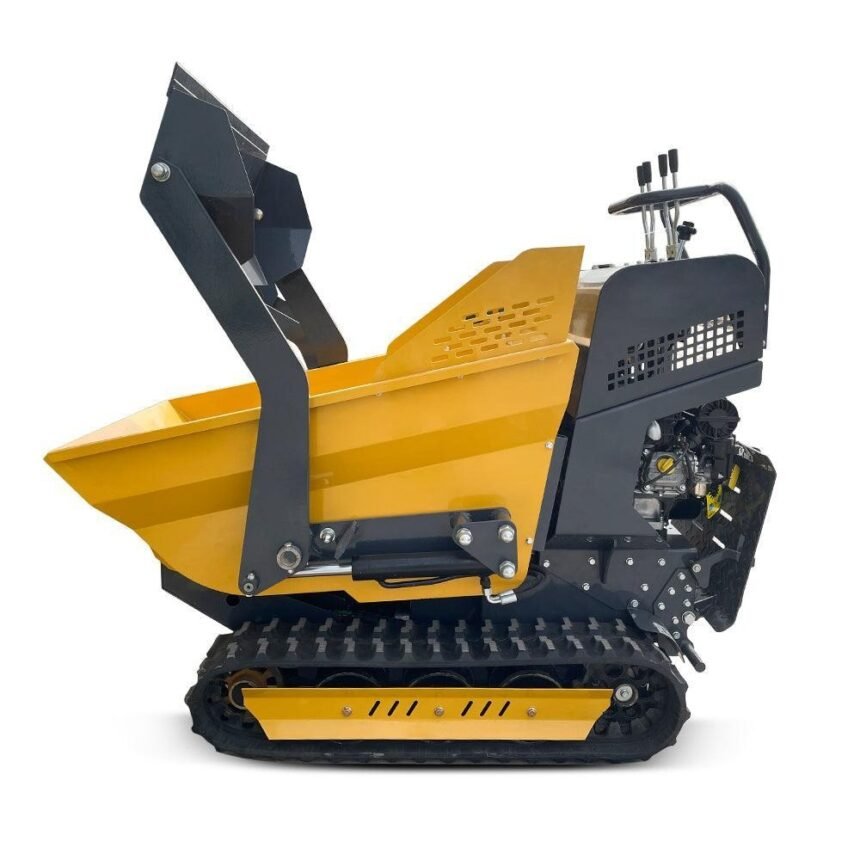
Material transport accounts for a surprising percentage of project costs, particularly when sites lack the space or access for wheeled loaders and dump trucks. Crews resort to wheelbarrows when standard equipment cannot reach work areas, multiplying labor hours and increasing the risk of injuries from repetitive strain. Every load carried by hand represents wasted productivity that erodes profit margins and extends schedules. Mini dumpers address this bottleneck by mechanizing material movement in spaces where conventional machinery fails to operate. These compact haulers navigate narrow pathways, climb steep grades, and maneuver around obstacles that stop larger equipment. The difference shows immediately in reduced crew fatigue, fewer injuries, and faster project completion. Contractors who deploy mini dumpers strategically find themselves completing difficult projects at costs that allow competitive bidding while maintaining healthy margins.
Design Features That Enable Versatility
Payload capacity determines how much material moves per trip, directly impacting productivity. Entry-level mini dumpers carry five hundred to one thousand pounds, sufficient for landscaping materials, demolition debris, and light concrete work. Mid-range models handle fifteen hundred to two thousand pounds, approaching the capacity of industrial wheelbarrows but with mechanical power eliminating manual pushing. High-capacity units exceed three thousand pounds, competing with small utility vehicles while maintaining the compact footprint that defines this equipment category. Operators must balance capacity against access requirements, as higher-payload machines inevitably grow larger and heavier.
Dump mechanisms vary between manual, hydraulic, and electric actuation. Manual systems use leverage to tip the load bucket, requiring operator strength but eliminating complexity and maintenance. Hydraulic dumps activate at the push of a button, lifting heavy loads without physical effort. This feature particularly benefits crews moving wet concrete or compacted soil that resists dumping. Electric dumps on battery-powered models provide similar convenience while avoiding the hydraulic fluid systems that can leak and require periodic service. The choice depends on typical loads and operator preference, though hydraulic systems dominate professional-grade equipment where reliability and ease justify the added cost.
Track Versus Wheel Drive Systems
Tracks excel on soft ground, slopes, and loose materials where wheels would slip or sink. The extended footprint distributes weight broadly, allowing operation on finished lawns without severe rutting. Tracked mini dumper models climb inclines exceeding thirty degrees, essential for hillside construction or terraced landscapes. Rubber tracks reduce vibration and noise compared to steel, making them suitable for residential areas where complaints about equipment disruption threaten project continuity. The tradeoff involves slower transport speeds and higher maintenance costs as track components wear from abrasion and debris intrusion.
Wheeled mini dumpers prioritize speed and maneuverability on firm surfaces. They transport loads quickly across paved areas, compacted gravel, and interior floors without the sluggish pace of tracked machines. Four-wheel drive systems maintain traction on moderate slopes and uneven ground, handling most conditions except the softest soils. Pneumatic tires absorb shocks that would jar tracked units, protecting both cargo and operator from impacts. Tire replacement represents a straightforward maintenance task that crews can complete on-site, unlike track systems requiring specialized tools and alignment procedures.
Power Options for Different Environments
Gasoline engines dominate consumer-grade mini dumpers due to low initial cost and familiar service requirements. Small displacement engines between five and ten horsepower provide adequate power for residential projects while remaining quiet enough for neighborhood work. Fuel efficiency matters less than on larger equipment since runtimes typically span hours rather than full days. Gasoline models store compactly and start reliably after periods of inactivity, making them practical for contractors who use dumpers intermittently rather than daily.
Diesel power characterizes commercial-grade equipment where durability and fuel economy justify higher purchase prices. Diesel engines deliver better torque at low speeds, beneficial when climbing grades or pushing through challenging terrain. They also consume less fuel per operating hour, reducing costs on projects requiring extended runtimes. The robustness of diesel construction supports intensive use across multiple job sites and years of service. MMS INDUSTRIAL incorporates proven diesel technology in their mini dumper lineup, balancing performance with operator comfort through advanced vibration isolation.
Electric and Hybrid Options
Battery-powered mini dumpers eliminate emissions entirely, enabling operation indoors and in environmentally sensitive areas where combustion engines face restrictions. Lithium-ion batteries provide several hours of runtime before requiring recharge, sufficient for typical projects when crews plan charging during breaks or overnight. Electric models operate nearly silently, reducing noise complaints in residential neighborhoods and occupied facilities. The absence of engine maintenance lowers long-term costs, though battery replacement eventually becomes necessary at intervals measured in years rather than thousands of hours.
Optimizing Productivity Through Smart Operation
Route planning significantly impacts how many loads crews move per hour. Operators should identify the fastest safe path between loading and dumping points before starting work, avoiding unnecessary detours or difficult terrain. Establishing one-way traffic patterns on larger sites prevents congestion when multiple machines operate simultaneously. Smooth acceleration and braking reduce spillage and extend component life, particularly important with tracked machines where abrupt movements stress drive systems. Operators learn to anticipate stops and turns, making gradual adjustments rather than jerking controls.
Load placement within the bucket affects machine stability and steering response. Centering heavy materials prevents side-to-side imbalance that makes turning unpredictable. Avoiding overloading beyond rated capacity protects against tipping and premature wear on dump mechanisms. Some operators exceed capacity slightly when hauling light materials like mulch or leaves, but this practice risks damage if applied to denser loads. Weight distribution matters most on slopes, where forward loads shift the center of gravity dangerously. Experienced crews partially empty buckets before ascending steep grades, making multiple trips rather than risking rollovers.
Terrain Challenges and Solutions
Mud and soft soil present the most common traction difficulties. Operators should test ground conditions before committing to routes that may trap machines. If wheels or tracks begin sinking, backing out immediately prevents becoming stuck. When soft ground is unavoidable, laying temporary mats or planks creates stable paths for repeated passes. Reducing load weight improves flotation, allowing passage where fully loaded machines bog down. Some contractors add tire chains or track pads that increase bite in slippery conditions, though these modifications may damage finished surfaces.
Safety Practices That Prevent Injuries
Visibility limitations pose significant risks with mini dumpers. Operators cannot see directly behind the machine, and raised dump buckets obstruct forward vision. Crews must establish clear communication protocols, using hand signals or radios to coordinate movements. Designated spotters help navigate congested areas where workers, materials, or obstacles create collision hazards. High-visibility clothing ensures operators see ground personnel even in peripheral vision or poor lighting conditions. No one should walk within the machine’s operating radius without confirming the operator knows their location.
Slope operation demands heightened awareness and conservative practices. Traveling straight up or down steep grades maintains stability better than traversing across slopes where side-to-side tipping becomes likely. Operators should avoid sudden turns on inclines, as centrifugal forces combine with gravity to overcome stability margins. Empty buckets before descending steep paths to keep the center of gravity low and controllable. If a machine begins tipping, operators must never attempt to jump clear, as the machine often rolls in unpredictable directions. Proper seatbelts and rollover protection systems installed on commercial-grade models provide essential protection during rollovers.
Daily Inspection Protocols
Pre-shift inspections identify problems before they cause breakdowns or injuries. Check tire pressure or track tension, as improper settings increase wear and reduce traction. Inspect hydraulic hoses for abrasion, leaks, or loose connections that could fail under pressure. Test brake function before entering work areas, ensuring the machine stops predictably. Verify that dump mechanisms operate smoothly without sticking or binding. Any unusual noises, vibrations, or handling characteristics warrant investigation before continuing operation. Five minutes spent on inspection prevents hours lost to equipment failure and the safety risks of unexpected malfunctions.
Applications Across Multiple Industries
Landscaping companies rely on mini dumpers to move soil amendments, decorative rock, and plant materials without destroying established beds or lawns. The ability to drive directly to planting areas eliminates intermediate handling that damages materials and wastes time. Crews completing hardscaping projects haul pavers, blocks, and bags of mortar mix precisely where needed rather than staging everything at perimeter access points. This direct delivery reduces manual handling that causes back injuries and speeds installation by keeping materials immediately available.
Concrete contractors use mini dumpers to position mixed concrete in areas inaccessible to ready-mix trucks. Foundations behind existing homes, interior slabs, and hillside projects all benefit from mechanical concrete placement. The alternative of pumping concrete often costs more than the value gained, making dumpers economically attractive. Small batch mixing near the pour location combined with dumper transport provides flexibility on projects with sporadic concrete needs. Cleanup operations similarly benefit, as demolition debris exits through the same narrow passages that prevented larger equipment from assisting with removal.
Facility Maintenance Operations
Property managers maintaining large campuses, parks, or industrial facilities find mini dumpers essential for transporting tools, materials, and waste across extensive grounds. Groundskeeping crews move between scattered work zones efficiently, avoiding fatigue from walking long distances while carrying equipment. Snow removal operations benefit from salt and sand distribution capabilities, with dumpers navigating sidewalks and parking areas that snow plows cannot reach. The versatility of owning a mini dumper reduces reliance on rental companies during emergencies when weather or equipment failures create urgent material transport needs.
Total Cost of Ownership Considerations
Purchase prices ranging from three to fifteen thousand dollars position mini dumpers as accessible investments for small contractors and property owners. Fuel costs remain modest due to efficient engines and intermittent use patterns typical of material handling work. Maintenance requirements focus on routine fluid changes, air filter replacement, and track or tire service. These tasks demand minimal technical expertise, allowing operators to handle most upkeep without engaging repair shops. Parts availability varies by manufacturer, with established brands offering better support networks than imported machines lacking dealer infrastructure.
Rental versus ownership calculations depend heavily on project frequency and duration. Contractors using dumpers weekly or more recover purchase costs rapidly compared to rental fees accumulating per day or week. Those with occasional needs find rentals economical, avoiding storage and maintenance responsibilities during idle periods. Some operators purchase used equipment for entry-level investments, accepting higher maintenance risks in exchange for reduced capital outlay. The used market offers significant savings, though buyers should verify mechanical condition and parts availability before committing to older models.
Moving Forward Efficiently
Mini dumpers eliminate the productivity bottleneck that manual material transport creates on space-restricted projects. These compact haulers deliver mechanical efficiency where wheelbarrows represent the only alternative, dramatically reducing labor costs and project timelines. Selecting appropriate models requires matching capacity, drive systems, and power sources to typical applications rather than buying the largest machine that might eventually prove useful. Proper operator training and maintenance practices protect investments while ensuring safe operation across diverse job sites. Contractors who integrate mini dumpers strategically into their equipment fleets gain competitive advantages through faster project completion and reduced labor requirements. The ability to mechanize previously manual tasks opens opportunities to bid aggressively on challenging projects while maintaining profitability.