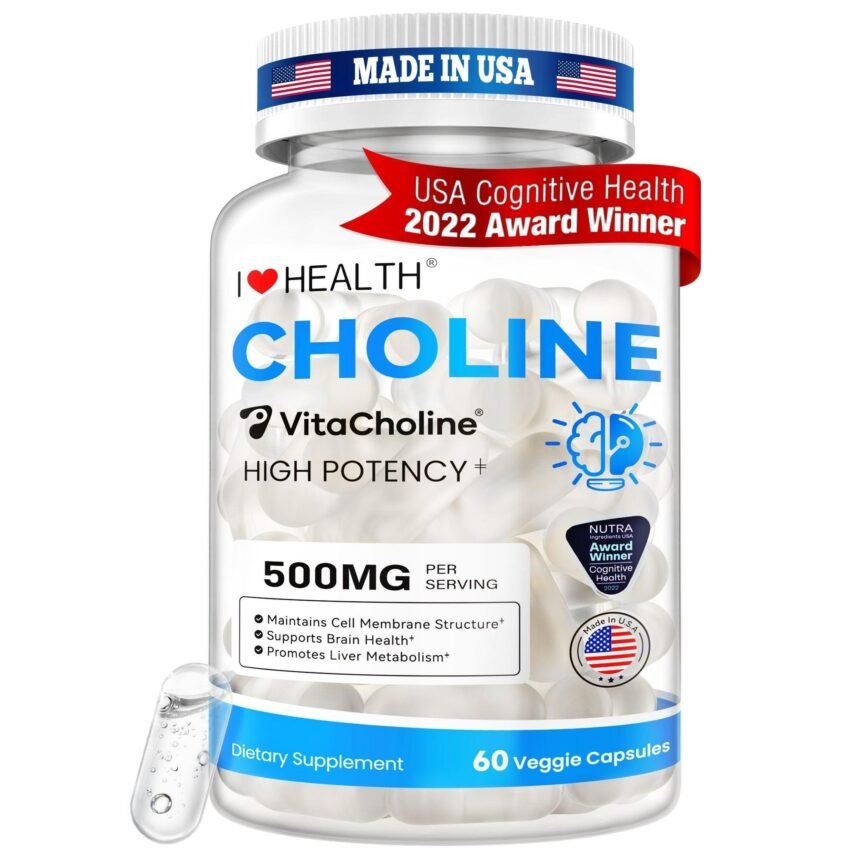
Ever finish a full day of meetings and realize you cannot recall three specific decisions you just made? Or watch your kids power through algebra homework while your own train of thought derails between the fridge and the couch? Cognitive slowdown creeps in quietly, and the culprits are often less mysterious than they seem. Choline, an essential nutrient your body needs but rarely makes enough of, quietly powers the very brain circuits responsible for attention, memory, and mood.
Most adults fall short of the recommended intake, which sits at 425 milligrams daily for women and 550 for men. Diets low in eggs, organ meats, and cruciferous vegetables leave a sizable gap, and plant-forward eating patterns often widen it. A well-chosen choline supplement offers a practical way to bridge the shortfall, particularly for knowledge workers, students prepping for exams, and adults over fifty who feel their sharpness slipping. This guide walks through how choline supports brain health, which forms deliver the most impact, and how to integrate it into a routine that fits real schedules.
Choline’s Central Role in Brain Function
Choline is the direct precursor to acetylcholine, a neurotransmitter that governs attention, muscle control, learning, and memory formation. Every time you focus on a task, recall a name, or hold a phone number in mind long enough to dial it, acetylcholine is firing across synapses in the hippocampus and prefrontal cortex. When choline runs low, acetylcholine production drops, and the mental effort required for routine cognitive tasks climbs.
Beyond neurotransmission, choline builds phosphatidylcholine, a structural fat that makes up a large portion of every cell membrane in your body, especially the ones wrapping your neurons. Adequate intake supports the physical integrity of brain tissue, not just its chemical signaling. Combining a high-quality choline supplement with a diet rich in whole foods gives your brain both the raw building blocks and the neurotransmitter precursors it needs to function at full capacity.
Signs Your Intake May Be Falling Short
Choline deficiency rarely announces itself dramatically. Instead, it shows up as afternoon brain fog that no amount of coffee can clear, forgetting why you walked into a room, struggling to hold multi-step instructions in mind, and muscle fatigue that feels disproportionate to your workload. Mood shifts, elevated markers of liver stress, and reduced exercise recovery can also signal insufficient intake, since choline supports liver fat metabolism and mitochondrial energy production alongside its brain functions.
Choosing the Right Form for Cognitive Support
Different choline forms behave differently once they enter the body. Choline bitartrate is affordable and effective for general repletion, though it does not cross the blood-brain barrier as efficiently as more specialized forms. Alpha-GPC and CDP-choline, sometimes labeled citicoline, are the two premier options for cognitive support because they reach brain tissue quickly and convert efficiently into acetylcholine. Phosphatidylcholine, extracted from lecithin, offers strong support for cell-membrane health and liver function.
Timing That Matches Your Goals
Morning dosing suits most adults because acetylcholine supports the attention and working-memory demands of the workday. Students preparing for exams often split the dose between breakfast and early afternoon to maintain steadier focus across long study blocks. Taking choline alongside a meal containing healthy fats improves absorption, and pairing it with omega-3 fatty acids adds a complementary structural benefit for neuronal membranes. Avoid late-evening dosing if you find the mild alertness effect interferes with winding down.
Building a Cognitive Routine That Sticks
Supplements work best when embedded in a broader lifestyle that supports the same goal. Sleep tops the list, since memory consolidation happens during deep and REM stages, and no supplement can outrun chronic short nights. Aim for seven to nine hours, protect the last hour before bed from screens, and keep the bedroom cool. Regular aerobic exercise increases blood flow to the brain and boosts brain-derived neurotrophic factor, which works synergistically with adequate choline intake.
Anchor the daily dose to a habit you already do without thinking, such as pouring your first coffee or unpacking your laptop bag. Keep the bottle visible near your workstation or kitchen counter rather than tucked away in a drawer. Track cognitive shifts across full weeks rather than single days, because the changes are often subtle at first and become obvious only when you notice you have made it through a demanding afternoon without the usual mental drag.
Complementary Nutrients Worth Considering
Choline works best inside a supportive nutritional context. B vitamins, particularly B12, folate, and B6, share metabolic pathways with choline and prevent bottlenecks in methylation, a process critical for neurotransmitter production and DNA maintenance. Omega-3 fatty acids provide the structural fats that partner with phosphatidylcholine in neuronal membranes. Magnesium supports overall nervous-system regulation, and vitamin D contributes to mood and cognitive resilience.
Personalizing Choline for Different Life Stages
Knowledge workers and creative professionals often notice the sharpest gains, since sustained attention and mental flexibility are the core demands of their day. Splitting the dose between morning and early afternoon typically works well for this group. Students see the greatest benefit during heavy learning periods and exam preparation, when acetylcholine demand climbs. Adults over fifty, whose natural choline production and absorption both decline, often experience noticeable improvements in word recall and mental clarity within four to eight weeks of consistent use.
Personalization matters for people with specific health circumstances. Anyone with mood-related conditions should mention choline supplementation to their prescriber because it can subtly influence neurotransmitter balance. Pregnant and nursing women have elevated needs but should follow guidance from their healthcare provider rather than self-directing high doses. Brands that publish transparent sourcing and third-party testing, such as iLoveHealth, help simplify the choice by making it easier to verify that the label matches what is inside the capsule.
Feeding the Brain That Powers Your Best Work
Cognitive performance is not a fixed trait but a daily balance of raw materials, rest, and demand. Choline sits near the top of that ingredient list, quietly powering the neurotransmitters and cell membranes your brain relies on from first coffee to bedtime. Choose a form suited to your goals, take it consistently with a meal, and give the routine at least two to three months to reveal its full effect. Combined with steady sleep, regular movement, and a diet built around whole foods, a well-formulated choline supplement can restore the sharpness, memory, and mental stamina that make long workdays feel less like a slog and more like a rhythm you can sustain.