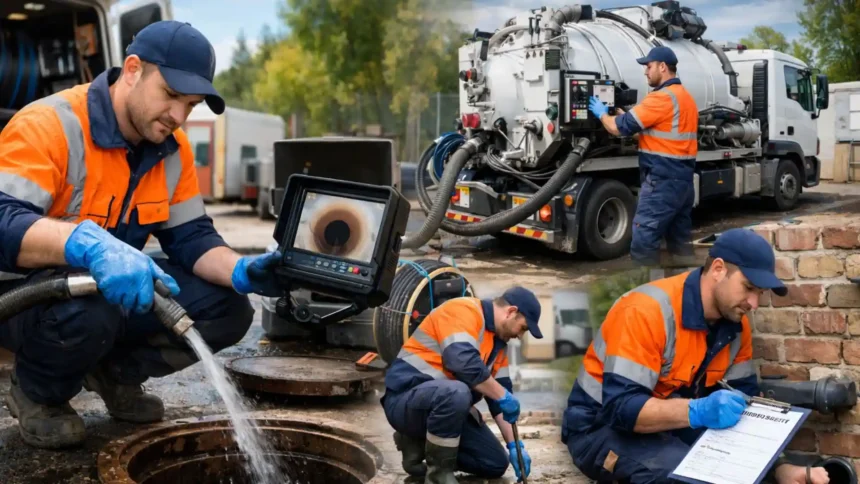
A drainage callout can look simple from the outside: an engineer arrives, opens a chamber, uses equipment and gets the water moving again. In practice, good drainage work involves a sequence of decisions. The engineer has to identify the likely location of the restriction, choose a suitable access point, protect the surrounding area, select the right clearing method and decide whether the pipe needs further inspection. Understanding that process helps property owners ask better questions and recognise the difference between a quick temporary fix and a properly explained result.
The first job is to understand the symptoms
Before equipment is used, the engineer needs a picture of what the property is experiencing. Which fixtures are affected? Is the problem constant or intermittent? Has the same line failed before? Give accurate information and avoid hiding previous DIY attempts or chemical use, because those details can affect safe working. A short conversation can save time by pointing toward a local branch, shared stack or main drain.
For homes, rentals and commercial sites alike, the best result is one that can be explained in plain language. People should know what changed, what was found and what still needs attention.
Access points shape the whole callout
Good engineers plan the route before forcing equipment into a pipe from the wrong direction. Drainage systems may be reached through manholes, inspection chambers, rodding points, waste connections or internal fittings. The safest and most effective access point is not always the one closest to the symptom. Urban properties can add complications such as basements, extensions, locked yards and shared service areas.
A sensible drainage plan stays proportionate to the evidence. Start with the least disruptive safe step, check the result, and only move to a larger intervention when the condition of the system supports it.
The clearing method should match the blockage
Different restrictions respond to different tools. Soft deposits, grease, silt, roots, scale and foreign objects are not the same problem. Mechanical tools may break through some blockages; high-pressure water may clean suitable pipework; removal may be needed for trapped objects. The engineer should be able to explain why a method is appropriate rather than simply using the most powerful option available.
The aim is to make the next decision easier rather than to add unnecessary work. Clear observations, a defined goal and a short record are usually more useful than guessing at hidden causes.
Flow restoration is only one part of the job
A drain that clears completely and has no history of trouble may need little more than advice. A line that has failed repeatedly deserves more attention. Once water moves freely, the next question is whether the blockage was an isolated event or a symptom of a deeper defect. Ask whether the system appears normal after clearing and whether any further investigation is recommended.
This approach also improves the handover if another engineer or property manager becomes involved later. A few accurate facts can prevent the same checks from being repeated and can make follow-up more efficient.
When comparing drainage engineers London, property owners can review Quick Clear Drainage alongside other providers and ask the same practical questions: how the cause will be diagnosed, what access is needed, what method is proposed, and what evidence will support any repair recommendation.
CCTV can turn a hidden problem into evidence
Drain cameras can show internal pipe conditions without immediate excavation. They are useful when recurring blockages, suspected damage or repair planning make visual evidence worthwhile. The value comes from using the footage to answer a specific question and guide the next decision. A survey may reveal cracks, displaced joints, root entry, debris or a section that holds water.
For homes, rentals and commercial sites alike, the best result is one that can be explained in plain language. People should know what changed, what was found and what still needs attention.
Repairs should follow the diagnosis
Ask for the damaged section to be explained in plain language and, where possible, supported by images or survey findings. If the pipe is damaged, the repair method depends on the type, location and extent of the defect. Some issues may suit a local repair or lining approach, while others may require excavation. The important point is that repair should be linked to the defect found, not simply added because a blockage occurred.
A sensible drainage plan stays proportionate to the evidence. Start with the least disruptive safe step, check the result, and only move to a larger intervention when the condition of the system supports it.
Professional work includes housekeeping and handover
A good callout ends with the work area left safe, access points secured and the property owner told what was done. For commercial sites, landlords and shared buildings, clear handover prevents confusion about whether facilities can be used normally and whether follow-up is booked. Keep the service record, especially when the building has complicated or shared drainage.
The aim is to make the next decision easier rather than to add unnecessary work. Clear observations, a defined goal and a short record are usually more useful than guessing at hidden causes.
Prevention is strongest when it is specific
A kitchen grease problem needs different prevention from a root-damaged outside drain or a line repeatedly blocked by inappropriate items. Drainage engineers see the causes of repeated problems first-hand. Their advice is most useful when it connects to the actual finding. Choose prevention based on evidence, and review the result if the problem returns.
This approach also improves the handover if another engineer or property manager becomes involved later. A few accurate facts can prevent the same checks from being repeated and can make follow-up more efficient.
Final Thoughts
Professional drainage work is a chain of decisions rather than a single tool or technique. Good engineers move from symptoms to access, from access to diagnosis, and from diagnosis to the least disruptive effective solution. That process gives the property owner a clearer result and better information for the future.
Ask for a plain-English handover
At the end of a callout, the engineer should be able to summarise the job without technical jargon. Ask where the restriction was found, what method was used, whether the pipe showed any warning signs and what would justify another visit. This is especially useful when the person who booked the job is not the person who manages the property long term. A short handover means the next contractor, landlord or facilities manager does not have to reconstruct the history from memory. Clear records are a practical part of professional drainage work, not an optional extra.