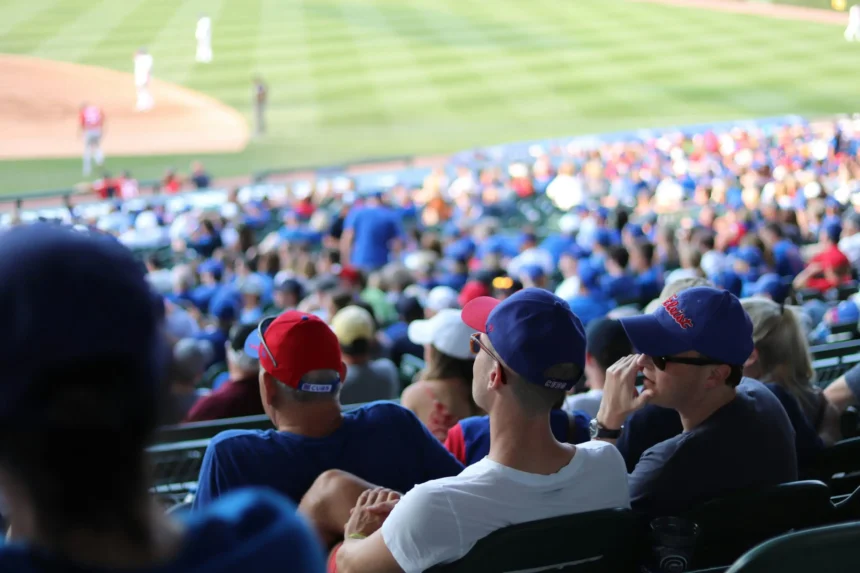
If you’re a UK sports fan in 2026, your monthly outgoings probably look something like this: a Sky Sports package, TNT Sports on top, Amazon Prime for the midweek fixtures, and a streaming service for everything that isn’t sport. Somewhere north of £80 a month. And you still can’t watch every match your team plays.
This isn’t a complaint about price. It’s a structural problem with how UK broadcast rights are sold.
Rights fragmentation, explained
Domestic football rights are split between multiple broadcasters by design — the packages are deliberately divided so no single buyer takes everything. Add European competitions sold separately, domestic cup rights on free-to-air, and international fixtures on whoever bid that cycle, and the result is that following one club across one season can require four different subscriptions.
Then there’s the 3pm Saturday blackout, which means a portion of matches simply aren’t broadcast domestically at all, regardless of what you pay.
Rugby, cricket, F1, boxing and MMA each have their own version of this. UFC events sit behind a separate pay-per-view or subscription wall. Big boxing cards move between broadcasters fight by fight. If you follow more than one sport, the stack grows fast.
What fans actually do about it
In practice, UK households handle this in one of four ways.
Rotate subscriptions seasonally. Cancel TNT in summer, resubscribe in August. Effective, mildly annoying, and increasingly complicated by minimum-term contracts.
Split with friends or family. Common, though most providers’ terms restrict this and enforcement has tightened.
Go to the pub. Genuinely the cheapest option for occasional viewing, and better atmosphere — but it doesn’t work for a Tuesday night fixture with early work the next day.
Consolidate onto a single platform. Use one service that aggregates live channels across sports rather than paying per broadcaster.
That last option has grown quickly in the UK specifically because the fragmentation here is worse than in most markets. The appeal is straightforward: one channel list, one bill, and the live feeds you care about in one place, on the TV, phone and tablet.
What to check before switching
If you’re considering consolidating, the evaluation matters more than the price. Things worth testing:
- Peak-time stability. Test on a Saturday afternoon or during a big card, not on a quiet weekday. Anything performs well at 2pm Wednesday.
- Simultaneous connections. A household watching two matches at once needs at least two streams.
- UK channel coverage specifically. Global channel counts are meaningless if the domestic feeds you actually want are missing or unreliable.
- Behaviour on a dip. Quality should drop, not freeze.
- A trial. Any provider confident in their delivery offers one. Take it and stress-test it.
- Real support. During a live event you need a human within minutes, not a ticket queue.
It’s worth taking an evening to compare live TV options properly against those criteria rather than choosing on channel count, because the differences between platforms in this category are almost entirely about infrastructure quality, not catalogue size.
The broader picture
Rights fragmentation isn’t going away — it’s commercially rational for the leagues and the broadcasters, even when it’s irrational for viewers. The 2026 rights cycles have if anything split packages further.
So the realistic question for UK fans isn’t “when will this get simpler.” It’s “what’s the cheapest, most reliable way to watch what I care about given that it won’t.” For some people that’s disciplined subscription rotation. For others it’s consolidation. For plenty it’s still the pub.
What’s no longer defensible is paying £80+ a month across four services and still missing your team on a Saturday afternoon. That’s not a viewing setup — it’s four separate subscriptions negotiating badly on your behalf.