Precise spatial data has become the backbone of modern research across disciplines ranging from geomorphology to heritage conservation. The ability to capture millimeter-accurate three-dimensional representations of real-world environments transforms how scientists observe, measure, and interpret complex phenomena. Yet researchers face a persistent challenge when selecting a 3D LiDAR scanner: finding an instrument that delivers exceptional resolution and accuracy without sacrificing operational efficiency or creating bottlenecks in data processing workflows. Many systems force uncomfortable trade-offs between speed and fidelity, leaving research teams to compromise on the very data quality their publications demand.
The Galois P4 scanner emerges as a purpose-built solution for institutions that refuse to accept these compromises. Engineered around a synchronized capture system that seamlessly integrates LiDAR point clouds with ultra-high-definition imagery, the P4 produces datasets of extraordinary richness—including 300-megapixel imagery that reveals details invisible to conventional scanners. This article provides a detailed comparison of the Galois P4 against other research-grade 3D LiDAR scanners, examining how its technical architecture directly enhances the quality, credibility, and impact of research outputs.
The Evolution and Importance of 3D LiDAR in Research
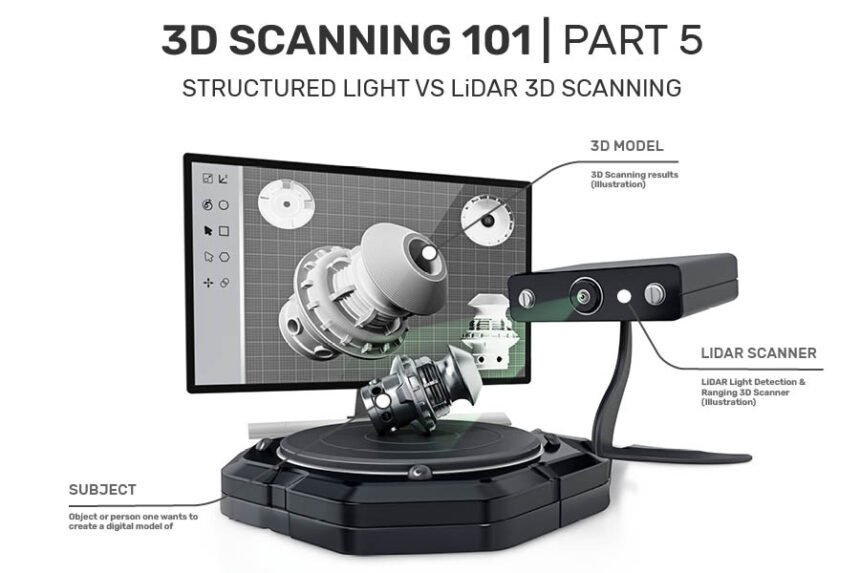
Three-dimensional LiDAR technology operates by emitting rapid pulses of laser light and measuring the time each pulse takes to return after striking a surface. By collecting millions of these measurements per second, the system constructs dense point clouds that represent physical environments with extraordinary geometric precision. What began as a tool primarily for topographic surveying has evolved into an indispensable research instrument spanning dozens of disciplines.
In archaeology, LiDAR penetrates forest canopies to reveal ancient settlement patterns invisible from the ground. Forestry researchers use it to quantify biomass and model canopy structure with individual-branch resolution. Urban planners rely on 3D scans to simulate infrastructure changes, while environmental scientists track coastal erosion or glacier retreat by comparing temporally separated datasets at sub-centimeter scales. Each of these applications shares a common requirement: the data must be detailed enough and accurate enough to withstand peer review scrutiny. When imagery reaches the 300-megapixel level, researchers can detect micro-fractures in stone, identify species-level botanical features, or measure structural deformation that would otherwise require destructive sampling. In academic contexts where conclusions must be reproducible and defensible, anything less than the highest achievable resolution introduces uncertainty that reviewers and funding bodies increasingly refuse to overlook.
Introducing the Galois P4: A Scanner Built for Precision
The Galois P4 occupies a distinct position in the research-grade scanner landscape, engineered specifically for institutions where data quality determines publication success and funding continuity. Unlike general-purpose terrestrial scanners adapted for research use, the P4 was designed from its core architecture outward to serve the demands of scientific documentation, where every captured point and pixel must contribute to defensible conclusions.
What distinguishes the P4 from its competitors is not a single specification but the integration philosophy underlying its design. The scanner combines a high-speed LiDAR acquisition engine with a multi-sensor imaging array, all governed by a synchronized capture system that ensures every data stream—geometric, radiometric, and photographic—aligns with temporal and spatial precision. The result is a unified dataset where 3D point clouds carry photorealistic texture at 300-megapixel resolution, enabling researchers to interrogate surfaces at scales previously requiring separate instruments or multiple survey passes. This ultra-high-definition output means that a single scan session produces models rich enough for both macro-scale spatial analysis and micro-scale surface characterization. For research teams working under tight field schedules or in environments with limited access windows, this consolidation of capture capability into one instrument eliminates redundant deployments and reduces the risk of registration errors between independently collected datasets. The P4 transforms raw environmental complexity into structured, analysis-ready information that researchers can immediately integrate into their analytical pipelines.
Core Technology: Synchronized Capture Explained
Synchronized capture refers to the P4’s ability to trigger its LiDAR sensor and imaging array simultaneously, binding each photograph to its corresponding geometric frame at the moment of acquisition. This eliminates the temporal gaps that plague sequential-capture systems, where environmental changes between scan and photo passes—shifting light, moving vegetation, or vibration-induced drift—introduce misalignment artifacts. In the P4, every color value maps to its precise three-dimensional coordinate without interpolation or manual correction. For researchers, this means geometric consistency across the entire dataset, dramatically simplifying post-processing workflows. Rather than spending hours aligning disparate data layers, teams receive a coherent, publication-ready model directly from the field, freeing analytical time for interpretation rather than data remediation.
The Power of 300-Megapixel and Ultra-High-Definition Outputs
At 300 megapixels, the P4’s imagery resolves surface details that fall below the detection threshold of standard scanner cameras. Hairline fractures in geological specimens, individual lichen colonies on heritage stonework, or sub-millimeter erosion patterns on experimental surfaces all become measurable features rather than visual noise. This resolution transforms documentation from a record of general form into an analytical resource capable of supporting quantitative measurement at scales previously requiring laboratory microscopy. For research publications, ultra-high-definition outputs serve dual purposes: they provide the evidentiary detail that satisfies rigorous peer review while simultaneously producing visually compelling figures that elevate presentations, grant proposals, and public engagement materials. The data speaks with clarity that builds both scientific credibility and broader impact.
Comparative Analysis: Galois P4 vs. Other Research-Grade Scanners
When research institutions evaluate terrestrial LiDAR systems, the decision matrix extends far beyond headline specifications. A scanner might boast impressive range or rapid acquisition rates, yet fall short in the integrated data quality that determines whether captured information actually advances research objectives. The Galois P4 distinguishes itself precisely at this intersection—where raw technical capability meets practical research utility.
Consider the critical dimensions along which research-grade scanners compete. In resolution, most high-end terrestrial systems produce imagery between 70 and 170 megapixels, sufficient for general documentation but inadequate when research questions demand surface-level interrogation. The P4’s 300-megapixel output operates in a fundamentally different category, resolving features that competitors simply cannot detect. For accuracy, leading systems typically achieve ranging precision within a few millimeters at moderate distances, and the P4 performs within this elite tier while maintaining its resolution advantage across the full measurement envelope. Range and field of view represent areas where some competitors offer marginal advantages for specific use cases—certain phase-based systems scan slightly faster at close range, while others extend measurement distance for large-scale topographic work. However, these gains come at the cost of integrated data quality. A system that scans faster but captures imagery at one-third the resolution forces researchers into supplementary photography campaigns, introducing registration uncertainty and multiplying field time. The P4’s synchronized capture architecture eliminates this trade-off entirely. Where competing workflows require separate LiDAR passes, photographic sessions, and subsequent alignment procedures, the P4 delivers geometrically bound, radiometrically consistent datasets in a single operation. Software integration further separates the P4 from alternatives. Its output formats align with standard research processing pipelines, meaning teams can move from acquisition to analysis without proprietary format conversions or compatibility workarounds that consume valuable project time.
Key Metrics for Research: Resolution, Accuracy, and Integration
In academic research, the hierarchy of scanner priorities differs markedly from commercial surveying applications. Pure acquisition speed—often the primary selling point for industrial systems—ranks below resolution and accuracy for institutions whose outputs must survive peer review and reproducibility challenges. A dataset captured in half the time holds no value if its resolution cannot support the measurements a study demands. Resolution determines the smallest observable feature, accuracy determines measurement confidence, and integration quality determines how efficiently raw data transforms into publishable results. The P4 prioritizes all three simultaneously through its synchronized architecture, ensuring that speed gains never come at the expense of the data characteristics researchers actually need. When a single scan session yields geometrically precise, ultra-high-definition models ready for quantitative analysis, the effective workflow speed—from field deployment to submitted manuscript—outpaces systems that acquire faster but demand extensive post-processing remediation.
Addressing Researcher Needs: How the Galois P4 Enhances Outputs
Research institutions operate under a specific set of pressures that distinguish their technology requirements from commercial surveying firms. Publications must present evidence of sufficient granularity to support novel claims. Grant applications must demonstrate that proposed methodologies can deliver on ambitious research questions. The Galois P4 addresses these institutional demands not through incremental improvement but through a fundamental rethinking of what a single scanning instrument can contribute to the research process.
The need for high-resolution imagery capable of supporting detailed analysis represents perhaps the most universal requirement across research disciplines. When a geomorphologist studies weathering patterns on exposed rock faces, the difference between 100-megapixel and 300-megapixel capture determines whether micro-erosion features register as quantifiable data or disappear into background texture. The P4’s ultra-high-definition output enables researchers to extract measurements from their scans that previously demanded separate close-range photogrammetry or even physical sampling. A structural engineer can identify crack propagation paths directly within the 3D model. An ecologist can distinguish moss species on cliff faces without returning to the field. This resolution surplus means researchers can revisit their datasets to answer questions that had not yet been formulated at the time of capture—extending the analytical lifespan of every field campaign and enabling secondary studies that maximize return on data collection investment.
Beyond resolution, research teams require technology that reliably enhances rather than complicates their output pipeline. The synchronized capture system directly addresses this by eliminating a category of errors that traditionally consume post-processing time: misalignment between geometric and photographic data. When LiDAR and imagery are captured as a unified event, the resulting dataset carries inherent consistency that reviewers and collaborators can trust without extensive validation procedures. This reliability translates into tangible institutional benefits. Manuscripts reach submission faster because data preparation phases shrink. Figures carry greater visual authority because they derive from genuinely integrated models rather than composited layers. Grant reviewers encounter methodology sections that describe streamlined, reproducible workflows rather than complex multi-instrument campaigns prone to compounding uncertainties. The P4 effectively raises the credibility ceiling of every project it supports, positioning research teams to compete for higher-impact publication venues and more prestigious funding streams.
Implementation Guide: Integrating the Galois P4 into Your Research Workflow
Adopting the Galois P4 requires deliberate planning to fully exploit its synchronized capture capabilities and ultra-high-definition outputs. The following workflow framework helps research teams move from initial deployment to publication-ready results with minimal friction.
Begin with thorough pre-survey planning and scene assessment. Identify scan positions that maximize coverage while minimizing occlusion, and document environmental variables—ambient light conditions, surface reflectivity, and potential obstructions—that could influence data quality. This preparation ensures that field time produces complete datasets without requiring return visits. During on-site setup, calibrate the synchronized capture system according to the specific scene geometry. Verify that LiDAR and imaging sensors are aligned and that capture parameters match the resolution demands of your research questions. For studies requiring maximum surface detail, configure the system to prioritize density over speed, ensuring the 300-megapixel imagery captures every relevant feature.
During acquisition, maintain consistent overlap between scan positions and avoid capturing during periods of rapid environmental change—shifting shadows or wind-driven movement degrade data coherence. Mark ground control points for later georeferencing if your analysis requires absolute spatial positioning. In post-processing, leverage the inherent alignment of synchronized datasets to bypass manual registration steps. Focus computational resources on point cloud filtering, mesh generation, and texture mapping at full ultra-high-definition resolution. Platforms such as Realsee have demonstrated how spatial data processing can be streamlined through intelligent software ecosystems, and similar pipeline efficiencies apply when working with P4 outputs. Finally, when preparing figures and visualizations for publication, extract orthographic views and detail crops directly from the textured 3D model. The 300-megapixel imagery supports extreme close-ups without interpolation artifacts, producing figures that communicate findings with immediate visual clarity and withstand the scrutiny of peer reviewers examining supplementary materials at full resolution.
Why the Galois P4 Sets a New Standard for Research-Grade Scanning
Across every dimension that matters to research institutions—resolution, accuracy, data integration, and workflow efficiency—the Galois P4 demonstrates clear advantages over competing terrestrial LiDAR systems. Its synchronized capture architecture eliminates the misalignment errors and redundant field campaigns that burden traditional multi-instrument approaches, while its 300-megapixel imagery delivers surface detail that transforms documentation into a genuine analytical resource. For teams whose success depends on producing defensible, high-impact publications, these capabilities represent more than technical specifications; they define the boundary between adequate data and exceptional evidence.
Investing in the Galois P4 is fundamentally an investment in research quality itself. The scanner’s ultra-high-definition outputs strengthen every stage of the academic pipeline, from initial analysis through peer review to public dissemination. As spatial research questions grow more ambitious and reviewers demand ever-greater evidentiary rigor, instruments that unify precision geometry with photorealistic imaging will define the standard for credible spatial science. The P4 positions research teams not merely to meet current expectations but to lead the next generation of three-dimensional discovery, capturing environments with a fidelity that opens questions we have not yet learned to ask.