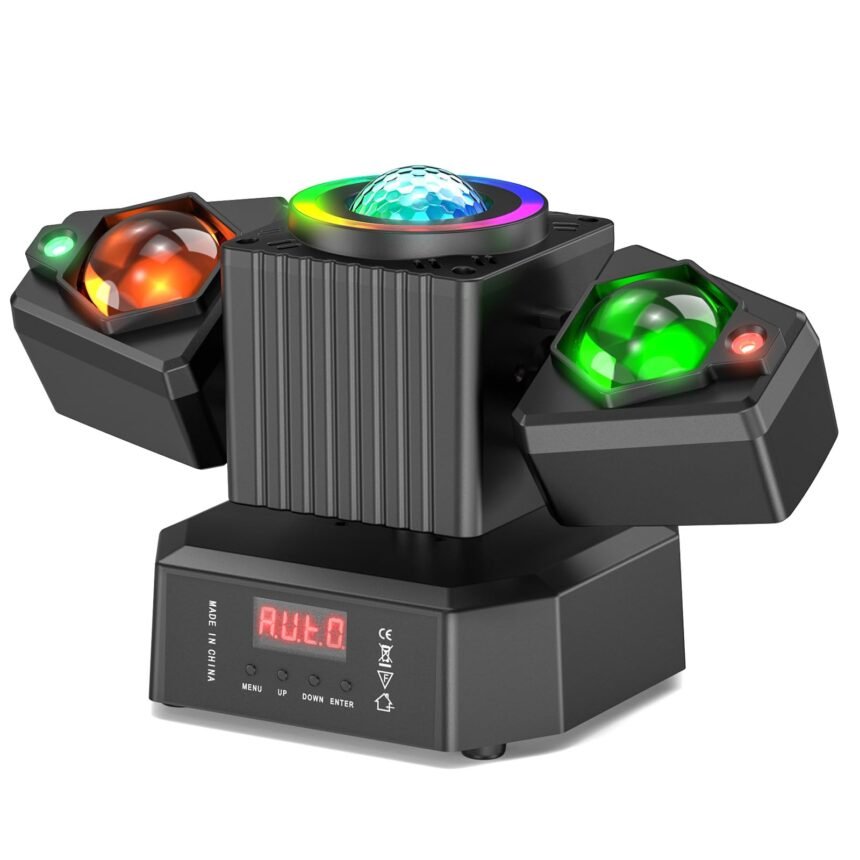
Walk into any major concert venue or theater production today, and you’ll immediately notice how lighting has evolved from simple illumination into a storytelling medium all its own. Beams of light sweep across crowds, colors shift to match emotional beats, and intricate patterns dance across stages with breathtaking precision. At the heart of this transformation are moving head lights—versatile fixtures that have revolutionized how designers craft immersive visual experiences for audiences worldwide.
Yet for lighting enthusiasts eager to harness this technology, the learning curve can feel steep. Understanding how to truly control these powerful tools requires more than plugging them in and pressing play. It demands knowledge of mechanics, protocols, and creative techniques that separate amateur setups from professional-grade productions. This article breaks down the essential aspects of mastering light control technology, from distinguishing between spot vs wash lights and unlocking the creative potential of prism effects to understanding how long lifespan features protect your investment. Whether you’re building your first rig or refining your skills, you’ll find practical guidance to elevate your lighting craft.
Fundamentals of Moving Head Lights and Light Control Technology
Moving head lights are automated fixtures capable of repositioning their beam in multiple directions while simultaneously adjusting color, intensity, and pattern output. Unlike traditional static fixtures, these lights contain motorized components that respond to digital commands, giving designers real-time control over every aspect of the beam. Understanding how these fixtures operate—and how to communicate with them—forms the bedrock of effective light control technology. Without this foundation, even the most expensive rig will underperform in the hands of someone unfamiliar with the underlying systems.
Understanding Moving Head Mechanics
The defining feature of any moving head light is its pan and tilt capability. Pan refers to horizontal rotation, often spanning a full 540 degrees, while tilt controls vertical movement through arcs of 270 degrees or more. Inside the fixture, a color wheel or CMY mixing system generates hues on demand, and rotating gobo wheels project patterns ranging from geometric shapes to organic textures. These mechanical elements work in concert, allowing a single fixture to shift from a tight spotlight on a performer to a sweeping aerial effect within seconds.
Basics of Light Control Systems
DMX512 remains the industry-standard protocol for communicating with moving head lights. Each fixture receives a unique address on the DMX chain, and a control console or software sends data across 512 channels per universe to dictate every parameter—from beam angle to rotation speed. Wireless DMX systems eliminate cable runs for complex setups, while software platforms like MA Lighting or Chamsys offer visual programming environments where designers build cues, timelines, and effects. Mastering these tools enables you to coordinate dozens of fixtures into cohesive, synchronized performances that respond precisely to music or narrative cues.
Decoding Spot vs Wash Lights: Functions and Applications
Choosing between spot and wash moving heads isn’t simply a matter of preference—it’s a design decision that shapes the entire visual narrative of a production. Each type serves a fundamentally different purpose, and understanding their strengths allows you to deploy them strategically rather than relying on guesswork. Many professional rigs incorporate both types working in tandem, with spots delivering dramatic focal points while washes establish the surrounding atmosphere. Knowing when and where to apply each fixture type is what separates a flat, one-dimensional light show from a layered, emotionally resonant experience.
Spot Lights: Precision and Focus
Spot moving heads produce tight, concentrated beams with clearly defined edges, making them ideal for isolating subjects or carving sharp lines through haze. Their narrow beam angles—often adjustable between 5 and 20 degrees—allow designers to pinpoint a singer on a darkened stage or project crisp gobo patterns onto architectural surfaces. In theatrical contexts, spots follow actors through scene changes, while in concert environments they create dramatic aerial effects that cut through fog with laser-like intensity. The ability to iris down to an extremely tight circle or zoom out slightly for a focused wash gives spot fixtures remarkable versatility within their precision-oriented role.
Wash Lights: Coverage and Ambiance
Wash moving heads take the opposite approach, spreading light across broad areas with soft, feathered edges that blend seamlessly into surrounding surfaces. Their wide beam angles—sometimes exceeding 60 degrees—make them essential for flooding stages with saturated color, establishing time-of-day moods, or bathing entire audiences in immersive hues during climactic musical moments. Because wash fixtures prioritize even coverage over hard-edged definition, they excel at creating emotional backdrops that support the overall tone of a performance without drawing attention to individual beam sources. Designers frequently use them in arrays to build smooth color gradients that shift throughout a show, providing the foundational canvas upon which spot effects can stand out with maximum impact.
Creating Dynamic Visuals with Prism Effects
Once you’ve established your foundation with spot and wash fixtures, prism effects open an entirely new dimension of creative possibility. A prism transforms a single beam into a multiplied array of light, instantly adding complexity and visual energy to any scene. For lighting enthusiasts looking to elevate their designs beyond basic color changes and position movements, mastering prism integration represents a significant leap forward in sophistication.
What is the Prism Effect?
Inside a moving head fixture, a prism is a faceted glass element that rotates into the beam path to split one concentrated ray into multiple identical beams—typically three, five, or eight depending on the prism’s facet count. As the prism rotates, these duplicated beams spin outward in a circular or linear pattern, creating the impression of far more fixtures working simultaneously. The visual result ranges from tight, flower-like formations when combined with narrow beam angles to expansive, room-filling geometric displays when the zoom opens wider. Designers can control rotation speed and direction independently, meaning a slow clockwise spin conveys elegance while rapid bidirectional movement generates intense, high-energy chaos suited to electronic music peaks.
Creative Applications of Prism Effects
In concert environments, activating prism effects during musical drops or chorus sections instantly amplifies visual intensity without requiring additional fixtures. Combining a prism with gobo projections creates layered, kaleidoscopic textures that evolve continuously as both elements rotate at different speeds. Pairing prism-equipped spot lights with complementary wash coverage behind them produces depth—the fractured beams appear to emerge from a colored void, enhancing three-dimensionality. For theatrical applications, subtle prism use can simulate natural phenomena like light filtering through crystal or water. The key principle is restraint: deploying prism effects at carefully chosen moments ensures they retain their dramatic impact rather than becoming visual noise that fatigues the audience.
Maximizing Value with Long Lifespan Features
Investing in moving head lights represents a significant commitment, and the longevity of your fixtures directly impacts both your budget and your creative consistency over time. Modern LED-based moving heads from manufacturers like UKING have dramatically extended operational life compared to older discharge lamp models, but maximizing that potential requires understanding what contributes to durability and how your habits affect fixture health. For enthusiasts building personal rigs or managing installations across multiple venues, long lifespan isn’t just a spec sheet number—it translates into fewer mid-show failures, more predictable performance quality, and substantially lower total cost of ownership across years of use.
Benefits of Long Lifespan
Fixtures engineered for extended operational hours reduce the frequency and expense of replacing lamps, LEDs, or entire units. This reliability means you can commit to a lighting design knowing your equipment will perform identically show after show without gradual color shift or dimming that undermines visual consistency. For touring applications, durable fixtures withstand the vibration and thermal cycling of transport, while installed systems in venues benefit from reduced downtime and fewer service interruptions. The cumulative savings on replacement parts and labor allow enthusiasts to redirect resources toward expanding their rig or investing in better control systems.
Maintenance Best Practices
Extending fixture life starts with regular cleaning—dust accumulation on fans, lenses, and internal optics forces motors to work harder and traps heat that degrades components prematurely. Use compressed air and lint-free cloths monthly for active rigs, and inspect cooling vents for blockages before each event. Store fixtures in padded cases away from moisture and extreme temperatures when not in use. During operation, avoid running lights at maximum intensity continuously when lower output suffices, and ensure adequate ventilation around each unit. Updating firmware when manufacturers release patches also addresses mechanical timing issues that can cause premature wear on motors and gears.
Step-by-Step Guide to Mastering Light Control Technology
Theory and knowledge only carry you so far—true mastery of light control technology comes through hands-on practice with your actual equipment. The following workflow takes you from unboxing to programming sophisticated cues, giving you a repeatable process that builds confidence with each session. By approaching setup methodically, you avoid the frustration of troubleshooting problems that stem from skipped steps or overlooked fundamentals.
Initial Setup and Configuration
Begin by securely mounting your moving heads to truss or stands using appropriate clamps and safety cables. Power each fixture individually first to confirm it completes its homing calibration without obstruction. Next, assign unique DMX addresses to each unit—consult the fixture’s channel mode to determine how many channels it occupies, then space addresses accordingly to prevent overlap. Connect fixtures in a daisy chain using quality five-pin DMX cables, terminating the final fixture with a 120-ohm resistor. Finally, link your control console or laptop running lighting software to the first fixture in the chain and verify communication by adjusting intensity on each address independently.
Programming Basic and Advanced Cues
Start with static scenes—position each fixture, set color and intensity, then store that look as a cue. Once you’ve built several scenes, create chases that transition between them at timed intervals matching your music’s tempo. Layer complexity by programming separate cue lists for your spot vs wash lights, allowing independent timing control. Introduce prism effects within specific cues tied to high-energy moments, adjusting rotation speed to complement the musical dynamics. Use your console’s effects engine to apply sine-wave movements across multiple fixtures simultaneously, creating organic sweeps that would be tedious to program manually channel by channel.
Troubleshooting Common Issues
When fixtures stop responding, check DMX cable connections first—loose or damaged connectors cause intermittent signal loss that mimics more serious failures. If a single fixture behaves erratically, verify its address hasn’t been accidentally duplicated by another unit in the chain. Flickering or stuttering movement often indicates a firmware mismatch between your console’s fixture profile and the actual unit, so update profiles from the manufacturer’s library. For mechanical issues like grinding during pan or tilt, power down immediately and inspect for debris in the movement path. Maintaining a spare DMX cable and terminator in your kit resolves the majority of field problems within minutes.
From Fundamentals to Stage-Ready Expertise
Mastering light control technology with moving head lights is a journey that rewards patience, practice, and curiosity in equal measure. The fundamentals—understanding pan and tilt mechanics, DMX communication, and fixture behavior—give you the vocabulary to speak fluently with your equipment. Recognizing the distinct roles of spot vs wash lights empowers you to make intentional design choices, using focused beams for dramatic emphasis and broad washes for emotional atmosphere. Prism effects add a layer of visual complexity that transforms simple beam work into captivating, multi-dimensional displays when deployed with thoughtful timing. And appreciating the value of long lifespan features ensures your investment continues performing reliably across countless shows, freeing you to focus on creativity rather than equipment failures.
The path forward is straightforward: set up your fixtures, experiment with programming, and learn from every unexpected result. Each session at the console builds muscle memory and deepens your instinct for what works visually. Don’t wait for the perfect rig or the ideal venue—start with what you have, push its limits, and let your growing expertise guide future upgrades. The stage is waiting for your vision to light it up.