Plenty of small businesses handle dry ice without ever thinking of themselves as being in the industrial gas world.
A café doing frozen desserts, a small pharmacy shipping temperature-sensitive stock, a caterer keeping food cold at an outdoor event. It arrives, it works, nobody reads a safety sheet. Most of the time that’s fine. Occasionally it isn’t, and the failures come from a few predictable places.
None of this is complicated. But it’s worth knowing before it becomes a problem rather than after.
Why Dry Ice Deserves More Respect Than It Gets
Dry ice is solid carbon dioxide at about minus 78°C. Two properties make it useful and mildly hazardous at the same time: it’s extremely cold, and it turns into a large volume of gas as it warms. A single kilogram becomes roughly half a cubic metre of CO2 gas. That’s the whole safety story in one sentence, and both halves matter.
The Cold
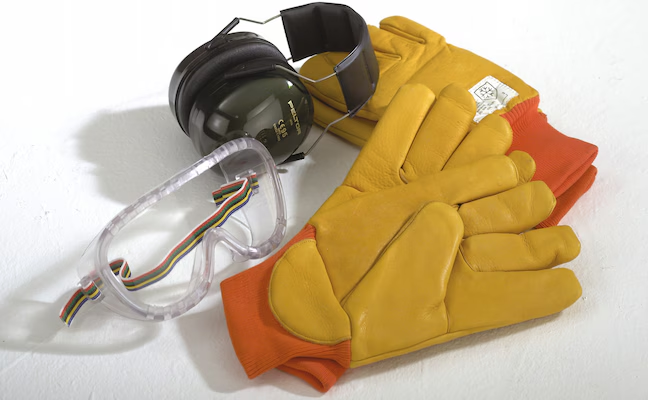
Direct contact causes cold burns, an injury that behaves like frostbite. A few seconds of bare-skin contact is enough. In practice that means insulated gloves and a scoop or tongs, kept wherever the dry ice is handled, not in a drawer on the other side of the room.
The Gas
This is the one people miss. As dry ice sublimates it displaces oxygen. In a small, poorly ventilated space, a walk-in cold room, a delivery van with the windows up, a closed storeroom, CO2 can build to levels that cause headaches, dizziness, or worse, with no warning smell. The UK’s Health and Safety Executive treats carbon dioxide as a substance hazardous to health, and the basic control is simple: ventilation.
The Rules That Prevent Most Incidents
Almost every dry ice problem a small business runs into traces back to ignoring one of these.
Never seal it in an airtight container. The expanding gas needs somewhere to go. A sealed bottle, a taped cooler, or a closed box can rupture. Storage and transport containers must be vented.
Ventilate the space. Handle and store it where air moves. Be especially careful in cold rooms, vehicles, and small back rooms where gas can pool low and unseen.
Protect skin. Gloves and tools, every time, with no exception for a quick handling.
Brief whoever touches it. The people taking deliveries and packing orders are the ones at risk, so they’re the ones who need the two-minute rundown.
Transport and Shipping
If you ship dry ice, there are rules. Carriers and aviation authorities classify it as a dangerous good above certain quantities, with packaging and labelling requirements. A business that ships regularly should confirm the current thresholds with its carrier before it becomes an issue at the depot.
A Supplier Is Part of Your Safety System
Here’s a point that gets overlooked: where you buy matters, not just for quality but for safety. A supplier who drops a pallet and leaves is different from one who advises on quantities, storage, and handling for your specific use.
The better operators build guidance into the service. As an example from the U.S. market, Adchem Gas pairs its dry ice and specialty gas deliveries with handling advice for its food service, lab, and event clients, working from this supplier relationship rather than a one-off transaction.
The model is worth looking for wherever you are: a supplier who treats safe handling as part of what they sell tends to be the one who’s easier to reach when something goes sideways.
Sizing Orders to Reduce Risk
Over-ordering carries its own hazard. Dry ice you don’t use sits around sublimating, adding CO2 to your space and tempting people to store it badly. Ordering the right amount for the job, delivered close to when you need it, is