Manual timesheets, buddy punching, and paper-based attendance logs cost businesses thousands of dollars annually in lost productivity and payroll errors. These outdated methods not only drain resources but also create disputes between management and employees over hours worked. Biometric work time clocks offer a powerful alternative, leveraging unique biological identifiers to verify employee attendance with precision that traditional systems simply cannot match. For tech-savvy entrepreneurs building scalable operations, these advanced attendance solutions represent a critical infrastructure upgrade that aligns workforce management with modern business demands. This article explores what biometric time clocks are, the tangible benefits they deliver to growing businesses, the key features worth prioritizing—including touchscreen interfaces and flexible shift support—and how warranty protection and cloud-based management ensure long-term reliability. Whether you’re managing a team of ten or scaling toward hundreds, understanding how to select and implement the right biometric system can transform your attendance tracking from a persistent headache into a seamless, automated process.
What Are Biometric Work Time Clocks?
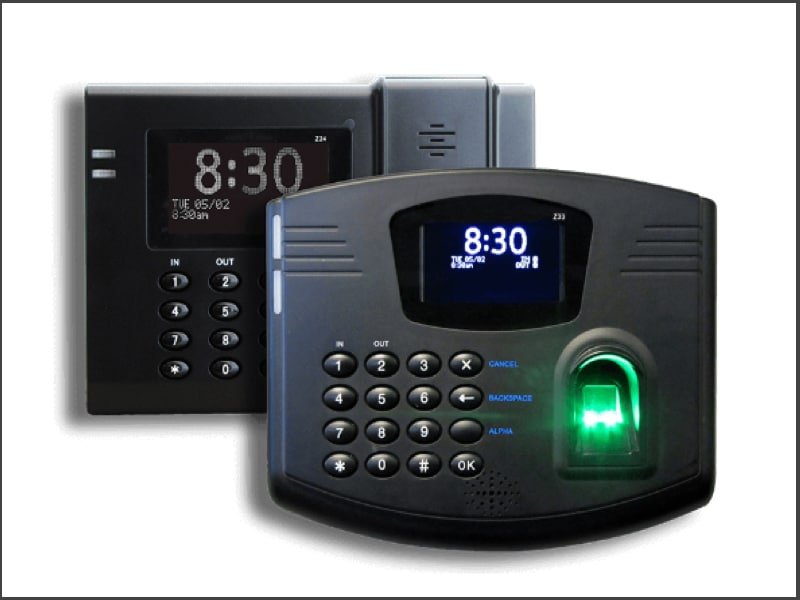
Biometric work time clock are electronic devices that authenticate employee identity using unique biological characteristics before recording their clock-in and clock-out times. Unlike traditional punch cards or PIN-based systems that can be shared or manipulated, biometric identifiers are inherently tied to a single individual, making them virtually impossible to falsify. These systems capture and store a digital template of an employee’s biological trait during enrollment, then compare each subsequent scan against that template to confirm identity in seconds.
The most common types include fingerprint scanners, which read the unique ridge patterns on a person’s fingertip, and facial recognition systems, which map the geometric structure of facial features using infrared or standard cameras. Some advanced models also utilize iris scanning, palm vein recognition, or voice authentication for environments requiring heightened security. Each method offers distinct advantages depending on workplace conditions—facial recognition works well in environments where hands may be dirty or gloved, while fingerprint systems offer a compact, cost-effective solution for office settings.
Within the broader landscape of modern attendance solutions, biometric time clocks serve as the foundational hardware layer that feeds accurate, verified data into payroll and workforce management platforms. They eliminate ambiguity about who clocked in, exactly when they arrived, and whether they were physically present—providing businesses with an indisputable attendance record that supports fair compensation and regulatory compliance.
The Benefits of Advanced Attendance Solutions for Businesses
The shift from manual tracking to biometric attendance systems delivers measurable returns that compound over time. Payroll accuracy improves dramatically when every clock-in event is tied to a verified individual rather than a handwritten entry or shared PIN code. Businesses that previously lost five to ten minutes per employee per shift to early departures, extended breaks, or buddy punching recover those hours immediately—translating to thousands of dollars in annual savings for even modest-sized teams. Beyond direct cost recovery, automated time capture eliminates the administrative burden of reconciling disputed hours, freeing managers to focus on operations rather than attendance disputes.
For tech-savvy entrepreneurs building systems designed to scale, biometric solutions integrate directly with payroll platforms and HR software, creating a seamless data pipeline from clock-in to paycheck. This automation reduces processing time during pay periods and minimizes the compliance risks associated with manual data entry errors. The result is a workforce management infrastructure that grows with the business without requiring proportional increases in administrative overhead. Employees also benefit from transparent, tamper-proof records that ensure they receive accurate compensation for every hour worked, which strengthens trust and reduces turnover driven by payroll frustrations.
Meeting the Desire for Biometric Tracking Features
Advanced biometric features go beyond simple attendance logging to deliver enterprise-grade security at a small business price point. Multi-factor authentication options—combining fingerprint verification with facial recognition, for example—prevent unauthorized access to sensitive areas while maintaining a frictionless experience for legitimate employees. Real-time alerts notify managers of anomalies such as unscheduled clock-ins or repeated failed authentication attempts, enabling immediate response to potential fraud. These capabilities give entrepreneurs the same sophisticated workforce oversight tools that large corporations rely on, packaged in systems that require minimal IT expertise to deploy and maintain.
Key Features: Touchscreen Biometric and Flexible Shifts
Modern biometric time clocks have evolved far beyond the clunky, button-heavy terminals of previous generations. Touchscreen biometric interfaces deliver an intuitive user experience that mirrors the smartphones employees already use daily, reducing training time and minimizing clock-in errors. Hardware manufacturers like NGteco have embraced this design philosophy, producing devices where employees navigate clear visual prompts to select departments, job codes, or break categories with a simple tap, while administrators configure settings through responsive menus rather than cryptic button combinations. This accessibility matters in fast-paced environments where every second at the terminal affects workflow—a well-designed touchscreen reduces average clock-in time to under three seconds, keeping shift transitions smooth even with large teams queuing simultaneously.
Equally critical for growing businesses is robust support for flexible shifts and non-traditional scheduling. Many entrepreneurs operate with rotating schedules, split shifts, remote teams, or project-based hours that rigid time tracking systems cannot accommodate. Advanced biometric clocks handle multiple shift rules simultaneously, automatically applying the correct overtime calculations, shift differentials, and break policies based on each employee’s assigned schedule. When a team member swaps shifts or picks up additional hours, the system adapts without requiring manual overrides from a manager. This flexibility integrates directly with scheduling and payroll platforms, ensuring that complex workforce arrangements are captured accurately at the point of entry rather than corrected after the fact. For businesses scaling through seasonal demand or expanding into multiple locations, this adaptability eliminates the need to replace or reconfigure hardware as operational needs evolve—the same system that manages a ten-person team today handles a hundred-person operation tomorrow with identical precision.
Ensuring Reliability: Time Clock Warranty and Cloud-Based Management
Investing in biometric time clocks requires confidence that the hardware will perform consistently under daily use. A comprehensive time clock warranty protects businesses against manufacturing defects, sensor degradation, and unexpected failures that could disrupt attendance tracking during critical pay periods. Beyond basic hardware coverage, the best warranty programs include dedicated customer support channels with technical specialists who understand workforce management contexts—not generic call centers reading scripts. For entrepreneurs who cannot afford downtime, warranty terms that include advance replacement units or on-site service ensure that a malfunctioning device never results in days of manual timekeeping workarounds.
Cloud-based management elevates biometric systems from standalone terminals into connected workforce platforms. Administrators access real-time attendance dashboards from any browser, review exception reports remotely, and push schedule updates to devices across multiple locations without physically touching each unit. Employee data and attendance records are encrypted and stored redundantly in secure data centers, eliminating the risk of losing critical information to local hardware failures or theft. Automatic firmware updates keep devices current with security patches and feature improvements without requiring IT intervention. For tech-savvy entrepreneurs managing distributed teams or traveling frequently, cloud connectivity means full operational visibility regardless of physical proximity to the workplace—turning attendance management into something monitored in minutes rather than hours spent on-site reconciling data.
A Step-by-Step Guide to Implementing Biometric Work Time Clocks
Successfully deploying a biometric time clock system requires deliberate planning rather than simply mounting hardware on a wall. Start by assessing your business needs thoroughly—document your current workforce size, shift patterns, number of locations, and pain points with existing tracking methods. Identify whether your environment demands fingerprint recognition, facial scanning, or multi-modal authentication based on workplace conditions like cleanliness, lighting, and traffic volume at clock-in points.
Next, select a system that aligns with your operational requirements. Prioritize devices offering touchscreen interfaces for ease of use, native support for flexible and rotating shifts, and proven integration capabilities with your existing payroll or HR software. Verify that the manufacturer provides a comprehensive time clock warranty covering sensor components and includes responsive technical support rather than generic assistance. Cloud-based management should be non-negotiable for any business planning to scale or operate across multiple sites.
Plan your installation strategically by positioning terminals at natural entry points where employees already congregate, minimizing disruption to existing workflows. Ensure reliable network connectivity at each location since cloud-synced devices depend on consistent internet access for real-time data transmission. Before going live, integrate the system with your payroll platform and run parallel testing alongside your current method for at least one pay cycle to validate data accuracy.
Employee training deserves dedicated attention—schedule brief enrollment sessions where each team member registers their biometric template and practices the clock-in process. Communicate clearly why the system benefits them personally through accurate pay and transparent records, which builds adoption rather than resistance. Finally, establish ongoing support protocols by bookmarking your cloud management dashboard for daily monitoring, configuring automated exception alerts, and documenting your warranty claim process so any hardware issue triggers immediate resolution rather than days of confusion. Review attendance reports monthly during the first quarter to fine-tune shift rules and overtime calculations as real usage patterns emerge.
Transform Your Workforce Management with Biometric Time Clocks
Biometric work time clocks represent more than a hardware upgrade—they fundamentally reshape how businesses capture, verify, and manage workforce attendance. By replacing error-prone manual methods with authenticated biological verification, these systems eliminate time theft, reduce payroll disputes, and deliver measurable cost savings that grow alongside your team. The combination of touchscreen interfaces and flexible shift support ensures that daily operations run smoothly regardless of scheduling complexity, while cloud-based management provides the remote visibility and data security that modern entrepreneurs demand. A solid time clock warranty backs that investment with the assurance that hardware reliability won’t become a business liability. For tech-savvy business owners building scalable operations, biometric attendance solutions check every critical box: accuracy, automation, adaptability, and long-term dependability. The businesses gaining competitive advantage today are those replacing outdated tracking methods now rather than absorbing preventable losses quarter after quarter. Evaluate your current attendance pain points, explore biometric systems that match your operational needs, and take the concrete step toward a workforce management infrastructure built for growth.