Picture this: you’re sitting in a crowded coffee shop, trying to follow a video call with your team while espresso machines hiss and conversations swirl around you. You catch maybe half of what your colleague says, nodding along and hoping nobody asks you a direct question. For millions of young professionals dealing with mild-to-moderate hearing loss, this scenario plays out daily—in open-plan offices, networking events, and busy commutes. The frustration is real, but so is the hesitation around seeking help. Traditional hearing aids carry associations with clinical appointments, bulky devices, and steep price tags that feel disconnected from the way you live and work.
Enter AI-powered Over-the-Counter hearing aids—a new category of device that promises to change the equation entirely. But do they actually deliver? This article breaks down the meaningful differences between traditional hearing aids and their AI OTC counterparts, focusing specifically on what matters most to tech-savvy users: seamless smart integration, discreet design, Bluetooth connectivity, built-in tinnitus management, and flexible payment options including HSA eligibility. The goal isn’t to declare a universal winner, but to help you determine which path genuinely fits your connected, fast-moving lifestyle.
The Core Difference: Understanding AI OTC vs. Traditional Hearing Aids
Traditional hearing aids operate within a medical model that’s remained largely unchanged for decades. You start with a referral, book an audiologist appointment, undergo comprehensive testing, and then get fitted with a device programmed specifically to your audiogram. Follow-up visits for adjustments are standard, and the entire process—from first appointment to wearing a tuned device—can stretch across weeks. The upfront investment typically runs into thousands of dollars, often with limited insurance coverage for adults. For people with severe or complex hearing loss, this hands-on clinical pathway remains essential and irreplaceable.
AI OTC hearing aids represent a fundamentally different philosophy. Made possible by the FDA’s 2022 ruling allowing direct-to-consumer sales for mild-to-moderate hearing loss, these devices skip the clinical gatekeeping entirely. You purchase them online or in-store, download a companion app, and complete a guided self-fitting process—often in under fifteen minutes. But what truly separates them from basic amplifiers is the artificial intelligence running under the hood. Machine learning algorithms continuously analyze your sound environment, distinguishing speech from background noise and adjusting processing in real time without manual intervention.
This AI-driven personalization is the real game-changer. Rather than relying on static programming set during a single office visit, these devices learn from your listening patterns and adapt automatically—whether you’ve walked from a quiet hallway into a packed conference room or stepped onto a noisy subway platform. The result is a user journey built around autonomy and immediacy, designed for people who expect their technology to work intelligently without requiring expert intermediaries at every step.
Smart Integration: The Heart of the Modern Hearing Experience
For young professionals who already manage their lives through interconnected devices—smartphones, smartwatches, wireless earbuds, laptops—the question isn’t just whether a hearing aid amplifies sound well. It’s whether the device fits naturally into an ecosystem they’ve already built. Smart integration transforms hearing aids from isolated medical appliances into connected wellness tools that communicate with the technology you already depend on. This is where AI OTC devices have made their most compelling case, offering a level of digital fluency that most traditional hearing aids are only beginning to match.
Seamless Bluetooth Technology for a Connected Life
Direct Bluetooth streaming fundamentally changes how you interact with audio throughout your day. With AI OTC hearing aids, phone calls route straight into your ears with clarity that cuts through ambient noise—no fumbling with speakerphone in a taxi or cupping your hand over your ear during a walking meeting. Music and podcasts stream during your commute without requiring separate earbuds, and video calls on Zoom or Teams deliver voices directly into your hearing aids with consistent volume and intelligibility. Traditional hearing aids have increasingly added Bluetooth capability, but many older or mid-tier models still require an intermediary streamer device—a separate piece of hardware you clip to your shirt or carry in a pocket—to bridge the connection between your phone and your aids. That extra step introduces friction, added cost, and another thing to charge and keep track of. For someone juggling back-to-back meetings across platforms, the difference between native Bluetooth and accessory-dependent connectivity is the difference between technology that disappears into your workflow and technology that interrupts it.
Companion App Control: Discreet and Personalized Management
The companion smartphone app is where AI OTC hearing aids truly earn their “smart” designation. Rather than reaching up to tap a tiny button on your ear—a gesture that draws attention in professional settings—you adjust volume, switch listening programs, or fine-tune bass and treble directly from your phone screen, as casually as checking a notification. Beyond basic controls, these apps let you build custom sound profiles tied to specific environments. You might create a “conference room” setting that emphasizes voices from the front, a “gym” profile that prioritizes music clarity, and a “commute” mode that reduces wind and traffic rumble. Many apps support geotagging, automatically switching to your preferred profile when your phone’s GPS detects you’ve arrived at the office or your favorite restaurant. Usage tracking and wellness dashboards round out the experience, giving you data on daily wear time, sound exposure levels, and even prompts to take listening breaks. This level of personalized, discreet control means you manage your hearing health the same way you manage fitness or sleep—through an app that respects your autonomy and keeps the experience entirely in your hands.
Addressing Key Needs: Solutions for the Tech-Savvy User
Beyond connectivity and smart features, two practical concerns consistently surface when young professionals explore hearing assistance: cost and tinnitus. Both represent real barriers that have historically kept people from seeking help, and both are areas where AI OTC devices have introduced genuinely accessible solutions.
Flexible Payment Options and Using Hearing Aids with HSA
The financial reality of traditional hearing aids has long been a dealbreaker for younger adults. When a pair of devices costs several thousand dollars and most health insurance plans offer minimal or no coverage for adult hearing aids, many people simply delay treatment—sometimes for years. AI OTC hearing aids dramatically lower that entry point, with many quality devices available at a fraction of the traditional cost. But the accessibility goes further than sticker price alone. Several OTC brands now offer interest-free financing plans that break the cost into manageable monthly payments, and some have introduced subscription models that bundle the device with ongoing app updates, replacement tips, and warranty coverage. Perhaps the most overlooked financial tool is your Health Savings Account or Flexible Spending Account. Both HSA and FSA funds can be used to purchase FDA-registered hearing aids—including OTC models—making it possible to pay with pre-tax dollars you’ve already set aside. To use this option, simply confirm the device is FDA-cleared, purchase through a qualifying retailer, and save your receipt for reimbursement or direct payment through your HSA/FSA debit card. This turns hearing health into a planned wellness expense rather than an unexpected financial burden.
Advanced Tinnitus Solutions Built-In
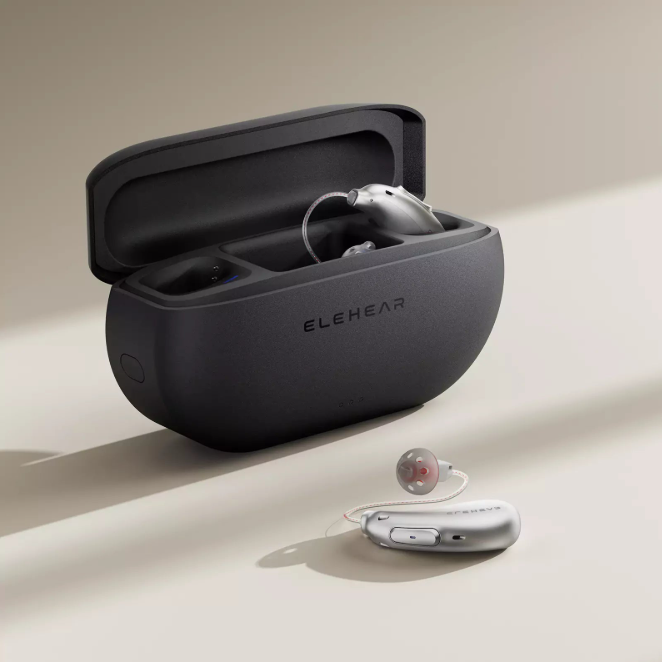
Tinnitus—that persistent ringing, buzzing, or hissing that affects roughly one in five young adults—used to require a separate clinical intervention or an upgrade to premium-tier traditional hearing aids to address. AI OTC devices have collapsed that gap by embedding tinnitus management directly into their companion apps. Brands like ELEHEAR, for example, integrate sound therapy programs within the same interface you use to adjust volume or switch profiles, allowing you to activate relief options without navigating separate systems. Options typically include white noise and pink noise generators, fractal tones that create unpredictable melodic patterns to redirect your brain’s attention, and notched audio therapy that filters out the specific frequency of your tinnitus to retrain auditory processing over time. You control intensity, scheduling, and which sounds work best for you—during focused work sessions, before sleep, or throughout the day as a background layer beneath amplified sound. What once demanded multiple specialist appointments and expensive hardware is now something you configure in your app during a lunch break, adjusting as your needs evolve without booking another appointment.
Making the Choice: A Practical Guide for Young Professionals
Deciding between traditional and AI OTC hearing aids doesn’t have to feel overwhelming if you approach it as a practical match between your specific situation and what each option delivers. Start by honestly assessing your hearing loss severity—this single factor narrows the field more than any feature comparison ever could.
Traditional hearing aids remain the right path if you’re dealing with severe or profound hearing loss that falls outside the mild-to-moderate range OTC devices are designed to address. They’re also the better fit if you have asymmetric hearing loss, a history of ear surgery, or conditions like sudden hearing changes that warrant medical investigation. If you value ongoing face-to-face professional support and prefer someone else handle the technical calibration, the audiologist-guided model offers reassurance that self-fitting can’t replicate. Complex listening needs—such as frequent group conversations in acoustically challenging environments—may also benefit from the precision of custom-molded fittings and advanced directional microphone arrays tuned by a specialist.
AI OTC hearing aids make sense if your hearing loss is confirmed as mild-to-moderate, you’re comfortable managing technology independently, and you want a device that integrates with your existing digital ecosystem rather than existing apart from it. They’re ideal if you prioritize Bluetooth streaming for calls and media, want app-based control you can adjust without appointments, need flexible payment options or plan to use HSA/FSA funds, and appreciate built-in tinnitus support without additional clinical visits. If discretion matters—and for most young professionals it does—the earbud-style form factor and phone-based management eliminate visible fiddling with your device in professional settings.
One final consideration: most reputable OTC brands offer trial periods ranging from 30 to 100 days. Use that window fully. Wear the devices through your actual daily routine—meetings, commutes, social dinners, quiet evenings—before deciding. A trial period costs you nothing but attention, and it reveals whether the device genuinely fits your life in ways no spec sheet can predict.
Embracing Smart Hearing Technology for a Connected Lifestyle
The hearing aid landscape has undergone a genuine paradigm shift. What was once exclusively a clinical, provider-driven experience has evolved into something that looks and feels much more like the consumer technology young professionals already embrace daily. AI-powered OTC hearing aids represent more than a cheaper alternative—they represent a fundamentally different relationship between you and your hearing health, one built on autonomy, intelligence, and seamless digital integration.
For tech-savvy users navigating busy professional lives, the core advantages are clear: direct Bluetooth streaming that eliminates extra accessories and keeps you connected across calls, media, and meetings; app-based control that lets you manage your hearing as discreetly as adjusting your phone’s brightness; accessible pricing paired with HSA/FSA eligibility and flexible payment structures that remove financial barriers; and built-in tinnitus management that once required separate specialist interventions. These aren’t incremental improvements—they’re a reimagining of what a hearing device can be when designed for people who expect their technology to adapt to them, not the other way around.
Traditional hearing aids absolutely remain vital for those with severe loss or complex audiological needs, and that clinical expertise isn’t going anywhere. But for the growing number of young adults with mild-to-moderate hearing loss who’ve been putting off help because the traditional path felt too slow, too expensive, or too disconnected from their lifestyle—AI OTC devices offer a compelling, empowering alternative that meets you exactly where you already live: in a connected, fast-moving digital world.