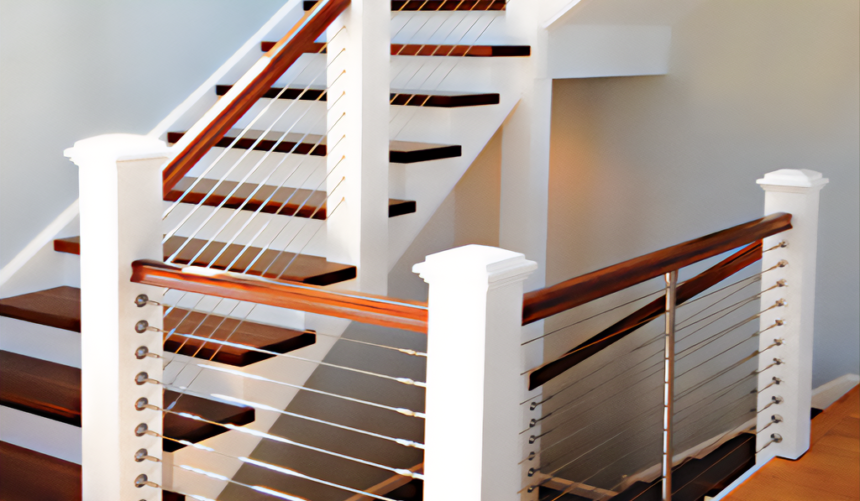
Modern architecture is evolving beyond traditional constraints, and nowhere is this more evident than in railing design. For decades, homeowners and builders have relied on bulky wooden or metal handrails that obstruct views and limit creative expression. These conventional solutions, while functional, often compromise the very aesthetics they’re meant to complement. Enter cable railing systems—a revolutionary approach that challenges the notion that railings must be visually intrusive to be safe and effective.
Cable railing represents a fundamental shift in how we think about balcony, deck, and staircase safety. By replacing solid balusters and chunky handrails with sleek horizontal cables stretched between minimal posts, these systems deliver structural integrity without sacrificing sightlines. Whether you’re overlooking a mountain vista from your deck or showcasing an open-concept interior, cable railing preserves your view while meeting stringent building codes. As design preferences trend toward minimalism and transparency, cable railing has emerged as the solution that bridges safety requirements with contemporary aesthetics, making it an increasingly popular choice for residential and commercial projects alike.
Introduction to Cable Railing
Cable railing systems consist of stainless steel cables tensioned horizontally between sturdy posts, creating a barrier that’s both functional and nearly invisible. Unlike traditional railings that rely on vertical balusters or glass panels, cable systems use thin metal wires—typically 1/8 to 3/16 inches in diameter—spaced at precise intervals to meet safety codes while maximizing transparency. The cables thread through posts at regular intervals, usually three to four inches apart, and are secured with specialized fittings that maintain consistent tension over time.
The primary advantage of cable railing lies in its ability to disappear into the background. Where conventional railings create visual barriers that segment spaces and block views, cable systems maintain uninterrupted sightlines from virtually any angle. This makes them ideal for properties with scenic overlooks, waterfront locations, or modern interiors where open flow matters. Beyond aesthetics, cable railing offers practical benefits including low maintenance requirements, exceptional durability against weather and corrosion, and versatility across applications from residential decks to commercial staircases. The system’s modular nature allows for customization in post spacing, cable configuration, and finish options, accommodating diverse architectural styles while preserving the core benefit of visual openness. As building codes evolve to recognize alternative safety solutions, cable railing has gained acceptance as a legitimate, code-compliant option that doesn’t compromise on protection.
The Problem with Traditional Handrail Options
Traditional handrail systems carry inherent design limitations that have frustrated architects and homeowners for generations. Wood railings, while classic in appearance, demand constant maintenance through staining, sealing, and periodic replacement as they succumb to rot, warping, and insect damage. Metal balusters fare better against the elements but introduce their own complications—wrought iron requires rust prevention treatments, aluminum can appear industrial and cold, and both create visual clutter through their vertical spacing requirements. Glass panel systems promise transparency but come with premium price tags, vulnerability to breakage, and the perpetual challenge of keeping surfaces streak-free and presentable.
The structural bulk of conventional railings creates more than just aesthetic problems. Standard building codes require balusters spaced closely enough to prevent a four-inch sphere from passing through, which translates to numerous vertical elements that fragment views and create a cage-like appearance. Top and bottom rails add horizontal mass that further obstructs sightlines, particularly problematic on elevated decks or balconies where the primary value lies in the panorama beyond. For interior applications like loft overlooks or open staircases, traditional railings can make spaces feel compartmentalized and closed off, contradicting the open-concept philosophy that defines contemporary design.
Installation complexity adds another layer of frustration. Traditional systems typically require precise measurements for each baluster, individual fastening points that multiply labor hours, and careful alignment to achieve professional results. Modifications or repairs become complicated affairs, often necessitating removal of multiple components to address a single damaged element. The combination of high maintenance demands, view obstruction, aesthetic inflexibility, and installation challenges has driven designers and property owners to seek alternatives that deliver safety without compromise—a need that cable railing systems directly address.
Design Flexibility and Aesthetics
Cable railing systems liberate designers from the rigid constraints that define traditional railing options. The minimal visual footprint of tensioned cables allows architectural elements to take center stage rather than competing with bulky barriers. Posts can be positioned at wider intervals—often six feet or more—reducing the number of vertical interruptions and creating cleaner lines that complement rather than dominate a space. This flexibility extends to material choices for posts and frames: stainless steel delivers industrial sophistication, powder-coated aluminum offers color customization, and wood posts provide warmth while maintaining the cable system’s transparency.
The adaptability of cable railing shines across diverse applications. Curved staircases that would require custom-fabricated traditional balusters accept cable systems with minimal adjustment, as the flexible cables naturally follow contours. Angled installations on sloped terrain or multi-level decks present no special challenges—cables maintain their clean horizontal lines regardless of post height variations. Interior applications benefit particularly from cable railing’s ability to define spaces without dividing them visually. Loft railings preserve the airy openness of high ceilings, while cable-lined corridors maintain sightlines that make compact spaces feel expansive.
Contemporary design trends emphasizing minimalism, natural light penetration, and indoor-outdoor connectivity find their ideal partner in cable railing. The system’s near-invisibility allows landscaping, water features, and architectural details to remain focal points. Lighting integration becomes simpler without solid rails casting shadows or blocking illumination paths. For properties where the view itself represents significant value—coastal homes, mountain retreats, urban high-rises—cable railing protects that investment by preserving what attracted owners to the location initially.
Safety railing solutions: The future of railing design
Safety concerns naturally arise when considering any departure from traditional railing designs, but cable systems meet or exceed the structural requirements that govern conventional options. Building codes across North America specify load-bearing capacities, spacing requirements, and height standards that cable railing systems readily satisfy when properly installed. The tensioned cables themselves can withstand substantial lateral force—quality stainless steel cables rated for railing applications typically support hundreds of pounds of pressure without stretching or breaking. Posts anchored according to manufacturer specifications distribute these loads effectively, creating barriers that perform as reliably as solid baluster systems while maintaining their transparent profile.
The three-to-four-inch spacing between cables addresses the primary safety concern in any railing system: preventing small children from slipping through openings. This configuration complies with the standard four-inch sphere test required by most building codes, ensuring that toddlers cannot pass between cables while maintaining maximum visibility. Cable tension plays a critical role in safety performance—properly tensioned cables resist deflection when pressure is applied, preventing the dangerous sagging that could create gaps large enough for a child to slip through or get trapped. Professional installation includes tensioning tools and techniques that achieve the precise tightness needed for both safety and longevity.
Maintenance requirements for cable railing systems directly impact long-term safety. Stainless steel cables resist corrosion in harsh environments including coastal salt air and freeze-thaw cycles, maintaining their structural integrity without the degradation that compromises wood or inadequately protected metal railings. Periodic inspection involves checking cable tension and examining connection points for wear—simple procedures that take minutes rather than the hours required to assess and treat traditional railings. When adjustment becomes necessary, tensioning hardware allows for quick modifications without replacing components. The durability of marine-grade stainless steel means properly installed cable systems can provide decades of reliable service, maintaining their safety performance throughout their lifespan while traditional options may require partial or complete replacement multiple times over the same period.
No Handrail Options: The Future
The trajectory of railing design points unmistakably toward solutions that prioritize transparency, durability, and architectural integration—qualities that cable railing systems embody completely. As construction costs rise and labor becomes more expensive, the efficiency advantages of cable systems gain prominence. Installation time drops significantly compared to traditional balusters that require individual measurement and fastening, translating to lower labor costs and faster project completion. The longevity of stainless steel components eliminates the recurring expense cycles associated with wood refinishing or metal repainting, making cable railing more economical over the lifespan of a structure despite potentially higher initial material costs.
Market adoption reflects this shift in priorities. Architects increasingly specify cable railing for projects where visual continuity matters, from boutique hotels maximizing scenic views to residential developments targeting design-conscious buyers. The system’s compatibility with diverse architectural styles—from ultra-modern glass and steel structures to rustic mountain lodges—has broadened its appeal beyond niche applications. Construction materials suppliers like Senmit have responded to growing demand by expanding their cable railing product lines, offering components that meet various architectural specifications while maintaining the quality standards necessary for long-term performance. Building code authorities have refined standards that explicitly accommodate cable systems, removing regulatory barriers that once favored traditional options.
Environmental considerations further strengthen cable railing’s position as the future standard. Stainless steel’s recyclability and exceptional durability align with sustainable building practices that prioritize longevity over disposability. The reduced material volume compared to solid railings lowers transportation costs and carbon footprints. As the construction industry continues embracing transparency in both literal and philosophical senses, cable railing stands as the logical evolution—a solution that refuses to compromise between safety, aesthetics, and practicality.
The Clear Choice for Modern Properties
Cable railing systems represent more than an alternative to traditional handrails—they embody a fundamental reimagining of how safety and design can coexist without compromise. The limitations that have defined conventional railings for decades—visual obstruction, maintenance burdens, aesthetic inflexibility, and installation complexity—dissolve when cables replace solid balusters. What emerges is a solution that protects without dominating, that meets stringent safety codes while preserving the views and open spaces that give properties their value.
The future of railing design has already arrived for those prioritizing transparency, durability, and architectural harmony. As construction practices evolve toward efficiency and sustainability, cable railing’s advantages in installation speed, material longevity, and environmental impact position it as the logical choice for forward-thinking projects. Whether you’re planning a residential deck renovation, a commercial building upgrade, or new construction that demands unobstructed sightlines, porch railing delivers the performance modern architecture requires. The question is no longer whether cable systems can replace traditional handrails, but why anyone would choose the limitations of the past when the future offers clarity in every sense.