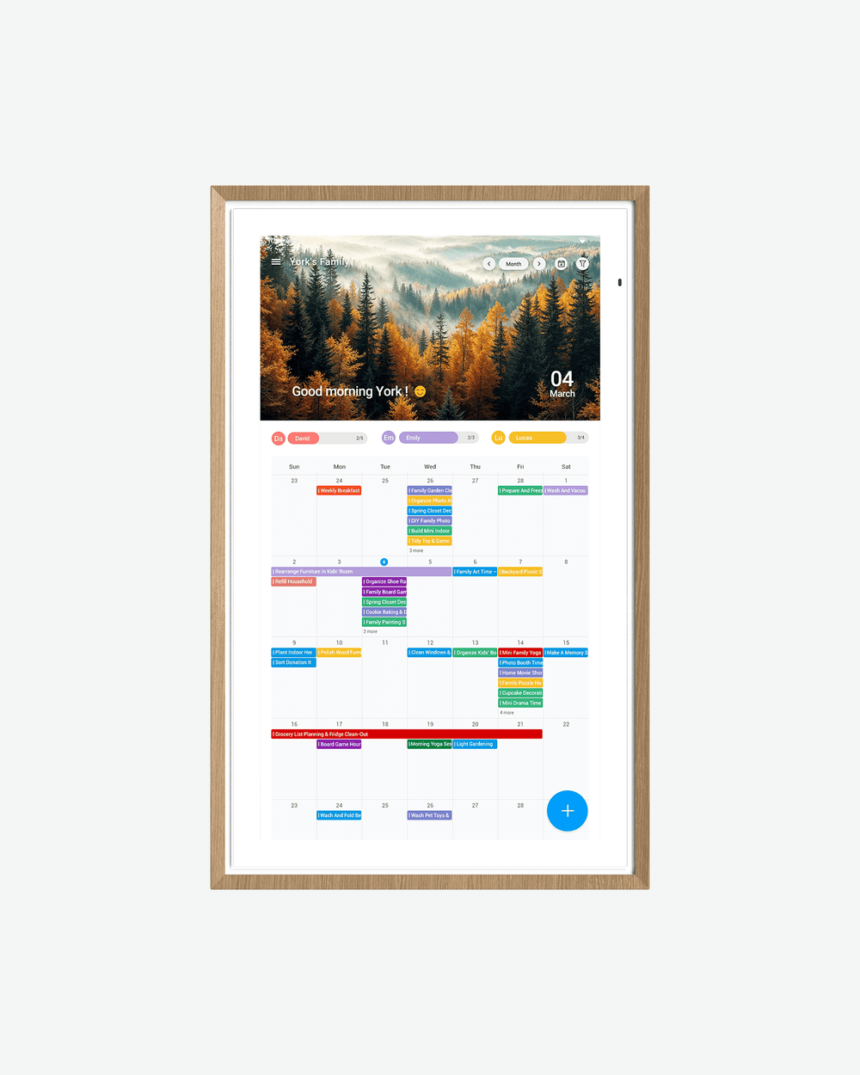
It’s 7:45 on a Tuesday morning. One child can’t find their soccer cleats for after-school practice, another just remembered a permission slip due today, and your partner asks if you’re picking up the kids because they have a late meeting you never heard about. Sound familiar? For millions of families, mornings like these aren’t the exception—they’re the exhausting norm. The root cause isn’t laziness or lack of caring; it’s the absence of a centralized system to keep everyone aligned. When schedules live in separate phones, sticky notes on the fridge, and half-remembered conversations, chaos fills the gaps. A scheduling calendar offers a unified solution—a single hub where every appointment, activity, and responsibility becomes visible to the entire household. This article explores whether adopting such a tool can genuinely transform daily family life, examining how it addresses specific pain points like overlapping commitments, forgotten tasks, and communication breakdowns to create something every busy household craves: a little more peace.
The Problem: Juggling Family Schedules Without a Central Tool
Modern family life operates at a pace previous generations would barely recognize. Between school schedules, extracurricular activities, work commitments, medical appointments, and social obligations, the average household manages dozens of moving pieces every single week. Without a central coordination tool, these pieces inevitably collide. Parents double-book themselves for pickup duty. A child’s recital falls on the same evening as a parent-teacher conference nobody remembered to mention. Chores pile up because no one is sure whose turn it is, leading to resentment and last-minute arguments.
The mental load falls disproportionately on one family member—often a parent who becomes the unofficial “household manager,” tracking everything in their head while fielding constant questions from everyone else. This invisible labor breeds exhaustion and frustration. Meanwhile, communication gaps multiply as family members rely on fragmented methods: a text here, a verbal reminder there, a note stuck to the refrigerator that nobody reads. The result isn’t just missed appointments—it’s eroded trust, heightened tension, and a persistent feeling that the household is always one forgotten detail away from falling apart. What families need is a single, shared system that makes every commitment visible, every responsibility clear, and every change instantly communicated to the people who need to know.
What is a Scheduling Calendar? A Comprehensive Overview
A scheduling calendar, in the family context, goes well beyond a simple digital date tracker. It functions as an integrated family organizer—a centralized platform where every household member’s commitments, tasks, and communications converge into one accessible view. Think of it as a command center for daily life, combining appointment tracking, task delegation, reminder systems, and real-time messaging into a single interface designed for collaborative use. Unlike a standard calendar app built for individual productivity, a family scheduling calendar prioritizes shared visibility and group coordination. It’s engineered around the reality that households don’t operate as collections of individuals—they function as interconnected units where one person’s schedule change ripples across everyone else’s day. The collaborative architecture means updates happen in real time, permissions can be tailored so teenagers see what’s relevant to them while parents maintain oversight, and the entire family draws from one authoritative source rather than piecing together fragmented information. This distinction—from personal tool to household infrastructure—is what makes scheduling calendars uniquely suited to solving the coordination challenges that plague busy families.

Core Features of an Effective Family Scheduling Calendar
Not all calendar tools are created equal, and understanding the features that matter most for household coordination helps families choose wisely and get the most from their system. The right combination of functionalities transforms a basic scheduling tool into a genuine family command center.
Digital Calendar Integration and Synchronization
The most effective family scheduling calendars pull in data from the platforms family members already use. When a parent adds a work deadline to Google Calendar or a teenager logs a study group in Apple Calendar, that event should automatically appear in the shared family view. This synchronization eliminates the need to manually duplicate entries across platforms, creating a single source of truth that everyone trusts. Without it, families end up maintaining parallel systems that inevitably fall out of sync.
Family Organizer Capabilities for Shared Access
Shared access is the backbone of collaborative scheduling. Effective tools let every family member—from parents to older children—view, add, and edit events in real time. Permission settings allow parents to control what younger kids can modify while giving teenagers more autonomy. When Dad adds a dentist appointment at 3 p.m., Mom sees it instantly and knows she’s on pickup duty for soccer. This transparency replaces the endless “did you know about…” conversations that drain energy and patience.
Advanced Schedule Management Tools for Clarity
Color-coding by family member makes it possible to glance at a week and immediately see who’s busy when. Customizable reminders—sent minutes, hours, or days before an event—prevent last-minute scrambles. Recurring event setup handles predictable commitments like weekly piano lessons or biweekly trash duty without repeated manual entry. Perhaps most valuable are conflict alerts, which flag when two family members are scheduled in different places at the same time, giving the household a chance to problem-solve before the day arrives rather than in a panicked parking lot.
Voice Control for Hands-Free Family Scheduling
When your hands are covered in dish soap or you’re buckling a toddler into a car seat, pulling out a phone to log an event isn’t practical. Voice control through smart speakers and phone assistants lets anyone say “Add Emma’s birthday party Saturday at two” and have it land on the shared calendar instantly. This lowers the barrier to actually recording commitments in the moment they’re mentioned, which is exactly when most scheduling details are communicated—and most easily forgotten.
Solving Family Needs: A Step-by-Step Implementation Guide
Knowing what a scheduling calendar can do is one thing—actually weaving it into your family’s daily rhythm is another. The transition from scattered planning to centralized coordination doesn’t happen overnight, but a deliberate approach ensures the tool becomes genuinely useful rather than just another app collecting dust on everyone’s phone.
Simplifying Family Event Scheduling: The Practical Steps
Start by selecting a platform that matches your household’s tech ecosystem. If most family members use iPhones, a tool with strong Apple Calendar integration makes adoption easier. If your household runs on a mix of devices, prioritize cross-platform compatibility so nobody is left out—platforms like ApoloSign are designed with this kind of multi-device flexibility in mind. Once you’ve chosen your tool, dedicate an hour to inputting every fixed commitment you can identify—school hours, work schedules, recurring medical appointments, sports practices, and religious services. This initial data dump creates the foundation everything else builds on. Next, establish a weekly planning session, even if it’s just fifteen minutes on Sunday evening. Gather the family, review the upcoming week on the shared calendar, and identify potential conflicts or gaps. This ritual does more than organize logistics; it gives every family member a voice in how the week unfolds and eliminates the surprise factor that causes so much friction. Finally, make the shared calendar the default communication channel for anything time-sensitive. Instead of texting one parent about a schedule change, family members add or update the event directly so everyone with access sees the shift immediately. Over time, this habit replaces the broken telephone chain that leads to missed pickups and double bookings.
Managing Chores and Responsibilities Effectively: The Solution Framework
Chore conflicts rank among the most persistent sources of household tension, but a scheduling calendar can neutralize them with structure and transparency. Begin by building a master task list that captures every recurring household responsibility—laundry, dishes, lawn care, pet feeding, grocery runs, and trash duty. Enter each task into the calendar as a recurring event with a clearly assigned family member. Rotate assignments on a set cycle, such as weekly or biweekly, so the distribution feels fair and predictable. Automated reminders sent a few hours before a task is due give the assigned person a gentle nudge without requiring another family member to nag—a dynamic shift that alone can reduce daily arguments. Build in a completion check-off system so everyone can see at a glance whether responsibilities have been handled. For families with children, consider tying completed tasks to a simple reward framework visible within the calendar, whether that’s screen time, a weekend activity choice, or a small allowance increment. The visibility of who has done what replaces subjective arguments with objective data, and accountability becomes a shared family value rather than a source of conflict.
The Impact on Family Harmony: Real Stories and Tangible Benefits
Consider the Martinez family—two working parents, three kids aged eight to sixteen, and a household that used to run on a volatile mix of group texts and memory. Within a month of adopting a shared scheduling calendar, they reported something unexpected: dinner conversations shifted from logistics to actual connection. When nobody needs to ask “who’s picking up Aiden tomorrow?” because the answer is already visible to everyone, the mental space freed up gets filled with better things. The parents noticed arguments about forgotten commitments dropped dramatically—not because people became more responsible overnight, but because the system caught conflicts before they became crises. The sixteen-year-old, initially resistant, admitted she appreciated knowing her parents’ work schedules so she could plan rides without awkward last-minute asks.
The tangible benefits extend beyond fewer arguments. Families consistently report a measurable reduction in the mental load carried by the primary household organizer, often describing it as finally being able to share the invisible weight. Quality time increases when weekends aren’t consumed by catch-up planning or recovering from scheduling disasters. Communication improves not because people talk more, but because they talk about things that matter instead of repeating logistical details. Perhaps most significantly, children who grow up using shared scheduling tools develop organizational habits and a sense of household responsibility that serves them well into adulthood. The calendar doesn’t manufacture harmony from nothing—it removes the friction that was preventing harmony from emerging naturally.
From Daily Chaos to Lasting Family Peace
The question posed at the start—whether a scheduling calendar holds the key to family harmony—deserves a nuanced answer. No single tool eliminates every source of household tension, but a well-implemented scheduling calendar addresses the structural problems that generate most daily conflict. It serves as a digital family organizer that replaces fragmented communication with shared visibility, transforms chore disputes into transparent accountability systems, and frees the overburdened household manager from carrying every detail alone. When every family member can see what’s happening, who’s responsible, and when things might collide, the reactive firefighting that dominates so many evenings and mornings gives way to proactive coordination. The stress reduction isn’t theoretical—it shows up in fewer arguments, calmer transitions, and weekends reclaimed for connection rather than crisis management. Families willing to invest the initial setup time and commit to a brief weekly planning habit consistently find that the payoff compounds over months. The calendar doesn’t create harmony by itself, but it systematically removes the barriers that keep harmony out of reach. For any household tired of operating on the edge of chaos, adopting a shared scheduling system isn’t just a productivity upgrade—it’s an investment in the daily peace that every family deserves.