When it comes to building stability, the foundation is everything. Among the various types of foundations used in construction, caisson foundations have emerged as a crucial solution for structures that demand enhanced support and durability. But what exactly are caisson foundations? And why are they so important in today’s architectural landscape?
As urban areas grow and structures become taller and more complex, engineers face unique challenges when it comes to ensuring stability. Caissons offer an innovative approach to tackling these issues by providing solid ground beneath even the heaviest buildings. This blog post will take you on a journey through the world of caisson foundations—exploring their types, advantages, disadvantages, construction processes, and real-life applications.
Join us as we delve into how these deep-seated wonders play an essential role in maintaining safety and integrity within our built environment. Exploring the role of caisson foundations in building stability can reveal insights that every architect or builder should keep in mind!
What are Caisson Foundations?
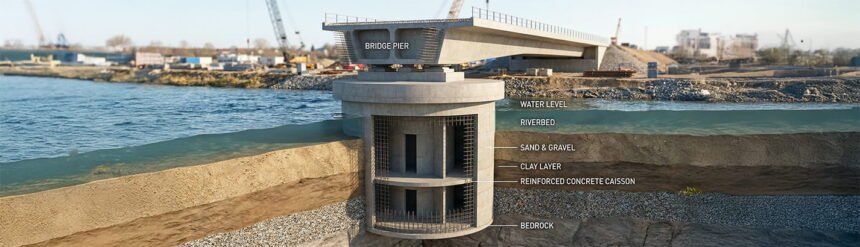
Caisson foundations are specialized structures designed to support heavy loads, often used in challenging soil conditions. They consist of large cylindrical shafts that extend deep into the ground, reaching stable soil or bedrock.
Typically constructed from concrete or steel, caissons can be either open at the bottom or closed. This design allows them to provide significant stability and load-bearing capacity for tall buildings, bridges, and other massive constructions.
The installation process involves drilling a hole into the earth and filling it with concrete while removing any water present. As they settle into place, these robust foundations ensure that weight is evenly distributed across their base.
Often employed in waterfront construction and regions vulnerable to shifting soils, caisson foundations offer an effective solution where traditional methods might fail. Their unique structure makes them ideal for creating lasting stability under demanding conditions.
Different Types of Caisson Foundations
Caisson foundations come in various types, each designed for specific soil conditions and load requirements. The most common are open caissons, which consist of a hollow cylinder that is excavated to the desired depth.
Then there are closed caissons. These resemble open caissons but have a solid bottom. This design helps prevent debris from entering during construction, making them ideal for underwater applications.
Another type is friction caissons, utilized when bedrock isn’t accessible. They rely on skin friction between the sides of the caisson and surrounding soil to support loads effectively.
There’s pneumatic caissons, which use air pressure to aid excavation underwater. Specially designed chambers allow workers to operate safely below water level while maintaining structural integrity.
Each type has unique advantages tailored for different projects and environmental conditions, playing a crucial role in achieving stability across diverse building landscapes.
Advantages and Disadvantages of Caisson Foundations
Caisson foundations offer several advantages that make them a popular choice in construction. Their deep-set design allows for exceptional stability, especially in areas with poor soil conditions. This depth helps distribute loads effectively, reducing settlement risks.
They are also adaptable to various environments, including waterfronts and regions prone to flooding. Caissons can penetrate through challenging materials like rock or dense clay, making them suitable for diverse projects.
However, there are disadvantages to consider. The installation process can be complex and time-consuming, often requiring specialized equipment and skilled labor. This complexity may drive up costs compared to traditional foundation types.
Additionally, caissons may face issues related to groundwater management during construction. Poor drainage can lead to delays or structural problems down the line if not managed properly. Understanding these pros and cons is crucial when selecting the right foundation type for your project.
Factors to Consider when Choosing a Caisson Foundation
Choosing the right caisson foundation is crucial for any construction project. Several factors come into play, ensuring that the structure remains stable and secure.
Soil conditions are paramount. Conducting a thorough soil analysis helps determine its load-bearing capacity and composition. Different soils react differently under pressure, influencing your choice of caisson type.
Next, consider environmental factors. Groundwater levels can affect the installation process and long-term stability. Understanding these aspects protects against future complications.
Project size also matters. Larger buildings may require deeper or more robust caissons to distribute weight effectively.
Budget constraints shouldn’t be overlooked. While high-quality materials and expert labor might increase upfront costs, they often lead to savings by reducing maintenance needs over time.
Balancing these elements will guide you toward selecting the most suitable caisson foundation for your building project.
Construction Process of Caisson Foundations
The construction of caisson foundations begins with site preparation. This involves clearing the area and assessing soil conditions. Proper evaluation ensures that the right type of caisson is chosen for stability.
Next, excavation takes place to create a deep hole where the caisson will be installed. Depending on design requirements, these holes can vary widely in diameter and depth.
Once excavated, casing material is often placed to prevent collapse during installation. Concrete or steel casings serve as protective barriers while allowing workers inside to manage reinforcing bars.
After securing the casing, concrete is poured into the hole. This process may require specialized equipment to ensure proper placement without air pockets or voids.
Once cured, additional structural elements are integrated above ground level. These provide essential support for the building’s superstructure and help distribute weight evenly across the foundation.
Case Studies of Successful Buildings with Caisson Foundations
The Burj Khalifa in Dubai stands as a testament to the power of caisson foundations. This architectural marvel reaches heights that seemed impossible, thanks in part to its robust foundation system designed for extreme stability.
Another notable example is the Taipei 101 in Taiwan, which also relies on caissons. It successfully withstands typhoons and earthquakes due to its solid anchoring deep within the ground.
Closer to home, New York’s One World Trade Center showcases how these foundations can support massive skyscrapers while ensuring safety and resilience against environmental challenges.
These case studies highlight not just the versatility but also the necessity of well-designed caisson foundations in modern construction. They enable builders to push boundaries while maintaining structural integrity across diverse landscapes.
Conclusion: Importance of Properly Designed and Constructed Caisson Foundations for Building Stability
Properly designed and constructed caisson foundations play a critical role in ensuring the stability of buildings. Their unique ability to reach deep into the ground allows them to provide support in challenging soil conditions, making them essential for heavy structures or those built near water bodies.
When executed correctly, caissons can significantly reduce settling and shifting over time. This is crucial for maintaining the integrity of any building. Structural engineers must consider various factors during design—soil type, load requirements, environmental conditions—all influencing how well these foundations perform.
Moreover, ongoing advancements in construction technology have further enhanced the reliability of caisson foundations. With modern techniques and materials at their disposal, builders can create stronger connections between structures and their foundational elements.
Investing time and resources into proper foundation engineering leads to safer buildings that stand firm against natural forces. The choice of using caisson foundations should always be backed by thorough analysis and expert consultation to ensure lasting stability for years to come.