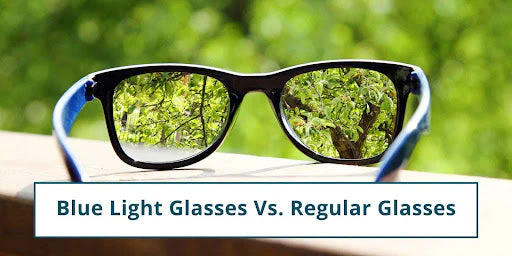
It’s 2:30 in the afternoon, and you’re staring at a spreadsheet that stopped making sense an hour ago. Your eyes feel gritty, a dull headache pulses behind your temples, and every Slack notification pulls you further from the task at hand. Sound familiar? For millions of office workers spending eight or more hours daily in front of screens, this scenario isn’t occasional—it’s the default. In the search for sharper concentration and fewer end-of-day migraines, two tools frequently enter the conversation: blue light glasses, designed to filter potentially disruptive wavelengths emitted by digital screens, and ordinary corrective glasses, engineered to bring the visual world into crisp focus. Both promise a path to better productivity, but through fundamentally different mechanisms. Adding complexity to the choice, a newer category of smart glasses now blends vision correction with integrated technology like audio streaming and voice assistants, claiming to reduce the very distractions that fracture our attention. So which option actually delivers measurable improvements in focus for working professionals? This article offers a comparative analysis of blue light glasses, ordinary corrective lenses, and emerging hybrid solutions—examining the science, weighing the evidence, and providing a practical framework to help you choose the right eyewear for sustained, deep work.
Understanding the Science: How Blue Light Affects Focus
Blue light refers to high-energy visible light with wavelengths between approximately 380 and 500 nanometers—the shortest, most energetic portion of the visible spectrum. While sunlight remains the dominant natural source, modern professionals encounter concentrated doses from LED monitors, laptop screens, smartphones, and overhead fluorescent lighting throughout the workday. This constant exposure has raised legitimate questions about its cumulative effect on both eye health and cognitive performance.
The biological impact operates through several interconnected pathways. Most well-documented is blue light’s influence on melatonin production. Specialized photoreceptor cells in the retina, called intrinsically photosensitive retinal ganglion cells, respond strongly to blue wavelengths and signal the brain’s suprachiasmatic nucleus to suppress melatonin secretion. During evening hours, this suppression delays sleep onset and disrupts circadian rhythms, leading to poor sleep quality that compounds into daytime fatigue, sluggish cognition, and diminished attention span the following day. Even during work hours, some researchers hypothesize that prolonged blue light exposure contributes to a state of low-grade visual stress that taxes the brain’s attentional resources.
The more immediate concern for focus, however, centers on digital eye strain—clinically termed computer vision syndrome. Symptoms include dry or gritty eyes, tension headaches concentrated around the forehead and temples, blurred vision at intermediate distances, and difficulty shifting focus between screen and printed materials. When your visual system is fighting discomfort, cognitive bandwidth narrows. Studies on workplace productivity consistently show that physical discomfort, even mild forms, degrades sustained attention and increases task-switching behavior as workers unconsciously seek relief.
Blue light glasses propose a straightforward intervention: specialized coatings or lens tints that absorb or reflect a percentage of blue wavelengths before they reach the retina. The intended result is reduced photoreceptor stimulation, less visual fatigue over extended screen sessions, and preservation of natural melatonin cycles when working into the evening. By alleviating the physiological stressors that fragment attention, these lenses aim to create conditions more conducive to deep, uninterrupted work—though the degree to which they succeed remains a subject of active scientific debate.
Blue Light Glasses vs. Ordinary Glasses: A Detailed Comparison
Purpose and Primary Function
The fundamental distinction between these two categories of eyewear lies in what each is designed to address. Ordinary glasses—whether prescription lenses for myopia, hyperopia, or astigmatism, or even non-prescription reading glasses—exist to correct a physiological limitation. They reshape how light enters the eye so that images land precisely on the retina, producing sharp vision at the distances where you work. Blue light glasses, by contrast, target an environmental variable rather than a biological one. Their coatings or embedded pigments selectively reduce the intensity of specific wavelengths reaching your eyes, attempting to modify the quality of incoming light rather than compensate for how your eye processes it. One fixes the hardware; the other adjusts the input signal.
Impact on Visual Clarity and Comfort
When an individual with uncorrected refractive error puts on properly prescribed lenses, the effect on focus is immediate and unambiguous. Text that was previously blurred snaps into legibility, reducing the constant micro-adjustments the ciliary muscles perform to compensate for optical imperfection. This relief alone removes a significant cognitive drain—your brain no longer allocates resources to deciphering partially resolved visual information. Blue light glasses operate on a subtler axis. They don’t sharpen blurry text, but proponents argue they reduce the harsh glare and high-contrast flicker characteristic of LED-backlit displays. For some users, this translates to less squinting, fewer tension headaches by late afternoon, and a subjective sense that extended screen sessions feel less punishing. The comfort benefit is indirect: by softening visual irritants, blue light lenses may extend the window during which comfortable, sustained reading remains possible before fatigue sets in.
Evidence for Focus Enhancement
The evidence base for ordinary corrective lenses is robust and largely uncontested. Multiple occupational health studies confirm that workers with uncorrected or under-corrected vision experience measurably higher error rates, slower reading speeds, and more frequent breaks—all proxies for degraded focus. Correcting the underlying refractive issue produces reliable, repeatable gains in task accuracy and sustained attention. The picture for blue light glasses is considerably more nuanced. A 2021 Cochrane systematic review found insufficient evidence that blue light filtering lenses reduce eye strain symptoms compared to standard clear lenses over short-term use. Some randomized trials report modest subjective improvements in comfort, while others detect no significant difference in objective measures like critical flicker fusion frequency or reading speed. Where blue light glasses show more consistent benefit is in evening use scenarios, where filtering short wavelengths helps preserve melatonin onset and subsequent sleep quality—benefits that circle back to next-day cognitive sharpness rather than producing an immediate focus boost during wear. The honest summary: ordinary glasses improve focus by solving a definable optical problem with strong supporting evidence, while blue light glasses offer a plausible but incompletely proven comfort intervention whose focus benefits may be most meaningful for heavy evening screen users or individuals particularly sensitive to light-induced strain.
The Rise of Smart Glasses: A Hybrid Solution?
While the debate between blue light and ordinary lenses centers on passive optical solutions, a third category has emerged that reframes the question entirely. Smart glasses represent a technological convergence—combining traditional lens functions with integrated digital tools designed to reduce the very device-switching behaviors that shatter concentration throughout the workday. Rather than simply modifying what your eyes see, these frames actively manage how information reaches you.
The productivity case rests on several embedded capabilities. Bluetooth audio built into the temples allows professionals to receive spoken notifications, listen to meeting notes, or stream focus-enhancing music without inserting earbuds or reaching for a phone—maintaining environmental awareness while staying connected. Hands-free calling means a ringing phone no longer demands you break eye contact with a document or physically pick up a device; you answer with a tap or voice command and continue working. For professionals operating across languages or collaborating with international teams, real-time translation features can process spoken input and deliver translated audio directly, eliminating the friction of switching to a translation app mid-conversation.
These features target a specific productivity enemy: context switching. Each time you grab your phone to answer a call or check an audio message, research suggests it takes an average of twenty-three minutes to fully re-engage with the interrupted task. Smart glasses aim to collapse that transition by keeping interactions within your peripheral workflow rather than demanding a full attentional shift. The current market has matured enough that several models now offer prescription lens compatibility and optional blue light filtering coatings, creating a genuinely multi-functional tool. A single frame can correct your vision, soften harsh screen wavelengths, and serve as a communication hub—addressing physiological, environmental, and behavioral barriers to deep work simultaneously.
Addressing Professional Needs: Choosing Your Focus Tool
Solution for Need: Effective Communication Tools
For professionals whose workdays involve frequent calls, cross-team coordination, or international collaboration, the constant toggling between devices creates a measurable productivity tax. Smart glasses equipped with hands-free calling allow you to answer or initiate conversations with a simple tap on the temple or a voice command, keeping your eyes on the document, design file, or code you were reviewing when the call came in. The physical act of picking up a phone, unlocking it, and navigating to the call interface may seem trivial, but multiplied across fifteen or twenty daily interactions, it fragments deep work into shallow bursts. Real-time translation capabilities push this further for globally distributed teams. Instead of pausing a conversation to open a translation app or waiting for a colleague to rephrase in a shared language, translated audio delivered directly through the frame keeps dialogue flowing naturally. The result is fewer interruptions to your cognitive state during collaborative work—communication becomes something that happens alongside your primary task rather than displacing it entirely.
Solution for Need: Hands-Free Productivity Solutions
Bluetooth audio integration addresses a different but equally common friction point. Professionals who rely on podcasts, dictated notes, ambient soundscapes, or instructional audio throughout their day typically depend on earbuds or over-ear headphones—both of which create isolation from the physical environment. Missing a colleague’s question, failing to hear a fire alarm clearly, or simply feeling disconnected from office energy are real trade-offs. Smart glasses with open-ear directional speakers deliver personal audio without sealing off your ears, maintaining spatial awareness while providing the auditory input you need. For warehouse managers following pick-list instructions, surgeons listening to patient notes before a procedure, or architects reviewing voice memos while sketching, the hands-free element eliminates the need to stop, find a device, and press play. Physical clutter decreases too—no tangled cables, no charging case to track, no earbuds falling out during movement. The workflow stays continuous because the tool stays on your face, ready without requiring any secondary action.
Decision Framework: Matching Eyewear to Your Workday
Choosing the right eyewear for sustained focus requires honest assessment rather than impulse purchasing. A structured approach ensures you address root causes rather than layering solutions over undiagnosed problems.
Start with Step 1: get a comprehensive eye exam. Many professionals operate with subtle refractive errors they’ve never corrected—slight astigmatism or early presbyopia that forces unconscious squinting and accelerates fatigue. No amount of blue light filtering or smart technology compensates for an optical problem that proper lenses solve immediately. Step 2 involves analyzing your actual screen time patterns and symptoms. Track for one week when headaches appear, when your eyes feel driest, and whether symptoms worsen in the evening. If discomfort clusters around late-afternoon or evening sessions, blue light filtering may offer meaningful relief by preserving your circadian rhythm. If strain hits early regardless of time, the issue likely points back to uncorrected vision or poor ergonomics. Step 3 asks you to honestly evaluate how often device-switching interrupts your concentration. If you answer more than ten calls daily, regularly listen to audio content, or collaborate across languages, integrated smart features deliver functional value beyond what passive lenses provide. Step 4 is where hybrid thinking pays off—many current frames accept prescription lenses with blue light coatings built in, and several smart glasses now support corrective inserts, meaning you don’t have to choose one benefit at the exclusion of others. Brands like ohosunshine offer versatile eyewear options that combine multiple lens technologies, making it easier to find a single frame that addresses several needs at once. Finally, Step 5 reminds you that any eyewear only works if you actually wear it consistently. Prioritize lightweight construction, comfortable nose pads, frames that suit your face shape, and lens quality from reputable optical manufacturers. The most feature-rich glasses in the world collect dust on a desk if they pinch behind your ears after thirty minutes.
Building Your Layered Eyewear Strategy for Sustained Focus
The comparison ultimately reveals complementary tools rather than competing ones. Ordinary corrective glasses address a foundational requirement—sharp vision—without which no amount of environmental optimization produces meaningful focus gains. The evidence here is clear and well-established: if you need refractive correction, nothing substitutes for properly prescribed lenses. Blue light glasses operate one layer above, attempting to improve the conditions under which your corrected eyes work by softening the harshness of prolonged screen exposure. Their benefits appear most credible for evening screen users and individuals with documented light sensitivity, though the broader scientific consensus remains unsettled regarding direct concentration improvements during daytime use.
Smart glasses introduce a behavioral dimension that neither passive option addresses—reducing the device-switching and context-shifting habits that silently erode deep work throughout a professional’s day. For communication-heavy roles, the integrated features represent genuine workflow consolidation rather than a gimmick. The optimal choice, then, isn’t a single answer but a layered one tailored to your specific barriers. Start with a comprehensive eye exam to establish your optical baseline. From there, add blue light filtering if your symptoms and screen patterns suggest wavelength sensitivity, and consider smart features if device fragmentation consistently breaks your concentration. The goal isn’t accumulating eyewear—it’s identifying and removing the precise obstacles standing between you and the sustained, focused work that moves your career forward.