Your CV has one job: to get you an interview. Recruiters often skim a CV quickly, so it needs to be clear, honest and easy to read. This guide explains how to write a CV in the UK step by step, from layout to the final proofread, with no jargon and no gimmicks.
What a UK CV Usually Includes
Most UK CVs follow a familiar order, which helps busy readers find what they need. A typical structure looks like this:
- Contact details: your name, phone number, email address and general location, such as the town or city.
- Personal profile: two to four lines summarising who you are and what you offer.
- Work experience: your roles in reverse order, with the most recent first.
- Education and training: qualifications and relevant courses.
- Skills: practical and technical abilities relevant to the job.
- Interests (optional): only if they add something useful.
You do not normally need to include your date of birth, marital status or a photo. Always follow the instructions in the specific job advert.

Choose a Simple Layout
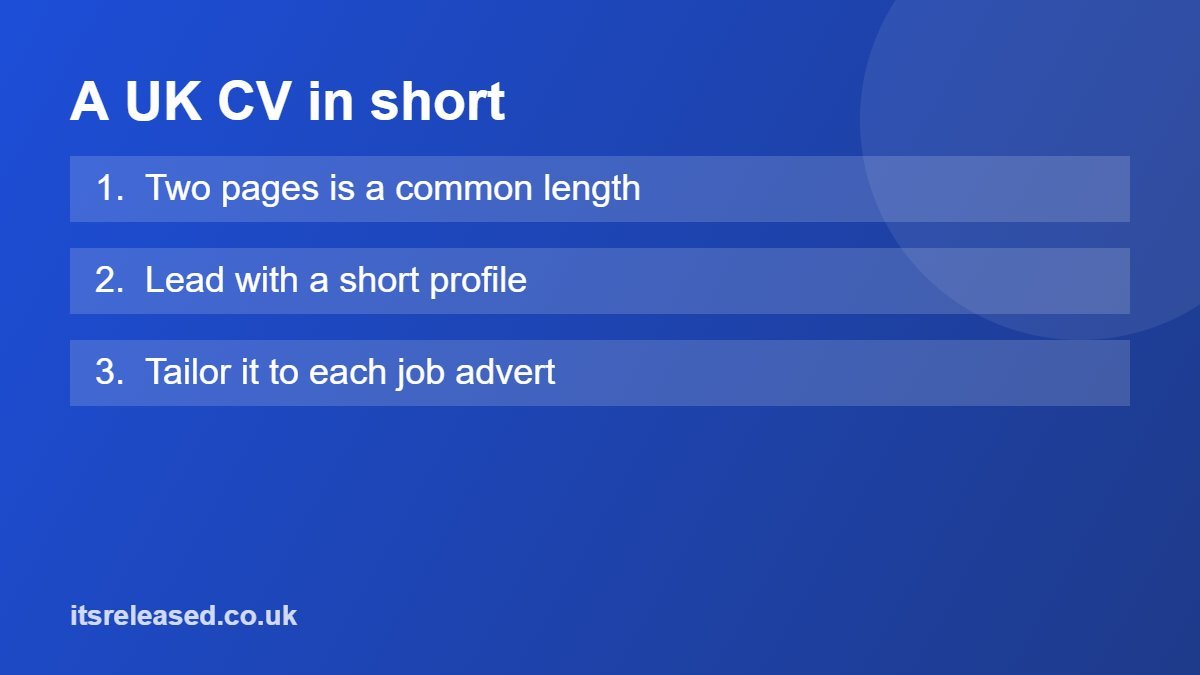
Plain and tidy beats creative and cluttered. Use one readable font, clear headings and consistent spacing. Avoid tables, text boxes and graphics if you can, because some employers use software to read CVs, and complicated formatting can confuse it. Two pages is a common target, and many early-career applicants manage on one.
Write a Strong Personal Profile
The profile sits at the top and works like a short introduction. It should say what you do, what you are good at and what you are looking for. For example: “Reliable customer service assistant with experience in busy retail environments, strong communication skills and a calm approach to problem solving, seeking an office-based support role.” Keep it factual and avoid empty phrases such as “hard-working team player” unless you back them up elsewhere.
Make Your Work Experience Count
For each job, list the job title, employer, dates and a few bullet points. Focus on what you achieved rather than only what you were asked to do. Where you can, use real numbers, but only ones you can honestly stand behind.
Use Action Words
Start bullet points with verbs such as managed, organised, trained, resolved or improved. Compare “Responsible for the till” with “Handled daily cash and card payments accurately and trained two new colleagues.” The second tells the reader far more.
More in Business
Deal With Gaps Honestly
If you have a gap in your work history, a short, truthful line is usually enough, for example “Career break to care for a family member” or “Full-time study.” Recruiters see gaps often, and honesty usually works better than trying to hide them.
Tailor Your CV to Each Job
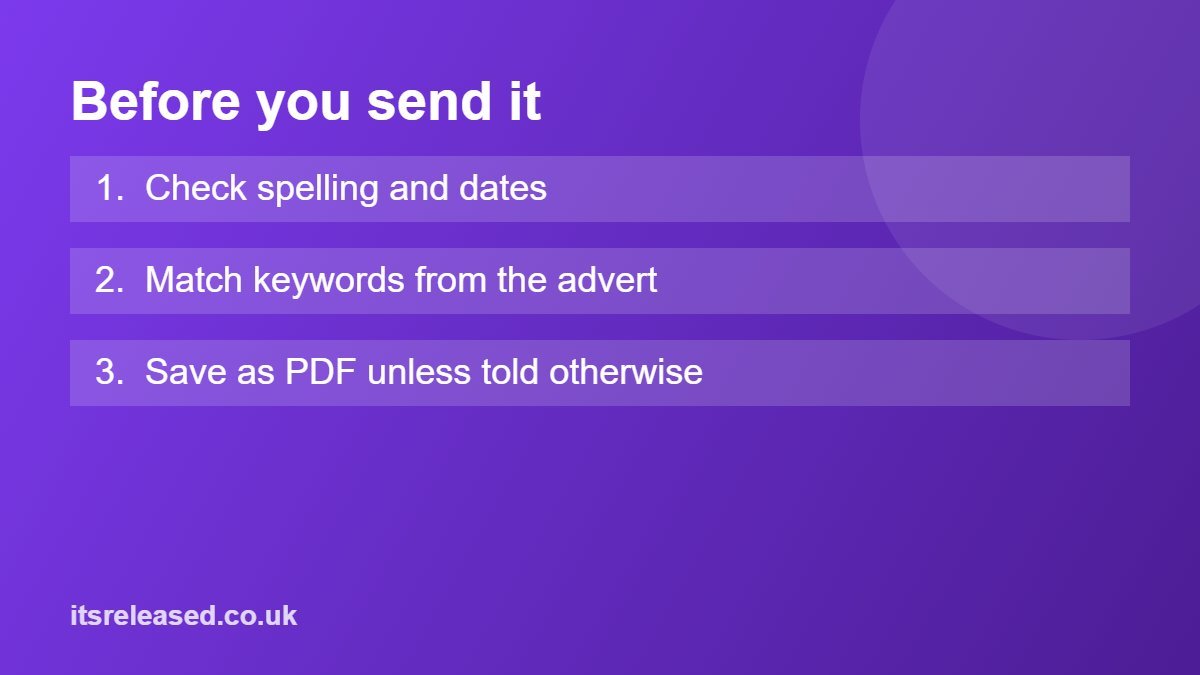
A generic CV is easy to spot. Read the job advert carefully and note the skills and experience it asks for. Then adjust your profile and bullet points to show those same strengths, using similar wording where it is true. This also helps if the employer uses software to screen applications. Tailoring takes a little time, but it is often the biggest improvement you can make.
Include Relevant Skills and Training
List skills that matter to the role, such as using spreadsheets, speaking another language or holding a driving licence. Add short courses and certificates where they support your application. If you are working on your own projects, such as a small business or a blog, they can show initiative. Our guide to starting an online business from home and the simple business plan guide may give you ideas on how to describe self-employed work.
If you have worked as a freelancer, you can also mention how you managed clients and billing, and the UK freelancer invoice guide covers part of that process.
Check, Check and Check Again
Spelling mistakes and wrong dates can undo good experience. Read your CV aloud, ask a friend to read it, and check that every date and job title matches your records. Use a professional email address, and make sure your phone voicemail sounds sensible.
Choosing a File Format
Unless the employer asks for something else, save your CV as a PDF so the layout stays the same on every device. Give it a clear file name such as “Firstname-Lastname-CV”. Some online application forms ask for a Word document, so follow whatever they request.
Common CV Mistakes
- Sending the same CV to every employer without changes.
- Writing long paragraphs instead of short bullet points.
- Leaving out dates or putting roles in the wrong order.
- Using an unprofessional email address.
- Exaggerating skills or experience, which may be checked at interview or later.
Frequently Asked Questions
How long should a UK CV be?
Two pages is the usual guideline, although early-career applicants often fit everything on one. Quality and relevance matter more than hitting an exact length.
Should I include a photo on my CV?
In the UK it is not normally expected, and many employers prefer CVs without one. Follow the instructions in the job advert if it says otherwise.
Do I need a cover letter as well?
Often yes, unless the advert says not to. A short, specific letter lets you explain why you want this role in a way a CV cannot.
Is a CV the same as a resume?
In the UK the word CV is the standard term for the document you send with a job application. Other countries use resume for a similar document, though formats can differ.
Final Thoughts
A good CV is clear, accurate and focused on the job in front of you. Start with a solid base version, then adapt it for each application. Keep it updated while you are still in work so that you are ready when the right opportunity appears.