Cold mornings, wet roads and short days can make driving in the UK more demanding between November and March. A little preparation can reduce the risk of a breakdown and make journeys safer. This pre-winter checklist covers the basics most drivers can check themselves, with notes on when to ask a garage for help.
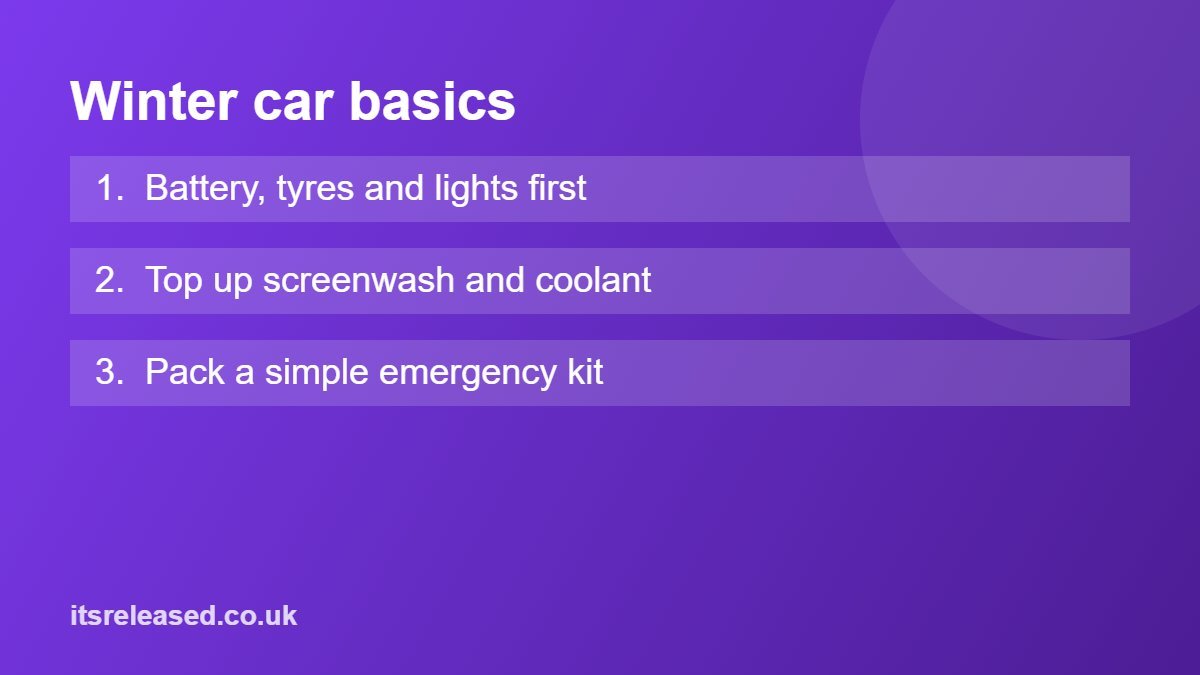
Check Your Battery
Cold weather puts extra strain on a car battery, and battery problems are among the most common reasons for winter breakdowns. If your battery is several years old, or the engine turns over slowly when you start the car, consider having it tested. Many garages and tyre centres can do a quick check. Short trips with lots of lights, heating and wipers on can also stop a battery from charging fully, so a longer drive occasionally can help.
Look at Your Tyres
Tyres are the only part of the car in contact with the road, so they matter a lot in rain, ice and mud.

- Tread depth: the legal minimum for most cars is 1.6mm, but many experts suggest replacing tyres sooner for better wet grip.
- Pressure: check when tyres are cold and use the figures in your handbook or on the door frame.
- Condition: look for cuts, bulges or uneven wear, and get them checked.
Some drivers choose winter or all-season tyres. They can help in cold temperatures, but they are not essential for everyone, so think about your usual journeys and budget.
Test All Your Lights
With darker evenings, working lights are essential, both so you can see and so others can see you. Check headlights, brake lights, indicators and fog lights. Ask a friend to stand behind the car while you press the brake pedal, or reverse towards a reflective surface. Clean the lenses, as dirt can reduce brightness, and replace faulty bulbs as soon as possible.
Keep Your Windscreen Clear
Visibility is vital. Check your wiper blades for splitting or smearing, and replace them if they leave streaks. Top up screenwash with a proper winter mix that does not freeze, because plain water can freeze in the system. Keep the inside of the glass clean too, since grime can cause glare from low winter sun and oncoming headlights.
Check Fluids
Check the engine oil and coolant levels, following your handbook. Coolant, often called antifreeze, helps stop the engine from freezing. If levels are low, top up with the right type, or ask a garage if you are unsure. Never open a hot radiator cap.
More in Blogs
Make a Winter Emergency Kit
If you break down in cold weather, you could be waiting for some time. A small kit kept in the boot can make a big difference:
- A fully charged phone and a car charger or power bank.
- A torch with spare batteries.
- A warm blanket, gloves and a hat.
- A scraper and de-icer.
- A high-visibility jacket and a warning triangle.
- Water and a snack.
- A small shovel or old mat for extra grip if you get stuck.
Plan Longer Journeys
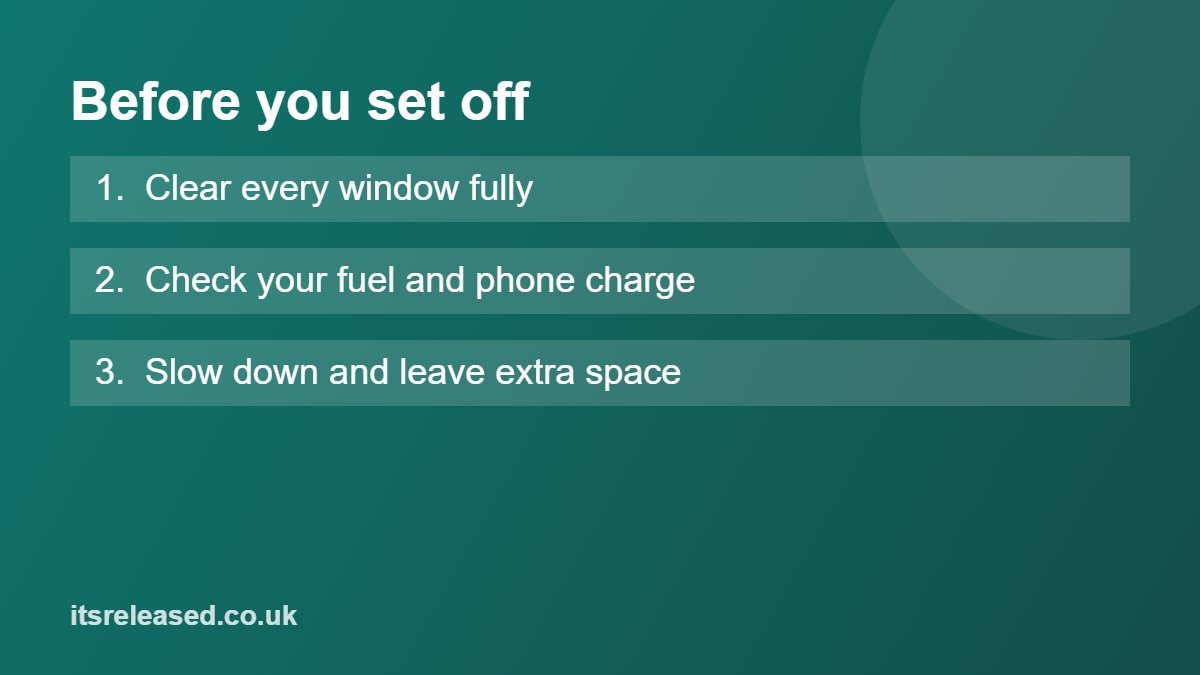
Before setting off, check weather and traffic updates and let someone know your route and expected arrival time. Keep your fuel tank at least a quarter full in case of delays. If conditions are very bad and the trip is not essential, consider postponing it.
Drive Smoothly in Wet and Icy Conditions
Stopping distances can be much longer on wet or icy roads, so leave extra space between you and the vehicle in front. Use smooth movements for braking, steering and accelerating. Drive in a higher gear when starting on slippery surfaces, and slow down well before bends. The Highway Code gives official guidance, so it is worth rereading before winter.
Do Not Forget the Rest of Your Life Admin
Check that your MOT, tax and insurance are up to date, and keep breakdown cover details in your phone. If you work from home and drive less, our guide to work from home productivity habits may help you plan your week, while the Android storage guide can free up space so that your navigation apps and offline maps work smoothly. If you plan to book travel for the festive season, our Christmas budget planner includes a travel category worth setting aside money for.
Frequently Asked Questions
When should I do my winter car checks?
Ideally in autumn, before the first frosts arrive. That leaves time to book repairs if you find a problem.
What is the legal tyre tread depth in the UK?
The legal minimum for most cars is 1.6mm across the central three-quarters of the tyre. Many experts suggest changing tyres earlier for better grip in wet and cold conditions.
Is it safe to pour hot water on a frozen windscreen?
It is best avoided because sudden temperature changes can crack glass. Use a proper de-icer and a scraper instead.
Should I warm up my car by leaving it running?
Leaving a car unattended with the engine running is risky, as it may be stolen, and it can invalidate insurance in some cases. Defrost and clear it fully while you are with it.
Final Thoughts
You do not need to be a mechanic to prepare for winter. A short check of your battery, tyres, lights, screenwash and emergency kit goes a long way. If anything looks wrong, speak to a qualified garage. This article is general guidance, so always follow your vehicle handbook.