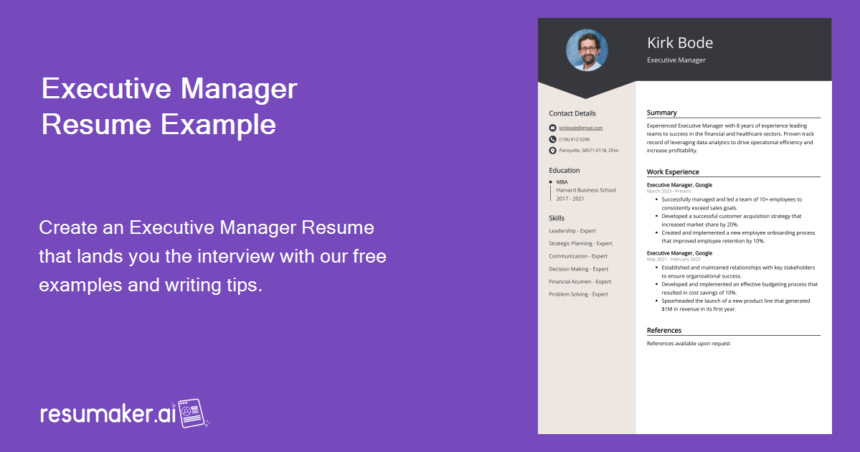
In today’s competitive business environment, advancing to the highest levels of leadership requires more than a strong track record—it requires the ability to communicate your value clearly and strategically. One of the most powerful tools for achieving this is a well-crafted executive management resume. Beyond simply listing positions and responsibilities, it demonstrates leadership impact, strategic thinking, and measurable results.
By studying effective executive resume examples, leaders can identify the strategies that distinguish top performers from other candidates and craft a document that positions them for success.
Why an Executive Management Resume Matters
An executive management resume is fundamentally different from a standard professional resume. While most resumes focus on roles, responsibilities, and skills, an executive management resume highlights strategic achievements, measurable outcomes, and leadership impact.
Organizations are looking for leaders who can drive growth, manage complex operations, and influence key stakeholders. A high-performing executive management resume communicates exactly that, making it an essential tool for securing interviews for senior leadership positions.
Learning From Executive Resume Examples
Reviewing executive resume examples can provide valuable insight into what works at the senior leadership level. Top examples typically share several common characteristics:
- Strategic Branding: Leaders open with a concise summary that defines their leadership identity, emphasizing vision, scope, and key strengths.
- Results-Oriented Content: Each role is described in terms of measurable accomplishments, rather than day-to-day responsibilities.
- Use of Metrics: Numbers are included wherever possible to demonstrate impact, from revenue growth to operational efficiency improvements.
- Cohesive Career Narrative: Roles are presented in a way that tells a story of increasing responsibility and influence.
By analyzing these patterns, executives can better understand how to position themselves and what recruiters are looking for in high-level candidates.
Executive Branding: Making Your Leadership Identity Clear
A critical component of an effective executive management resume is executive branding. This is the section where you define your leadership style, highlight your core competencies, and set the stage for the rest of the resume.
For example, instead of opening with a generic statement like “Experienced executive seeking leadership opportunities,” a strong executive management resume might start with:
- “Results-driven executive with a proven track record of leading cross-functional teams to drive growth, operational excellence, and organizational transformation.”
This immediately communicates value and credibility, helping decision-makers understand what makes you a top candidate.
Results Over Responsibilities
At the executive level, achievements matter far more than tasks. Top leaders focus on outcomes and strategic contributions rather than routine responsibilities.
A strong executive management resume uses action-oriented language to describe achievements, such as:
- “Spearheaded a company-wide operational overhaul that increased productivity by 30% and reduced costs by $5M annually.”
- “Led a cross-functional team to expand into international markets, generating a 25% increase in revenue within 18 months.”
Such statements demonstrate measurable impact and provide evidence of leadership effectiveness, setting you apart from other candidates.
Metrics and Measurable Achievements
Metrics are a hallmark of effective executive resumes. Numbers provide clarity and context, allowing decision-makers to quickly assess the scale of your contributions.
Some examples of metrics that can enhance an executive management resume include:
- Revenue growth percentages
- Cost reduction figures
- Market expansion results
- Budget responsibility
- Team size and leadership scope
By incorporating these metrics, your resume becomes more compelling and substantiates your leadership claims.
Strategic Language and Executive Positioning
The language used in an executive management resume should reflect enterprise-level thinking. Top executives avoid operational jargon and instead emphasize strategy, influence, and transformation.
Keywords and phrases often seen in strong executive resume examples include:
- Organizational transformation
- Change management
- Strategic planning and execution
- Governance and compliance
- Stakeholder engagement
This type of language signals to boards, recruiters, and hiring managers that you operate at a strategic level and can contribute to long-term organizational success.
Telling a Cohesive Career Story
An effective executive management resume presents a clear career narrative. Each role should build on the previous one, demonstrating professional growth, expanding responsibility, and increasing influence.
For example, moving from a divisional manager to a regional vice president to a global operations executive shows not only career progression but also readiness for larger, more complex challenges. By reviewing executive resume examples, you can see how top leaders structure their career story to make their trajectory clear and compelling.
Highlighting Transformational Leadership
Executives are expected to drive change, not just maintain status quo. Your resume should emphasize transformational achievements, such as:
- Leading mergers and acquisitions
- Implementing digital transformations
- Entering new markets
- Building high-performing leadership teams
Such accomplishments demonstrate your ability to effect meaningful organizational change, which is highly valued in senior leadership roles.
Professional Presentation and Executive Presence
A strong executive management resume is not only content-rich but also visually polished. Clean formatting, consistent section headings, and balanced spacing make it easier for decision-makers to quickly digest information.
A professional appearance enhances executive presence and demonstrates attention to detail, reinforcing the image of a capable and strategic leader.
Leadership Beyond the Organization
Many top executives include leadership experience beyond their primary role. This can include:
- Board memberships or advisory roles
- Industry engagement
- Speaking engagements
- Awards or recognition
These elements highlight influence, credibility, and thought leadership, adding depth to your executive profile.
Balancing Keywords and Readability
Modern executive management resumes must also be optimized for digital searches. Integrating relevant keywords naturally into achievement-focused statements ensures that your resume is discoverable without compromising readability or professionalism.
Conclusion
An effective executive management resume is far more than a record of positions held; it is a strategic document that demonstrates leadership impact, results, and influence. By studying executive resume examples, leaders can understand how to craft a document that elevates their professional profile and positions them for competitive opportunities.
Focusing on results, measurable achievements, cohesive storytelling, and strategic language ensures that your resume stands out. For executives seeking to advance their careers, refining the executive management resume is not just advisable—it is essential for demonstrating readiness to lead at the highest level.