Home gyms have surged in popularity over the past few years, and it’s easy to see why. Between rising gym membership costs, packed fitness centers, and the sheer convenience of working out on your own schedule, more people than ever are carving out dedicated fitness spaces at home. But two obstacles consistently stand in the way: limited space and a tight budget.
That’s where expandable systems come in. Modular gym frames and foldable equipment designs have transformed what’s possible in a spare bedroom, garage, or basement. Instead of committing to a fixed, expensive setup that may not suit your needs six months from now, these flexible systems grow with you — adding components as your fitness goals evolve and your budget allows.
This article walks you through everything you need to know to build a smart, scalable home gym. You’ll learn what modular gym frames are and why they’re worth considering, how to plan your setup around small spaces, a step-by-step guide to expanding your system, affordable options that won’t drain your wallet, and how to maintain your equipment for the long haul. Whether you’re just starting out or looking to upgrade an existing setup, these actionable tips will help you build a home gym that truly works for you.
Understanding Modular Gym Frames and Expandable Systems
What Are Modular Gym Frames?
Modular gym frames are structural systems built from interchangeable components — uprights, crossbars, and attachment points — that can be assembled, reconfigured, or expanded without replacing the entire setup. Think of them as the skeleton of your home gym. A basic frame might start as a simple squat rack, then accept pull-up bars, cable attachments, dip handles, and landmine units over time. The components bolt or pin together using standardized connections, meaning a new attachment purchased months later slots right into the frame you already own.
Advantages of Expandable Home Gym Systems
The most immediate advantage is space efficiency. Rather than crowding a room with several standalone machines, a single modular frame consolidates multiple functions into one footprint. Financially, the phased approach makes a real difference — you invest in a solid core unit first, then add attachments as your budget and goals develop, avoiding a large upfront purchase that may include features you don’t yet need.
Expandable systems also adapt to shifting fitness priorities. Someone focused on strength training today might add cable pulley attachments later for functional conditioning. If you move to a larger space, the same frame scales up with additional modules rather than requiring a full replacement. Over a three-to-five year horizon, this approach consistently outperforms buying fixed, single-purpose equipment in both value and versatility — making modular gym frames a genuinely smart long-term investment for serious home gym builders.
Planning Your Home Gym Setup for Small Spaces
Before purchasing a single piece of equipment, take stock of what you’re actually working with. A well-planned small-space gym outperforms a poorly planned large one every time. Start by measuring your available floor area, ceiling height, and doorway width — these three dimensions will immediately rule out certain equipment and confirm others. Ceiling height matters more than most people realize; overhead pressing and pull-up bars require at least eight feet of clearance, and some modular frame systems need more. Once you have your measurements, sketch a rough floor plan and mark where natural light, ventilation, and power outlets are located. These factors affect where you position equipment and how comfortable your workouts will feel over time.
Assessing Space and Budget
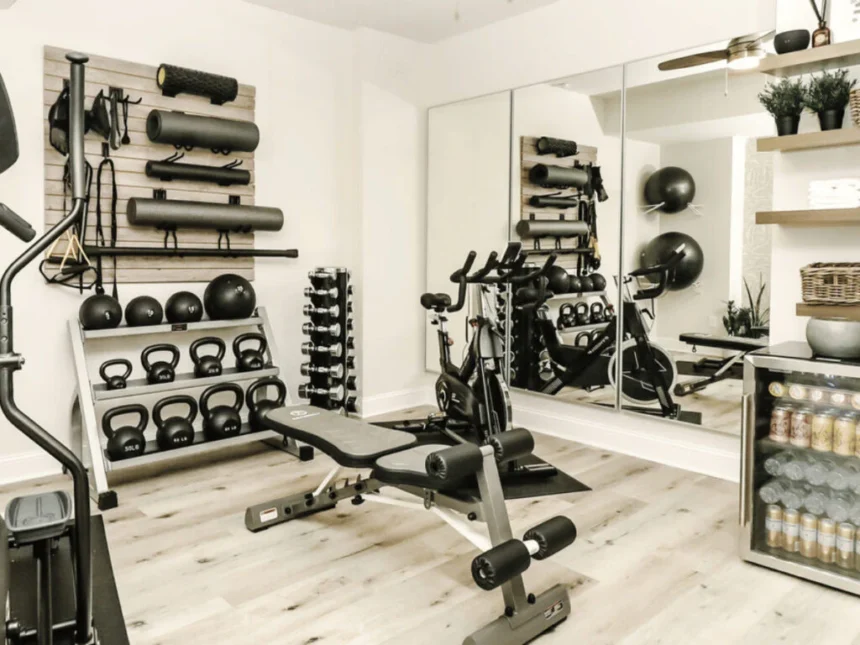
Set a realistic budget before browsing equipment, and divide it into two categories: your initial core investment and a future expansion fund. A common mistake is spending everything upfront on a fixed setup, leaving no room to add components later. Instead, allocate roughly 60 to 70 percent of your budget to a quality modular frame and the remaining portion to accessories and foldable additions. If storage is limited, factor in wall-mounted hooks or ceiling storage for items like resistance bands, kettlebells, and folded benches. Identifying these constraints early prevents costly impulse purchases that don’t fit your space or workflow.
Choosing Foldable Design Equipment
Foldable equipment has improved dramatically in recent years, and the best options sacrifice nothing in terms of stability or load capacity. A foldable weight bench is typically the first smart addition — it provides a sturdy surface for pressing and incline work, then tucks flat against a wall when not in use. Foldable squat racks and wall-mounted pull-up stations follow the same principle, folding flush when sessions end. When evaluating foldable gear, prioritize units with locking mechanisms, weight-rated frames, and mounting hardware rated for your wall type. These pieces integrate seamlessly alongside a modular frame, letting you reclaim floor space without sacrificing the range of exercises your training demands.
Step-by-Step Guide to Expanding Your Home Gym System
Building an expandable home gym isn’t about buying everything at once — it’s about making deliberate, sequenced decisions that compound over time. Each phase should strengthen what came before it while leaving clear pathways for what comes next. The three steps below walk you through the process from initial frame selection to long-term growth planning.
Step 1: Selecting Core Modular Frames
Your core frame is the foundation everything else depends on, so prioritize quality and compatibility above all else. Look for frames constructed from 11-gauge or thicker steel, as thinner material flexes under heavy loads and degrades faster at connection points. More importantly, verify that the frame uses a standardized attachment system — typically 5/8-inch or 1-inch hole spacing along the uprights — which determines what accessories will fit now and later. Before purchasing, research whether the manufacturer offers an active accessories ecosystem: cable systems, dip attachments, landmine units, and band pegs. A frame with no expansion ecosystem is a dead end regardless of its build quality. Confirm weight ratings exceed your current lifting capacity by a comfortable margin, and check that the assembled footprint fits your measured floor plan with at least two feet of clearance on each working side.
Step 2: Integrating Foldable Equipment
Once your core frame is installed and stable, foldable equipment fills the functional gaps without consuming permanent floor space. Start with a weight-rated adjustable bench — this single addition unlocks flat, incline, and decline pressing movements that a rack alone cannot provide. Mount it near the frame so it can be positioned for use and folded away in one fluid motion. Next, consider a foldable cable attachment or pulley add-on if your frame supports it, which extends your exercise variety into rows, tricep pushdowns, and face pulls. Systems like FitTransformer’s modular lineup are designed with exactly this kind of staged integration in mind, allowing foldable accessories to connect directly to the core frame without additional adapters. When integrating any foldable piece, test its stability under load before committing to a full workout. Check that folding hinges lock firmly in both the open and closed positions, and ensure wall-mounted items are anchored into studs or masonry rather than drywall alone.
Step 3: Planning for Future Expansion
Smart expansion requires thinking ahead during the initial setup, not after. Leave deliberate open space on at least one side of your frame — this becomes your staging zone for future attachments like a lat pulldown, functional trainer cables, or a landmine post. Keep a running list of exercises you want to add over the next twelve months and cross-reference them with available attachments for your frame model. When new components arrive, install them one at a time and test each under controlled conditions before adding another. This staged approach also helps you identify whether a new attachment genuinely improves your training or simply adds clutter. Revisit your floor plan every six months, reassessing whether your current configuration still matches your fitness priorities and whether any underused equipment should be repositioned or replaced.
Affordable Options for Home Gym Expansion
Cost is the most common reason people delay building or expanding a home gym, but a modular approach actually makes affordability more achievable than most realize. The key is resisting the urge to buy everything at once and instead treating your gym as a living investment that grows in stages. Phased purchasing lets you spread costs over months or years, buying attachments only when your training genuinely demands them. Shopping during major sale periods — Black Friday, New Year fitness promotions, and end-of-season clearances — can yield significant savings on name-brand modular components. Second-hand equipment is another underutilized avenue; quality steel frames and benches from reputable brands retain their structural integrity for years, and platforms like Facebook Marketplace or Craigslist regularly feature lightly used modular gear at a fraction of retail cost.
Budget-Friendly Modular Options
Several brands offer entry-level modular frames that prioritize scalability without premium pricing. Look for systems from manufacturers like Titan Fitness, REP Fitness, FitTransformer, or Force USA, which offer compatible attachment ecosystems at accessible price points. These brands use standardized hole spacing and publish full accessories catalogs, so you can confirm long-term expandability before committing. Prioritize frames with solid steel construction and a meaningful warranty — a cheaper frame that fails under load costs more in the long run than a mid-range option built to last.
DIY Tips for Cost-Effective Setup
Simple DIY additions can meaningfully extend your gym’s functionality without significant expense. Rubber stall mats from farm supply stores cost a fraction of branded gym flooring and perform just as well for impact absorption and floor protection. PVC pipe and standard hardware can be fashioned into wall-mounted storage for resistance bands, foam rollers, and jump ropes. For landmine attachments, a basic pipe sleeve inserted into a weight plate replicates the function of a $50 accessory for almost nothing. These practical hacks free up budget for the structural components that genuinely matter.
Maintaining and Optimizing Your Home Gym Over Time
A modular gym is only as good as the care it receives. Without basic upkeep, even well-built frames develop loose joints, corroded contact points, and degraded moving parts that compromise both performance and safety. Fortunately, maintaining an expandable system requires far less effort than most people expect — consistency matters more than complexity.
Regular Maintenance for Longevity
Every month, inspect all bolts, pins, and connection points for loosening caused by repeated load and vibration. Tighten anything that has shifted, and apply a light machine oil to pulleys, cable guides, and folding hinges to prevent friction wear. Wipe down steel surfaces with a dry cloth after each session to remove sweat, which accelerates rust on uncoated metal.
When and How to Upgrade Your System
Upgrade when your current configuration consistently limits your training — not simply when new attachments look appealing. Clear signs include exercises you can no longer progress, attachments that no longer challenge you, or a layout that creates workflow bottlenecks during workouts. When adding new components, install them one at a time, test under controlled loads, and reassess your floor plan to confirm the expanded setup still moves efficiently.
Build Smart, Start Today
Building a home gym doesn’t have to mean choosing between space, budget, and functionality. As this article has shown, modular gym frames and foldable equipment designs solve all three challenges simultaneously — consolidating multiple exercise functions into a single footprint, spreading costs across manageable phases, and scaling alongside your evolving fitness goals.
The core principles are straightforward: measure your space before buying anything, invest in a quality modular frame with an active accessories ecosystem, integrate foldable gear to reclaim floor space between sessions, and expand deliberately rather than all at once. Pair that approach with smart budgeting habits — phased purchasing, seasonal sales, and quality second-hand finds — and a capable, professional-grade home gym becomes genuinely achievable on a realistic budget.
Maintenance ties everything together. A well-cared-for modular system lasts years longer than neglected fixed equipment, compounding the value of every dollar you’ve invested. Now it’s time to put these tips into action. Start by measuring your available space today, set your initial budget, and identify one quality modular frame that fits both. Your home gym doesn’t need to be perfect on day one — it just needs to start.