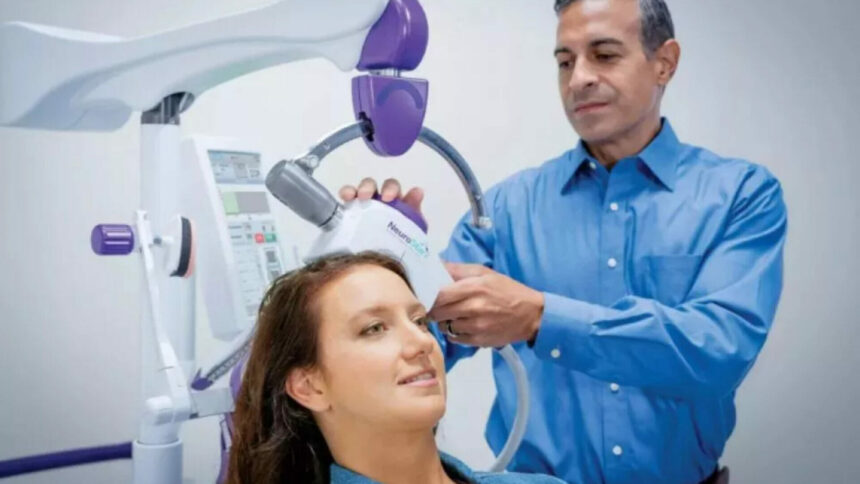
Transcranial Magnetic Stimulation (TMS) has emerged as a promising treatment for various neurological and psychiatric conditions. As technology advances, new variations of TMS have been developed to enhance its effectiveness. One such innovation is Deep TMS.
In this article, we’ll compare Deep TMS and traditional TMS to help you understand each approach’s differences and potential benefits.
Understanding TMS: The Basics
Before we compare Deep TMS and traditional TMS, let’s briefly review what TMS is and how it works.
What is TMS?
TMS is a non-invasive brain stimulation technique that uses magnetic fields to stimulate specific brain areas. It’s primarily used to treat depression but has shown promise for other conditions such as anxiety, obsessive-compulsive disorder (OCD), and chronic pain.
How Does TMS Work?
TMS works by delivering magnetic pulses to targeted areas of the brain. These pulses induce small electrical currents in the brain tissue, which can modulate neural activity.
By repeated stimulation over multiple sessions, TMS can help restore normal brain function in areas affected by various conditions.
Traditional TMS: An Overview
Traditional TMS, also known as repetitive TMS (rTMS), has been in use for several decades and has a well-established track record.
Key Features of Traditional TMS
- Uses a figure-8 coil
- Stimulates superficial brain regions
- Requires precise targeting
- Typically used for depression treatment
Pros of Traditional TMS
- Well-studied with extensive research backing
- FDA-approved for depression treatment
- Generally well-tolerated with minimal side effects
- Non-invasive and doesn’t require anesthesia
Cons of Traditional TMS
- It may have limited effectiveness for some patients
- Requires multiple sessions over several weeks
- Can be time-consuming
- It may not reach deeper brain structures
Deep TMS: A Newer Approach
Deep TMS is a more recent innovation in the field of brain stimulation. Developed by BrainsWay, Deep TMS aims to overcome some of the limitations of traditional TMS.
What is Deep TMS?
Deep TMS is a variant of TMS that uses a specially designed H-coil to deliver magnetic stimulation to deeper and broader regions of the brain compared to traditional TMS.
Key Features of Deep TMS
- Uses an H-coil design
- Stimulates deeper brain regions
- Covers a larger brain area
- FDA-approved for depression and OCD treatment
How Deep TMS Works
Deep TMS therapy uses the H-coil to generate magnetic fields that can penetrate up to 4 cm into the brain, stimulating deeper structures. This broader coverage may lead to more comprehensive treatment effects.
Comparing Deep TMS and Traditional TMS
Now that we’ve outlined the basics of both approaches let’s compare Deep TMS and traditional TMS across several key factors.
1. Depth of Stimulation
- Traditional TMS: Stimulates superficial brain regions, typically reaching depths of 1.5-2.5 cm.
- Deep TMS: Can stimulate deeper brain structures, reaching depths of up to 4 cm.
2. Area of Coverage
- Traditional TMS: Targets a more focused area due to the figure-8 coil design.
- Deep TMS: Covers a larger brain area, potentially affecting more neural networks.
3. Precision of Targeting
- Traditional TMS: Requires precise targeting and may need frequent adjustments.
- Deep TMS: Less sensitive to coil positioning due to broader coverage.
4. FDA Approvals
- Traditional TMS: FDA-approved for depression treatment.
- Deep TMS: FDA-approved for depression and OCD treatment.
5. Treatment Duration
- Traditional TMS: Typically requires 20-30 sessions over 4-6 weeks.
- Deep TMS: Often requires fewer sessions, potentially 20 sessions over 4 weeks.
6. Side Effects
- Traditional TMS: Generally mild side effects, such as scalp discomfort or headache.
- Deep TMS: Similar side effect profile to traditional TMS, with potentially reduced risk of seizures.
7. Patient Comfort
- Traditional TMS: This may require more frequent repositioning of the coil.
- Deep TMS: Often more comfortable for patients due to less frequent repositioning.
8. Cost
- Traditional TMS: Generally less expensive due to established technology.
- Deep TMS: This may be more expensive due to newer technology and specialized equipment.
The BrainsWay Deep TMS System
BrainsWay is a leading provider of Deep TMS technology. Their system has gained recognition for its innovative approach to TMS treatment.
Features of BrainsWay Deep TMS
- Patented H-coil design
- FDA-cleared for multiple indications
- Customizable treatment protocols
- User-friendly interface for clinicians
Benefits of BrainsWay Deep TMS
- Potential for improved efficacy due to deeper stimulation
- Broader coverage of brain regions
- Comfortable for patients
- A shorter treatment duration is possible
Efficacy and Research
Both traditional TMS and Deep TMS have been the subject of extensive research. Let’s look at some of the findings:
Traditional TMS Research
- Numerous studies have shown traditional TMS to be effective for depression treatment.
- Meta-analyses have reported response rates of 50-55% for treatment-resistant depression.
- Research continues to explore its potential for other conditions like anxiety and PTSD.
Deep TMS Research
- Studies have shown Deep TMS to be effective for depression, with response rates similar to or higher than traditional TMS.
- Research has demonstrated efficacy for OCD treatment, leading to FDA approval.
- Ongoing studies are investigating its potential for other conditions like autism and Alzheimer’s disease.
Choosing Between Deep TMS and Traditional TMS
When deciding between Deep TMS and traditional TMS, several factors should be considered:
1. Condition Being Treated
- If you’re seeking treatment for OCD, Deep TMS may be preferable due to its FDA approval for this condition.
- For depression, both options have shown efficacy.
2. Brain Region Targeted
- Deep TMS might be more effective if the condition involves deeper brain structures.
- For more superficial targets, traditional TMS may be sufficient.
3. Treatment Duration
- If time is a concern, Deep TMS might offer a shorter overall treatment course.
4. Cost and Insurance Coverage
- Check with your insurance provider about coverage for both options.
- Consider the out-of-pocket costs for each treatment.
5. Availability
- Deep TMS may not be as widely available as traditional TMS.
- Check with local providers to see which options they offer.
6. Personal Comfort
- Some patients may find Deep TMS more comfortable due to less frequent coil repositioning.
7. Provider Recommendation
- Consult with a healthcare professional who can assess your individual case and recommend the most appropriate treatment.
Future Developments
The field of TMS is continuously evolving, with ongoing research into both traditional and Deep TMS approaches.
Potential Advancements
- Improved targeting techniques
- Combination therapies with medication or psychotherapy
- Personalized treatment protocols based on brain imaging
- Expansion of approved indications for both traditional and Deep TMS
Conclusion
Both Deep TMS and traditional TMS offer promising treatment options for various neurological and psychiatric conditions. While Deep TMS offers potential advantages in terms of depth of stimulation and broader coverage, traditional TMS has a longer track record and may be more widely available.
The choice between Deep TMS therapy and traditional TMS treatment should be made in consultation with a healthcare professional, taking into account your specific condition, treatment goals, and individual factors.
As research continues and technology advances, both approaches are likely to see further refinements and expanded applications.