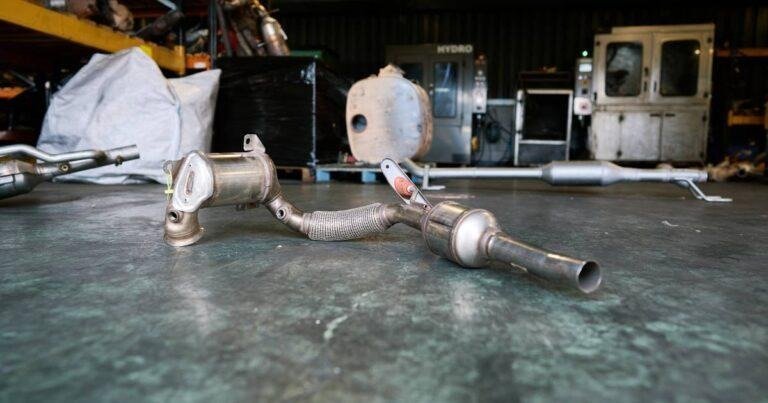
Diesel vehicles remain widely used across the UK, particularly by commuters, tradespeople, delivery drivers and businesses operating commercial fleets. However, modern diesel engines rely on emissions-control systems that require proper maintenance. One of the most important is the diesel particulate filter (DPF).
A blocked or damaged DPF can trigger warning lights, reduce engine performance, increase fuel consumption, and put the vehicle into limp mode. For drivers in Leicester, choosing between DPF cleaning Leicester services and complete DPF replacement depends largely on the condition and cause of the problem.
DPF Problems Can Develop Through Everyday Driving
A DPF captures soot from diesel exhaust gases. During normal operation, the vehicle periodically raises exhaust temperatures to burn off the accumulated soot through a process known as regeneration.
Problems can occur when regeneration cannot complete properly. Frequent short journeys, stop-start traffic and extended periods of low-speed driving can prevent the exhaust from reaching the temperature required for effective regeneration.
Leicester’s urban driving conditions can make this particularly relevant. A vehicle that regularly travels through city traffic may experience different DPF demands compared with one that spends most of its time on motorways.
Warning signs can include:
- DPF warning lights appearing on the dashboard
- Reduced acceleration or engine power
- Increased fuel consumption
- Limp-home mode
- Frequent attempted regenerations
- Poor throttle response
- Excessive exhaust smoke in some cases
Ignoring these symptoms can allow a relatively manageable blockage to develop into a more serious and expensive fault.
Professional DPF Cleaning Can Restore a Serviceable Filter
When the DPF itself is structurally sound, professional cleaning can be an effective alternative to replacement.
DPF cleaning Leicester services remove accumulated soot and ash from the filter, helping restore exhaust flow and filtration performance. The exact cleaning process varies depending on the equipment and the filter’s condition, but professional systems can provide a more thorough solution than relying solely on an attempted regeneration.
Cleaning can be particularly worthwhile when diagnostics show that the filter is restricted but has not suffered physical damage.
However, cleaning should not be treated as a universal solution. A DPF that has cracked, melted or suffered other structural damage may require replacement.
DPF Replacement Is Sometimes the Only Reliable Solution
A DPF is a physical component, so cleaning cannot resolve every underlying problem.
Replacement may be considered when the filter has:
- Structural cracks
- Severe thermal damage
- A melted or collapsed internal structure
- Excessive ash loading
- Persistent restriction after professional cleaning
- Damage caused by an underlying engine fault
Replacing the DPF without investigating why it failed can also lead to repeat problems. Faults involving injectors, turbochargers, EGR systems, sensors, or engine combustion can increase soot production and put extra pressure on a replacement filter.
This makes accurate diagnostics an important part of any DPF repair decision.
Diagnostics Should Come Before Cleaning or Replacement
A DPF warning light does not necessarily mean that the filter itself has failed.
Modern diesel vehicles use several sensors and control systems to monitor exhaust pressure, temperature and emissions performance. A diagnostic assessment can help determine whether the primary issue is a blocked filter, a sensor fault, a regeneration problem, or another engine-related fault.
For this reason, simply replacing a DPF based on a warning light can be an unnecessary expense.
A professional assessment should ideally consider fault codes, differential pressure readings, regeneration history, and the vehicle’s overall condition before deciding between cleaning and replacement.
DPF Cleaning Can Be More Cost-Effective Than Immediate Replacement
When a filter is recoverable, cleaning can offer a practical middle ground between continuing to drive with a blockage and buying a new DPF.
The cost difference can be significant because replacement includes the component itself, plus labour and, depending on the vehicle, additional diagnostic or programming work.
However, the cheapest option is not always the best option. Repeated cleaning of a damaged filter can simply postpone replacement while the original problem continues.
The right decision depends on the filter’s condition, not price alone.
Leicester Drivers Should Address DPF Symptoms Early
Drivers who regularly use diesel vehicles around Leicester should watch for early warning signs. Continuing to drive with a severely restricted DPF can affect engine performance and may contribute to additional problems.
Early diagnostics can establish whether a regeneration is appropriate, whether professional cleaning could restore the filter or whether DPF replacement is ultimately required.
This approach can also help identify underlying faults before they damage other emissions-control components.
DPF Clean Team Provides Cleaning and Repair Support in Leicester
For motorists looking for DPF cleaning Leicester services, DPF Clean Team provides specialist DPF cleaning and repair support for vehicles in the Leicester area. Its services are focused on diagnosing DPF-related faults and identifying an appropriate solution based on the vehicle’s condition, rather than automatically recommending replacement.
The business also supports related emissions-system problems, helping drivers and fleet operators address DPF issues before they develop into more expensive vehicle faults.
Other UK specialists, including DPF Doctor, The DPF Centre and DPF Cleaning Services, also provide DPF-related cleaning and repair solutions. Comparing the diagnostic approach, cleaning process, warranty and overall service can help motorists choose an appropriate provider.
Preventative Maintenance Can Reduce Future DPF Problems
The best DPF strategy is often prevention. Vehicles that regularly complete longer journeys at suitable operating temperatures are generally better positioned to complete regeneration cycles than those used almost exclusively for short trips.
Drivers should also avoid ignoring dashboard warnings and should investigate recurring regeneration problems rather than repeatedly resetting warning lights.
For businesses operating vans or diesel fleets, monitoring recurring DPF faults can be particularly valuable. A vehicle that repeatedly enters limp mode can affect schedules, productivity and operating costs.
Whether a vehicle needs professional DPF cleaning Leicester services or a complete DPF replacement, accurate diagnosis should come first. Understanding the filter’s condition and the cause of the fault helps drivers make a more informed decision and reduces the risk of paying for an unnecessary replacement.
Catalytic Converter Faults Require Accurate Diagnosis
Catalytic converters can also deteriorate over time. Internal damage, contamination, overheating or other engine problems can affect their performance.
A faulty catalytic converter may contribute to:
- Emissions-related warning lights
- Reduced engine performance
- Poor fuel economy
- Unusual exhaust smells
- Excessive heat around the exhaust system
- Diagnostic trouble codes relating to catalyst efficiency
However, a catalyst-related fault code does not automatically mean that the catalytic converter itself needs replacing.
Sensors, wiring, exhaust leaks and underlying engine faults can produce similar diagnostic symptoms. Proper testing is therefore important before approving a catalytic converter replacement.