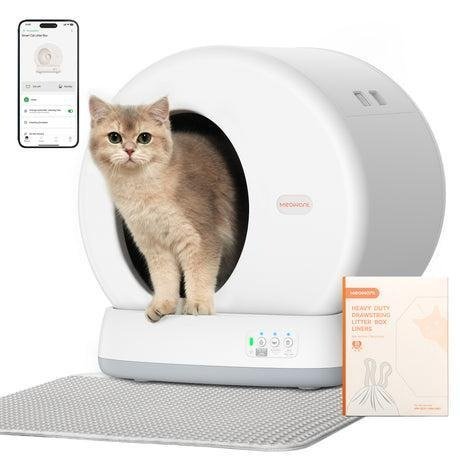
It’s 7 a.m., you’re already running late, and the unmistakable smell hits you before you even reach the hallway. The litter box needs scooping — again. For millions of cat owners, this is an all-too-familiar daily reality. Traditional litter boxes demand constant attention: scooping clumps, battling persistent odors, sweeping up tracked litter, and somehow managing all of it without gagging. It’s messy, time-consuming, and frankly, one of the least glamorous parts of owning a cat.
Beyond the inconvenience, traditional boxes raise real hygiene concerns. Waste left sitting for even a few hours creates bacterial buildup and ammonia-heavy odors that spread through your home. Busy schedules make consistent cleaning nearly impossible, leaving both owners and cats frustrated.
Smart litter boxes have emerged as a genuine game-changer, using self-cleaning technology, sensor-driven automation, and app connectivity to eliminate these everyday headaches. Rather than simply redesigning the box, they rethink the entire experience of cat waste management. This article breaks down exactly how smart litter boxes compare to traditional options — and why, across every meaningful measure, they come out on top.
The Drawbacks of Traditional Litter Boxes: A Time-Consuming Chore
Traditional litter boxes operate on a simple premise: your cat uses it, and you clean it. In practice, that simplicity becomes a relentless cycle of scooping, scrubbing, and deodorizing that eats into your day more than most owners anticipate. Veterinarians typically recommend scooping at least once daily — twice if you have multiple cats — which means no vacations, no late nights, and no skipping without consequences.
The odor problem compounds quickly. Cat urine contains urea that breaks down into ammonia within hours, producing the sharp, eye-watering smell that permeates entire rooms. Even with baking soda additives or scented litters, the chemical reaction is relentless. Solid waste left sitting accelerates bacterial growth, turning the box into a health hazard for both cats and the humans sharing their space.
Litter tracking adds another layer of frustration. Cats carry granules on their paws as they exit the box, scattering litter across floors, rugs, and furniture in a radius that seems to defy physics. Cleaning up stray litter becomes its own daily task, separate from the scooping itself. For busy professionals, parents, or anyone managing a packed schedule, this accumulation of small but persistent chores creates genuine stress. The traditional litter box doesn’t just demand time — it demands it on a schedule that never accommodates yours, making the case for a smarter alternative increasingly hard to ignore.
Smart Litter Boxes: Harnessing Advanced Technology for Pet Care
Smart litter boxes are self-contained waste management systems that replace manual scooping with automated cleaning mechanisms. At their core, they use a combination of weight sensors, infrared motion detectors, and motorized components to detect when a cat has used the box and trigger a cleaning cycle automatically — no human intervention required. The result is a consistently clean environment that neither you nor your cat has to tolerate in a degraded state.
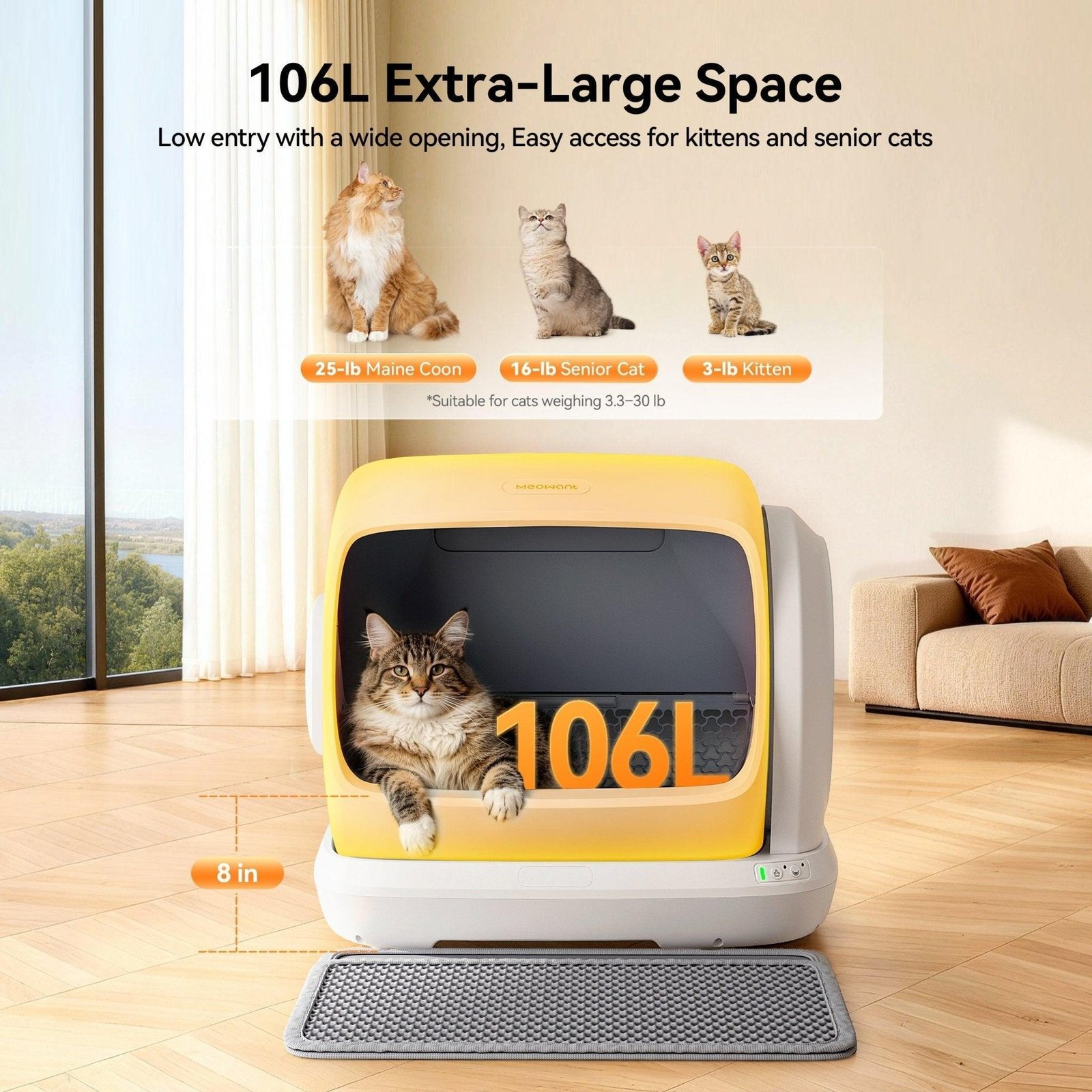
The technology stack inside a modern cat litter box self cleaning system is surprisingly sophisticated. Weight sensors detect your cat’s entry and exit, while infrared beams confirm the box is clear before any mechanical movement begins. A rotating drum or raking mechanism then separates clumps from clean litter, depositing waste into a sealed compartment that contains odors far more effectively than an open tray ever could. Many units, including those from pet technology brands like Meowant, also incorporate carbon filters or UV sanitization to address bacterial growth at the source.
Connectivity takes these devices a step further. Wi-Fi and Bluetooth modules link the box to companion smartphone apps, allowing owners to monitor usage frequency, receive maintenance alerts, and even track behavioral patterns that might signal health issues. This data layer transforms the litter box from a passive fixture into an active part of your pet care routine.
This shift from manual to automated represents a broader evolution in how pet ownership intersects with smart home technology. Just as thermostats and security cameras moved from mechanical to intelligent systems, cat waste management has followed the same trajectory — replacing reactive, labor-intensive habits with proactive, sensor-driven solutions that work around your schedule rather than dictating it.
Key Features that Drive Superiority: Automatic Cleaning and Remote Control
When cat owners weigh the switch to a smart litter box, two capabilities consistently tip the decision: automatic cleaning cycles and remote operation. These aren’t minor conveniences — they fundamentally change the relationship between owner, cat, and the daily maintenance grind. Together, they address the core frustrations that make traditional boxes so draining while delivering a level of control that fits naturally into modern, connected lifestyles.
Automatic Cleaning Cycles: Effortless Maintenance
Most smart litter boxes trigger a cleaning cycle through one of two methods: a fixed timer that runs at set intervals, or weight-sensor detection that initiates the cycle shortly after your cat exits. Sensor-based activation is generally more responsive, removing waste within minutes rather than waiting for a scheduled window. The rotating drum or raking mechanism sweeps clumps into a sealed waste drawer, keeping the litter bed fresh without any manual scooping. Many units offer adjustable cycle delays — useful for multi-cat households where back-to-back visits are common — and some allow you to choose between lighter daily cycles and deeper weekly cleaning modes. The practical result is a box that stays consistently clean throughout the day, preventing the ammonia buildup that starts within hours of waste being deposited in a traditional tray.
Remote Operation: Convenience at Your Fingertips
Companion apps extend your control well beyond pressing a button. From your phone, you can manually trigger a cleaning cycle, check the waste drawer fill level, and receive push notifications when the bin needs emptying or a maintenance issue arises. More advanced platforms log each visit — recording time, duration, and frequency — giving you a behavioral baseline that makes it easier to spot irregularities that might indicate a urinary or digestive health concern. For smart home users, many boxes integrate with platforms like Alexa or Google Home, allowing voice commands or automation routines. Whether you’re traveling, at the office, or simply in another room, remote operation ensures the litter box works on your schedule rather than interrupting it.
Enhancing Cat Comfort and Owner Peace of Mind
A clean litter box isn’t just a human preference — cats are notoriously fastidious creatures that will avoid a soiled box entirely, sometimes choosing your floor instead. Smart litter boxes address this behavioral reality directly. By removing waste within minutes of each visit, they maintain the fresh conditions cats instinctively seek, reducing avoidance behavior and the accidents that follow. The enclosed globe or dome designs common in smart models also provide privacy, which many cats prefer, while the spacious interiors accommodate larger breeds without the cramped conditions that deter use.
Noise is a legitimate concern during the transition. Most premium smart boxes are engineered with whisper-quiet motors that operate below 40 decibels — roughly the ambient hum of a quiet library — so the cleaning cycle doesn’t startle cats mid-visit or create anxiety around the box. This quiet operation is especially important during nighttime cycles when sudden mechanical sounds could disrupt both cats and sleeping owners.
For owners, the benefits extend well beyond reclaimed time. Consistent automated cleaning means the ammonia-heavy odors that typically escape a traditional box are contained before they can spread through living spaces, contributing to measurably better indoor air quality. The reduced daily handling of waste also lowers direct exposure to pathogens like Toxoplasma gondii, a genuine health consideration for pregnant owners or immunocompromised individuals. Knowing the box is functioning properly — confirmed through app notifications rather than a visual inspection — replaces low-grade, background worry with quiet confidence, making the overall experience of cat ownership noticeably less stressful.
Practical Solutions: How to Choose and Integrate a Smart Litter Box
Selecting the right smart litter box starts with matching the unit to your household’s specific demands. For larger cats or multi-cat homes, interior dimensions matter — look for a globe or drum with enough clearance that your cat enters willingly rather than squeezing in reluctantly. Noise ratings deserve equal attention; if your box will sit near a bedroom or in a shared living space, prioritize models with motors rated below 45 decibels. App compatibility is another practical checkpoint: verify the companion app works with your phone’s operating system and, if you use Alexa or Google Home, confirm integration before purchasing. Brands like Meowant have built their smart litter box lineup around exactly these considerations, making them a useful reference point when comparing features across the market.
Setup is straightforward for most units. Unbox and assemble the components on a flat, stable surface, then add the recommended litter type — typically clumping clay or silica gel, depending on the model’s mechanism. Connect to Wi-Fi through the companion app by following the in-app pairing instructions, then configure your preferred cycle timing and notification preferences. Place the box in the same location your cat currently uses, which eases the transition considerably. Sprinkle a small amount of used litter from the old box into the new one to carry over familiar scents. Most cats adapt within three to seven days; during this window, keep the old box available as a backup and avoid forcing interaction with the new unit. Once your cat is using it consistently, remove the traditional box and let the automated routine take over.
Smart Litter Boxes Are Worth the Switch
The gap between traditional and smart litter boxes isn’t marginal — it’s fundamental. Traditional options demand daily manual effort, tolerate odor buildup, and operate entirely on your cat’s schedule rather than yours. Smart litter boxes flip that dynamic entirely, using sensor-driven automation, sealed waste containment, and app-based monitoring to keep the box consistently clean without pulling you away from the rest of your day.
The advantages stack up across every dimension that matters: less odor in your home, fewer accidents from cats avoiding a soiled box, lower direct exposure to waste-borne pathogens, and genuine behavioral health insights delivered straight to your phone. For busy professionals, multi-cat households, or anyone who simply wants a cleaner, lower-maintenance home, the case for upgrading is straightforward.
Pet care technology has reached a point where managing your cat’s litter box no longer has to be the most unpleasant part of your morning. If you’ve been tolerating the daily scooping routine out of habit or hesitation, now is the time to reconsider. A smart litter box isn’t a luxury add-on — it’s a practical upgrade that improves life for both you and your cat from day one. Make the switch, and you’ll wonder why you waited.