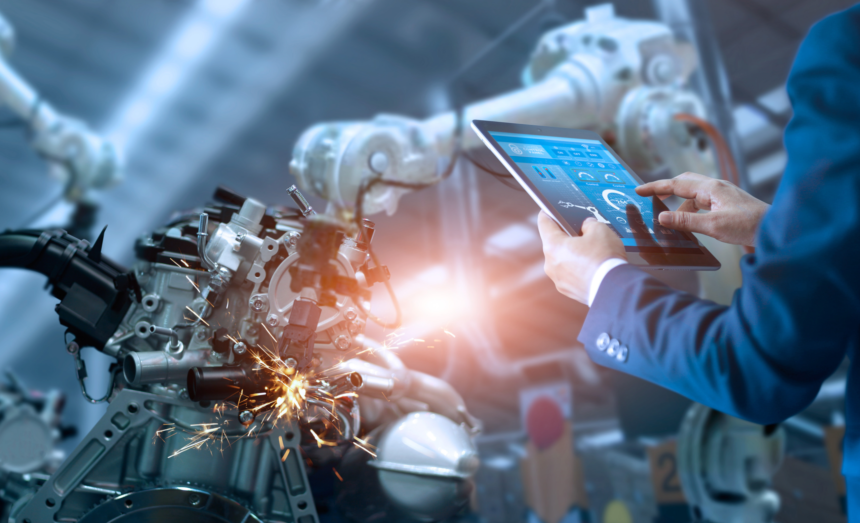
Industrial environments are evolving rapidly as automation, data connectivity, and intelligent systems reshape how facilities operate. Human‑machine interface (HMI) software has become a central component of this transformation, bridging the gap between complex machinery and the people who manage it. As industries move toward smarter, more integrated control systems, the role of HMI software is expanding, making it essential for efficiency, safety, and long‑term competitiveness.
Enhancing Real‑Time Visibility and Decision‑Making
Modern industrial operations rely heavily on real‑time data. HMI software provides operators with immediate access to system performance, equipment status, and process conditions. This visibility allows teams to identify issues quickly, respond to anomalies, and make informed decisions that keep production running smoothly.
Clear visual dashboards, intuitive controls, and customizable displays help operators interpret complex data without delay. As facilities adopt more connected devices and sensors, the ability to consolidate information into a single, user‑friendly interface becomes even more valuable. HMI tools ensure that critical insights are always within reach, reducing downtime and improving overall operational responsiveness.
Supporting Automation and System Integration
Automation is no longer optional for growing industrial operations—it is a necessity. HMI software plays a crucial role in integrating automated systems, allowing operators to monitor and control machinery from centralized platforms. This integration streamlines workflows, reduces manual intervention, and enhances consistency across production lines.
As companies adopt advanced technologies such as robotics, IoT devices, and cloud‑based analytics, HMI systems help unify these components into a cohesive operational ecosystem. In many cases, facilities also rely on hmi SCADA software to combine supervisory control with real‑time visualization, enabling more sophisticated monitoring and control capabilities. This level of integration supports both current automation needs and future scalability.
Improving Safety and Reducing Operational Risk
Safety remains a top priority in industrial environments, and HMI software contributes significantly to risk reduction. By providing clear alerts, visual warnings, and automated notifications, HMI systems help operators respond quickly to hazardous conditions. Whether it’s detecting equipment malfunctions, identifying temperature fluctuations, or signaling pressure irregularities, these tools ensure that potential dangers are addressed before they escalate.
Additionally, HMI software can be configured to enforce safety protocols, restrict unauthorized access, and guide operators through standardized procedures. This reduces the likelihood of human error and supports compliance with industry regulations. As industrial processes become more complex, the ability to maintain safe operations through intelligent interface design becomes increasingly important.
Increasing Efficiency Through Predictive and Preventive Insights
Efficiency is a defining factor in modern industrial success. HMI software contributes to improved performance by enabling predictive and preventive maintenance strategies. When integrated with sensors and analytics tools, HMI systems can track equipment health, identify patterns, and alert operators to maintenance needs before failures occur.
This proactive approach minimizes unplanned downtime, extends equipment lifespan, and reduces repair costs. Operators can view performance trends, schedule maintenance more effectively, and ensure that machinery operates at optimal levels. As industries continue to adopt data‑driven maintenance models, HMI software will remain a key enabler of operational efficiency.
Preparing for the Next Generation of Industrial Technology
The future of industrial control is increasingly digital, connected, and intelligent. Emerging technologies such as artificial intelligence, augmented reality, and advanced analytics are shaping the next generation of industrial systems. HMI software is evolving alongside these innovations, offering more intuitive interfaces, enhanced mobility, and deeper integration with cloud‑based platforms.
Mobile‑friendly HMI applications allow operators to monitor systems remotely, improving flexibility and responsiveness. AI‑enhanced interfaces can assist with troubleshooting, optimize workflows, and provide actionable recommendations. As these capabilities expand, HMI software will continue to serve as the central hub through which operators interact with advanced industrial technologies.
Conclusion
HMI software is becoming indispensable as industries embrace automation, connectivity, and intelligent control systems. By improving visibility, enhancing safety, supporting integration, and enabling predictive insights, HMI tools help facilities operate more efficiently and reliably. As industrial technology continues to evolve, the importance of robust, adaptable HMI solutions will only grow, shaping the future of industrial control and empowering companies to stay competitive in an increasingly digital world.