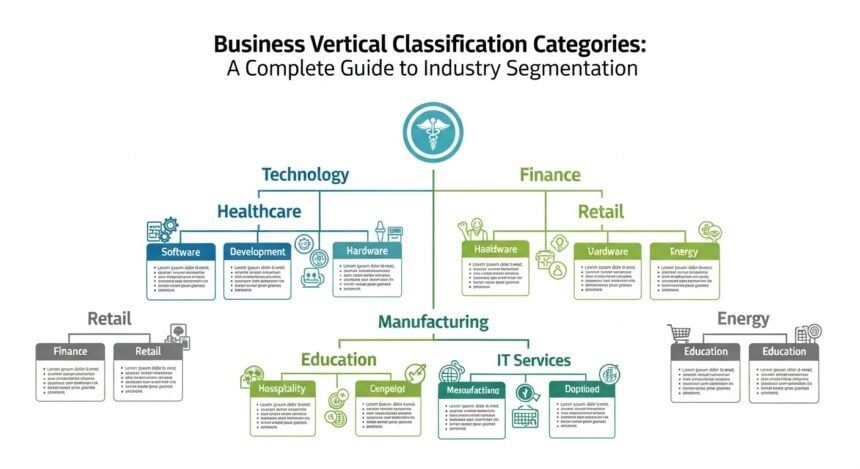
In today’s complex business world, companies and organizations are often categorized into different business verticals based on their focus and market segment. Business vertical classification categories help to define the specific sector a company operates in, providing clarity for investors, partners, and consumers. By grouping businesses into specific verticals, these categories allow for easier identification, understanding of market dynamics, and targeted strategies for growth.
In this article, we will explore what business verticals are, why they matter, and how businesses are classified into different vertical categories. Whether you’re a startup, a seasoned enterprise, or an investor looking for market insights, this guide will help you understand business vertical classification and its importance in today’s competitive landscape.
What Are Business Verticals?
Defining Business Verticals
A business vertical refers to a specific industry or market segment that a company or organization focuses on. Essentially, it is the niche in which the business operates, based on the products, services, or value propositions it offers to consumers or other businesses. For example, a company in the healthcare vertical offers products or services related to health, such as pharmaceuticals, medical devices, or health insurance.
Business verticals are often used as a means of classification, where businesses are grouped together based on their industry, service offerings, or target market. By identifying the vertical in which a company operates, stakeholders can better understand the company’s role in the broader economy and its potential for growth.
Vertical vs. Horizontal Market
It’s important to distinguish between vertical markets and horizontal markets. A vertical market refers to a niche within an industry, while a horizontal market spans across multiple industries with a broad, general appeal. For example, a company that produces software specifically for healthcare companies operates in the healthcare vertical, while a company that creates generic software for all industries operates in the horizontal market.
Importance of Business Vertical Classification
Market Focus and Targeting
The classification of businesses into verticals is crucial for market focus. By specializing in a particular vertical, a company can target a specific audience, develop niche products, and become an expert in the field. For example, a company in the financial services vertical may focus on banking products, investment management, and insurance services, targeting financial institutions and individuals with specific financial needs.
Streamlining Product Development and Marketing
Focusing on a specific vertical allows businesses to streamline their product development and marketing strategies. For example, a company in the automotive vertical can design products tailored specifically to automotive manufacturers or car owners, reducing the need for broad market research or product diversification. In turn, this focused approach enables more effective and efficient use of resources.
Improving Strategic Decisions
Classifying businesses by verticals helps stakeholders, including investors, to make more informed strategic decisions. Whether it’s identifying trends, analyzing competitors, or making investment decisions, business vertical classifications provide a clearer picture of the industry’s potential. By understanding the vertical, companies can also adapt their strategies to align with industry-specific challenges and opportunities.
Common Business Vertical Classification Categories
Healthcare and Life Sciences
The healthcare vertical is one of the most critical business verticals, given the global demand for healthcare services and products. Companies within this vertical focus on the provision of medical care, medical devices, pharmaceuticals, biotechnology, and health insurance.
Subcategories within Healthcare and Life Sciences
-
Pharmaceuticals: This includes companies that research, develop, and manufacture drugs and medicines.
-
Medical Devices: Businesses that produce equipment and devices used in the diagnosis, treatment, and prevention of medical conditions.
-
Healthcare Services: Companies that operate healthcare facilities such as hospitals, clinics, and rehabilitation centers.
-
Health Insurance: Organizations providing medical insurance coverage to individuals and groups.
Finance and Banking
The finance vertical includes all businesses involved in the management of money, investments, and financial services. This vertical plays a vital role in the global economy, with companies involved in everything from banking and lending to asset management and financial advisory services.
Subcategories within Finance and Banking
-
Banking: This includes commercial banks, investment banks, and savings institutions.
-
Investment Management: Companies that manage investment portfolios and funds for individuals, institutions, and governments.
-
Insurance: Business Vertical Classification Categories providing insurance products for life, health, property, and casualty insurance.
-
Fintech: Financial technology companies offering innovative solutions for payment processing, blockchain, and online lending.
Retail and E-commerce
The retail vertical encompasses businesses that sell goods directly to consumers. With the rise of online shopping, the e-commerce vertical has become a dominant force in the retail industry. Companies in this vertical offer a wide range of products, including clothing, electronics, food, and home goods, through both physical stores and online platforms.
Subcategories within Retail and E-commerce
-
Online Retail: Businesses that operate e-commerce platforms to sell products directly to consumers (e.g., Amazon, eBay).
-
Brick-and-Mortar Retail: Traditional physical stores selling products directly to consumers.
-
Consumer Goods: Companies producing or distributing products like clothing, electronics, and household items.
-
Luxury Goods: High-end retail businesses focusing on luxury and premium products.
Technology and Software
The technology vertical is a broad category that includes companies involved in the development and provision of technology products and services. This vertical includes everything from hardware manufacturing to software development and IT services.
Subcategories within Technology and Software
-
Hardware: Companies manufacturing physical devices like computers, smartphones, and consumer electronics.
-
Software Development: Businesses creating software products such as operating systems, applications, and enterprise solutions.
-
IT Services and Consulting: Companies offering services like network management, cloud computing, and IT consulting.
-
Artificial Intelligence and Machine Learning: Companies that focus on AI, ML, and automation technologies.
Education and Training
The education vertical includes businesses focused on providing educational services, from K-12 schools to universities and vocational training centers. It also includes companies offering online courses, tutoring, and professional development services.
Subcategories within Education and Training
-
Primary and Secondary Education: Schools, both public and private, that offer basic education services.
-
Higher Education: Colleges and universities offering undergraduate and postgraduate programs.
-
Online Learning: Platforms providing distance education, including MOOCs (Massive Open Online Courses).
-
Vocational Training: Companies offering job-specific training and certification programs.
Manufacturing and Industrial
The manufacturing vertical includes businesses involved in the production of goods, from raw materials to finished products. Companies in this vertical operate across industries such as automotive, construction, electronics, and textiles.
Subcategories within Manufacturing and Industrial
-
Automotive Manufacturing: Companies involved in producing vehicles, engines, and automotive parts.
-
Electronics and Electrical: Businesses manufacturing electronics, semiconductors, and electrical components.
-
Textile and Apparel: Companies producing fabrics, clothing, and fashion accessories.
-
Heavy Equipment: Firms manufacturing industrial machines, tools, and construction equipment.
How Business Vertical Classification Categories Impact Market Strategy
Tailoring Products and Services
Understanding business vertical classification helps companies tailor their products and services to the specific needs of the target market. By specializing in a particular vertical, businesses can refine their offerings and optimize their sales strategies.
Example: Healthcare Product Customization
A pharmaceutical company targeting the healthcare vertical can focus on producing medicines and treatments specific to a geographic region’s healthcare needs, ensuring the product meets local demand and regulations.
Competitive Advantage
Knowing your business vertical allows companies to assess the competitive landscape and position themselves effectively. By understanding the key players within a vertical, businesses can develop unique selling propositions (USPs) and better differentiate themselves in the market.
Example: Tech Companies in Fintech
Fintech companies, for instance, can use technology to streamline banking services and offer innovative payment solutions, giving them a competitive edge over traditional financial institutions.
Conclusion: The Power of Business Vertical Classification
Business vertical classification categories are essential for both business strategy and market analysis. By grouping businesses into verticals, companies and stakeholders can gain insights into industry trends, competitor landscapes, and potential growth areas. Understanding these categories not only helps businesses focus their marketing efforts and product development but also enables better decision-making across various sectors of the economy.
In today’s interconnected world, knowing where your business fits within the vertical ecosystem is more important than ever. Whether you’re a startup, an established business, or an investor, understanding business vertical classification can lead to smarter strategies, more effective operations, and long-term success in a competitive market.