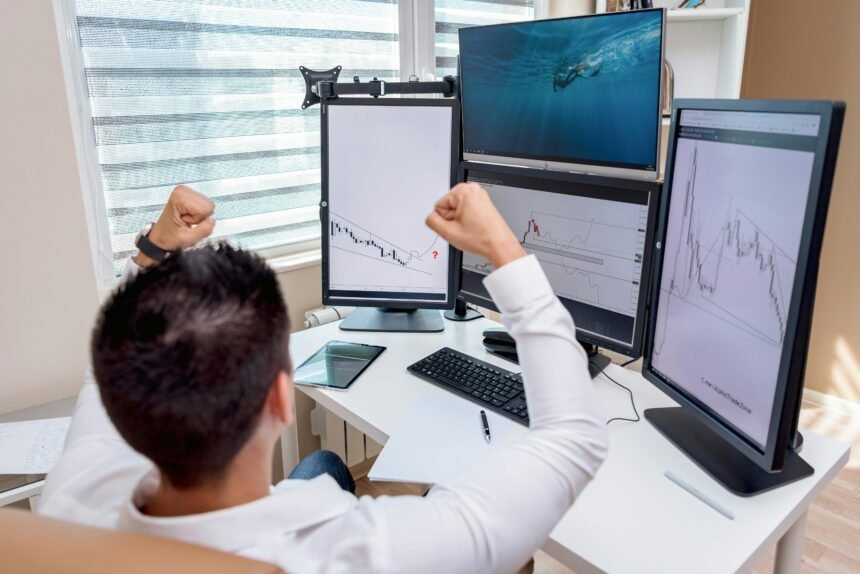
The cryptocurrency market never sleeps, it runs around the clock, every single day of the year. This creates incredible opportunities, sure, but it also brings some pretty intense challenges for traders trying to keep up. As digital currencies become more mainstream, traders are wrestling with a fundamental question: should they hand over control to automated systems, or keep their hands firmly on the wheel? This isn’t just a technical decision, it shapes everything from how much time you’ll spend trading to how you’ll handle the emotional rollercoaster of volatile markets. When you really understand what each approach brings to the table (and what it doesn’t), you’ll be in a much better position to choose the path that fits your goals, your risk of tolerance, and honestly, your life.
The Fundamentals of Automated Trading Systems
Automated trading systems run on sophisticated algorithms that follow predefined rules to execute trades, no constant babysitting required. These platforms chew through market data, spot trading opportunities based on technical indicators, and pull the trigger on buy or sell orders according to the strategies you’ve programmed. Today’s automated solutions aren’t just following simple rules anymore; they’re leveraging artificial intelligence and machine learning to process massive amounts of market information in the blink of an eye. Think about it this way: while you’re sleeping or at work, these systems are watching multiple cryptocurrency pairs across different exchanges simultaneously, catching opportunities that would slip right past a human trader.
What makes automated systems particularly valuable? They completely remove emotional bias from the equation, something that trips manual traders constantly. These platforms stick to the script, following established strategies with unwavering discipline regardless of whether the market’s going wild or your nerves are shot. They can also back test strategies against years of historical data, giving you a preview of potential performance before you risk a single dollar of real capital. The scalability factor is huge too. Automated solutions let you manage multiple positions and strategies at once without your brain turning into mush.
Manual Trading: Control and Intuition
Manual trading is the old-school approach where you’re personally calling all the shots, analyzing markets, making decisions, and clicking that buy or sell button yourself. This method puts you in the driver’s seat for every single aspect of your trading journey, from digging through research to choosing the perfect moment to execute. Manual traders lean on technical analysis, fundamental research, and market sentiment evaluation, often mixing in that gut feeling they’ve developed through years of experience. This hands-on style allows for nuanced decision-making that takes into account breaking news, regulatory shifts, and those subtle market dynamics that automated systems might completely miss.
The flexibility of manual trading stands out as one of its biggest strengths. You can pivot your strategy instantly when major news breaks or unexpected market events unfold. Human traders bring something algorithms can’t fully replicate, the ability to interpret qualitative information like social media buzz, institutional movements, and geopolitical tensions that genuinely influence cryptocurrency values. There’s also an educational component here that shouldn’t be overlooked; every trade you make teaches you something about market mechanics, risk management, and how to keep your head when everyone else is losing theirs.
Comparing Performance and Efficiency
When you stack automated and manual trading against each other, the performance differences really depend on what you’re measuring and what you’re trying to accomplish. Automated systems shine when it comes to consistency, they execute predefined strategies without ever getting distracted, maintaining rock-solid discipline even when markets are melting down and human emotions typically wreak havoc. These platforms absolutely dominate in high-frequency trading scenarios where split-second decisions and monitoring multiple markets simultaneously create genuine competitive edges. Statistical analysis consistently shows that automated systems often deliver better risk-adjusted returns because they ruthlessly stick to stop-loss protocols and position sizing rules.
Manual trading performance varies wildly depending on the individual trader’s skill level, experience, and mental toughness. That said, seasoned manual traders frequently outperform automated systems when unprecedented situations arise, those black swan events that require interpretive judgment and adaptive thinking rather than historical pattern matching. Human traders can spot emerging patterns, sector rotations, and fundamental paradigm shifts that algorithms trained on past data might not see coming. For professionals who need to maintain consistent positions across volatile conditions, excellent automated crypto trading platforms deliver the reliability and discipline necessary to execute strategies without emotional interference mucking things up. The efficiency comparison gets interesting when you factor in time investment, automated systems offer the tantalizing possibility of passive income while manual trading demands significant daily attention and mental bandwidth. At the end of the day, whether automated or manual produces better results really comes down to how well the strategy is implemented rather than which method you’ve chosen.
Risk Management Considerations
Risk management is where the rubber meets the road when comparing automated and manual trading, with each approach bringing its own set of strengths and weaknesses. Automated systems deliver systematic risk control through programmed parameters that cap position sizes, set predetermined stop-loss levels, and keep overall portfolio exposure within boundaries you’ve defined. These platforms eliminate that dangerous habit manual traders have of overriding their own risk rules during stressful moments or when they’re convinced they’ve spotted a sure thing. Automated solutions can implement sophisticated risk metrics, value-at-risk calculations, correlation analysis, drawdown limits, all working continuously in the background to protect your capital.
Manual traders have a distinct advantage when it comes to contextual risk assessment, they can adjust position sizes and exposure based on qualitative factors that purely quantitative models simply can’t capture. An experienced trader might sense that something fundamental has shifted in market dynamics, signaling it’s time to adjust strategies or even step back temporarily. That human element allows for discretionary intervention during technical glitches, flash crashes, or obvious market manipulation that automated systems might trade straight into like lemmings off a cliff. Manual traders can also diversify across different strategy types and timeframes depending on current market conditions.
Cost and Accessibility Factors
The practical and financial barriers to entry differ significantly between automated and manual trading, which matters a lot when deciding which approach fits your situation and budget. Automated trading platforms typically charge subscription fees that range from reasonable monthly payments for basic packages to eye-watering costs for enterprise-level solutions packed with advanced features. Getting started might require some technical know-how for configuring strategies, running backtests, and fine-tuning performance, though plenty of modern platforms now offer intuitive interfaces with ready-made strategies you can deploy immediately. Don’t forget additional costs like exchange API fees, VPS hosting to keep your bot running 24/7, and ongoing maintenance or strategy updates.
Manual trading comes with lower upfront costs, basically, you just need an exchange account and maybe some charting software or market data subscriptions. However, the hidden costs tell a different story: the substantial time investment for monitoring markets, conducting analysis, and executing trades represents a significant opportunity cost for most people. Manual traders also need to factor in the learning curve expenses, including potential losses during those early skill-building phases and the cost of educational resources for continuous improvement. The accessibility of manual trading definitely appeals to beginners who can start with minimal capital and gradually build expertise through real-world experience.
Conclusion
Choosing between automated and manual crypto trading isn’t about finding the “right” answer, it’s about finding the right answer for you. Automated systems bring consistency, emotional discipline, time efficiency, and scalability to the table, making them perfect for traders who want more passive income streams or those juggling multiple strategies at once. Manual trading offers flexibility, contextual judgment, educational value, and complete control, everything that appeals to traders who genuinely enjoy active market engagement and have both the time and expertise to leverage their skills. Interestingly, many successful traders don’t pick sides at all; they adopt hybrid approaches that combine automated execution for systematic strategies while keeping manual oversight for discretionary opportunities and risk management decisions.