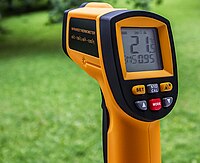
Temperature measurement has come a long way since the days of mercury-filled glass thermometers. Enter the pyrometer—a game-changing instrument that leverages advanced technology to measure temperature from a distance, revolutionizing various industries. Whether in manufacturing plants, laboratories, or even homes, pyrometers have significantly impacted how we monitor heat without direct contact with the object being measured. This article will take you through an exciting journey exploring what pyrometers are, their history, types and uses, advantages over traditional methods, and innovations in this field. Let’s dive into the world of pyrometry and discover why it matters more than ever!
The History of Temperature Measurement
The quest to measure temperature has roots that reach back to ancient civilizations. Early Greeks and Romans used rudimentary methods, like observing the expansion of air in flasks.
By the 16th century, Galileo introduced one of the first thermoscopes. This device marked a pivotal moment, allowing people to visualize temperature changes.
In 1714, Daniel Gabriel Fahrenheit created the mercury thermometer, establishing a more accurate standard for measurement. Shortly after, Anders Celsius introduced his scale in 1742.
These breakthroughs paved the way for modern techniques. As science advanced through the centuries, temperature measurement evolved from simple observations into precise instruments capable of extreme accuracy.
Today’s devices are far removed from their historical counterparts but owe much to this rich legacy of innovation and exploration in understanding heat and its effects on our world.
Types of Pyrometers and Their Uses
Pyrometers come in various types, each designed for specific applications. The most common are contact and non-contact pyrometers.
Contact pyrometers measure temperature by direct contact with the object. They are often used in laboratory settings or manufacturing processes where precision is crucial.
Non-contact pyrometers, on the other hand, use infrared technology to gauge temperature from a distance. This makes them ideal for hazardous environments or moving objects.
Another type worth mentioning is the optical pyrometer. It measures high temperatures through visible light emitted by hot surfaces, making it perfect for metalworking and glass production.
Then there are radiation thermometers that detect thermal radiation emitted from an object to determine its temperature accurately. These devices find their place in industries like aerospace and automotive.
Each type of pyrometer plays a vital role in enhancing efficiency across different sectors while ensuring safety and accuracy.
Advantages of Pyrometers Over Traditional Thermometers
Pyrometers offer distinct advantages compared to traditional thermometers. First, they enable non-contact temperature measurement. This feature is crucial in hazardous environments where direct contact could pose risks.
Speed is another benefit. Pyrometers provide rapid readings, often in seconds, making them ideal for fast-paced industrial settings.
Additionally, pyrometers excel in high-temperature situations where conventional thermometers may fail or be unsafe to use. Their ability to measure extreme temperatures expands the range of applications significantly.
Accuracy also stands out as a key advantage. Many modern pyrometers are designed with advanced optics and sensors that ensure precise measurements even from a distance.
Their versatility means they can work across various materials and surfaces. Whether measuring metals or ceramics, pyrometers adapt seamlessly, enhancing productivity and safety across industries.
Applications of Pyrometers in Different Industries
Pyrometers find diverse applications across various industries, showcasing their versatility and efficiency. In metallurgy, they monitor temperatures during the smelting process to optimize metal quality. Accurate readings help in achieving desired properties for steel and other alloys.
In the glass manufacturing sector, pyrometers ensure consistent melting temperatures. This precision is crucial for producing high-quality glass products with minimal defects.
The food industry also benefits from these devices. They are employed in baking ovens and frying processes, ensuring safe cooking temperatures while maintaining product integrity.
Moreover, power generation facilities utilize pyrometers to oversee combustion processes. By tracking temperature variations, they enhance energy efficiency and reduce emissions.
Even within the automotive industry, manufacturers rely on pyrometers to check exhaust system temperatures during testing phases. This ensures compliance with safety standards and improves performance metrics significantly.
Innovations in Pyrometer Technology
Advancements in pyrometer technology have transformed how industries approach temperature measurement. Modern designs now incorporate infrared sensors that provide real-time data with remarkable accuracy.
Wireless connectivity is another game-changer. Many new pyrometers can transmit data directly to mobile devices or cloud systems, allowing for remote monitoring and analysis. This innovation enhances operational efficiency and safety.
Additionally, some advanced models feature thermal imaging capabilities. This allows users to visualize heat distribution across surfaces, pinpointing hotspots that need attention.
User-friendly interfaces are also gaining prominence. Touchscreen displays make it easier for operators to navigate settings and view readings at a glance.
The integration of machine learning algorithms is helping predict temperature trends based on historical data. These innovations promise not just precision but smarter decision-making in various applications.
Challenges and Limitations of Pyrometers
Despite their advantages, pyrometers face several challenges and limitations. One significant hurdle is the issue of emissivity. Different materials emit infrared radiation at varying rates. This variability can lead to inaccurate readings if not properly calibrated.
Another challenge lies in environmental factors. Dust, smoke, or steam can obscure the view of the surface being measured, impacting accuracy. In such conditions, relying solely on a pyrometer may not yield reliable data.
Temperature ranges also pose limitations; some pyrometers cannot accurately measure extreme temperatures found in specialized applications. This restricts their use in industries like metallurgy or aerospace.
Cost is another consideration. High-quality pyrometers can be expensive compared to traditional thermometers, which might deter smaller operations from investing in them.
User training is essential for effective operation. Without proper understanding and handling expertise, users risk misinterpretation of data collected by these advanced tools.
Future Outlook for Pyrometers
The future of pyrometers looks promising as technology continues to advance. Innovations in infrared sensing and data analytics are pushing the boundaries of temperature measurement.
Smart pyrometers equipped with IoT capabilities will enable real-time monitoring across various applications. This connectivity allows for instantaneous data collection, leading to better decision-making.
Moreover, miniaturization is on the rise. Smaller, portable units will be more accessible for everyday use without sacrificing accuracy or reliability.
With an increasing focus on sustainability, pyrometers are expected to play a crucial role in energy management systems. Their ability to measure temperatures accurately can help industries optimize processes and reduce waste.
As artificial intelligence integrates with these devices, predictive maintenance could become standard practice. Anticipating equipment failures before they happen saves time and resources while enhancing safety protocols.
In short, the evolution of pyrometer technology holds exciting possibilities that can transform how industries approach temperature measurement and control.
Conclusion
Temperature measurement has come a long way since the early days of thermometers. Pyrometers have transformed how we gauge heat, bringing precision and convenience to various industries. Their ability to measure temperature from a distance opens up new possibilities in environments where traditional methods fall short.
As technology advances, so do pyrometers. Innovations continue to enhance their accuracy and functionality. This evolution promises even greater applications across sectors such as manufacturing, metallurgy, and food processing.
While challenges remain—such as calibration complexities or limitations in certain conditions—the future looks bright for these devices. With ongoing research and development, pyrometers are poised to become even more integral tools for businesses seeking efficiency and reliability.
The impact of pyrometers on temperature measurement is undeniable. As industries evolve, so too will their reliance on this remarkable technology. Embracing the advancements in pyrometer design can lead to improved processes and outcomes that benefit both producers and consumers alike.