Introduction to Concrete Honeycombing
Concrete is often hailed as one of the most durable building materials available, but even the sturdiest structures can face challenges. One such issue that contractors and homeowners may encounter is concrete honeycombing. This condition not only affects aesthetics but also compromises structural integrity. Understanding concrete honeycombing—its causes and prevention methods—is essential for anyone involved in construction or renovation projects. By addressing these concerns proactively, you can ensure your concrete remains strong and reliable for years to come. Let’s dive deeper into this topic to uncover what leads to honeycombing and how you can avoid it in your future projects.
Causes of Concrete Honeycombing:
Concrete honeycombing occurs due to a few key factors that can compromise the integrity of your structure.
Poor workmanship is often at the forefront. When workers are not adequately trained or if they rush through their tasks, critical steps may be overlooked.
Inadequate compaction also plays a significant role. If concrete isn’t compacted properly, air pockets may remain trapped inside, leading to those unsightly voids.
Another culprit is improper concrete mix design. Using incorrect ratios of materials can weaken the overall consistency and strength of the mixture.
Construction delays coupled with exposure to weather elements can hinder curing processes. Rain or extreme temperatures might alter how well the concrete sets, contributing further to honeycombing issues later on.
– Poor workmanship
Poor workmanship is one of the primary culprits behind concrete honeycombing. It can manifest in various ways, from inadequate mixing to improper pouring techniques. When workers rush through tasks or lack experience, they may neglect essential steps.
For instance, if the concrete isn’t mixed thoroughly, it can lead to uneven distribution of aggregates. This creates voids and weak spots that compromise the structure’s integrity. Additionally, careless handling during placement often results in air pockets trapped within the mix.
Another aspect of poor workmanship involves failing to follow established best practices for vibration during compaction. This oversight prevents proper consolidation and leaves behind those unsightly honeycomb patterns on cured surfaces.
Attention to detail is crucial when working with concrete. Skipping even minor steps can have significant long-term consequences for durability and strength.
– Inadequate compaction
Inadequate compaction occurs when concrete is not sufficiently compressed during placement. This can lead to voids and air pockets, resulting in honeycombing.
The compaction process is crucial for ensuring that the concrete fills all spaces within the formwork. If this step is rushed or neglected, it compromises the structural integrity of the final product.
Factors like improper vibration techniques contribute significantly to inadequate compaction. When vibrators are used incorrectly or not at all, they fail to eliminate trapped air effectively.
Environmental conditions also play a role. For instance, working in hot weather may cause rapid setting times, making proper compaction challenging.
Addressing these issues early on can prevent costly repairs down the line. It’s essential to prioritize effective compaction methods for a robust and durable structure.
– Improper concrete mix design
Improper concrete mix design can lead to significant issues in construction. When the ratios of cement, water, sand, and aggregates are not balanced correctly, it compromises the strength and durability of the concrete.
A too-rich or too-lean mix can result in honeycombing. If there’s insufficient cement paste to bind the aggregates together, voids will form within the structure. This creates weak spots that become problematic over time.
Moreover, using incompatible materials affects workability. For instance, if coarse aggregates are too large relative to other components, they may not settle properly during pouring. As a result, air pockets develop.
Additionally, environmental conditions play a role here. Excessive moisture or temperature changes can alter how well constituents interact during curing. Proper attention must be given at this stage to ensure long-lasting results with no hidden flaws beneath the surface.
– Construction delays and exposure to weather elements
Construction delays can significantly impact the integrity of concrete structures. When projects fall behind schedule, it often leads to rushed work and insufficient attention to detail. The consequences can be dire.
Weather elements play a crucial role during the curing process of concrete. Exposure to extreme temperatures or unexpected rain can interfere with hydration, leading to uneven strength development. High humidity may cause premature drying, while freezing conditions can halt the curing altogether.
In addition, prolonged exposure to harsh sunlight can create surface cracking as moisture evaporates too quickly. These factors compromise not only aesthetics but also structural performance over time.
Proper planning is essential to mitigate these risks. Scheduling work during favorable weather conditions ensures that construction progresses smoothly and minimizes potential damage from environmental stresses.
Impact of Concrete Honeycombing:
Concrete honeycombing can lead to significant structural issues. When air pockets or voids appear, they compromise the integrity of the concrete. This weakness may reduce load-bearing capabilities, making structures unsafe.
Moreover, honeycombed areas are more susceptible to water infiltration. Moisture can seep into these gaps, resulting in corrosion of reinforcement bars over time. This not only accelerates deterioration but also increases maintenance costs.
Aesthetically, honeycombing presents an unsightly finish. It detracts from the overall appeal of a project and might affect property value. Clients often have concerns about quality when visible defects emerge.
In terms of safety, poorly executed concrete can pose risks during natural disasters like earthquakes or heavy storms. The resilience required for such events is diminished with compromised structure due to honeycombing effects.
Prevention Methods:
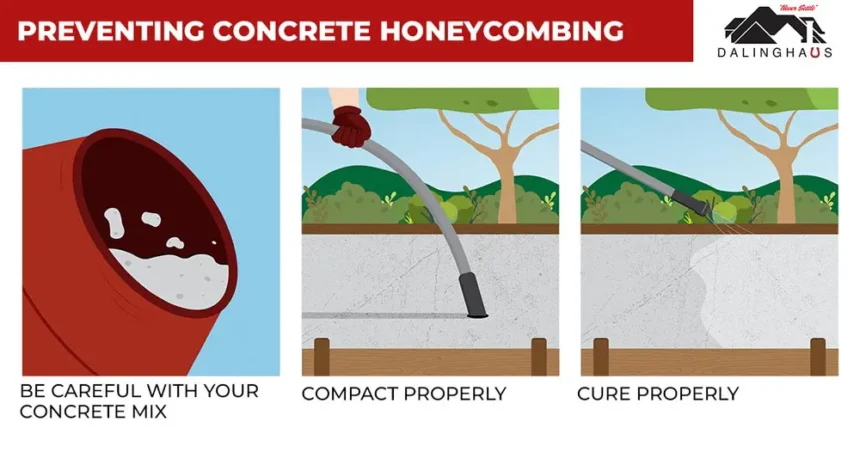
Preventing concrete honeycombing starts with proper formwork and careful reinforcement placement. Ensure that the molds are secure and tight, as gaps can lead to voids in the final structure.
Selecting an appropriate concrete mix is vital. A well-designed mixture enhances workability and reduces air pockets. Incorporating additives can improve consistency, ensuring a smooth pour.
Placement techniques also matter significantly. Pouring concrete in layers allows for better compaction without overwhelming the material’s strength. This method encourages uniform distribution throughout the formwork.
Don’t underestimate the curing process either. Adequate curing helps maintain moisture levels, promoting hydration of cement particles, which strengthens the bond within your mix.
By focusing on these elements during construction, you can drastically reduce instances of honeycombing and enhance overall structural integrity.
– Proper formwork and reinforcement placement
Proper formwork is crucial in achieving strong, durable concrete structures. It provides the necessary support to hold the wet concrete until it sets. Choosing high-quality materials for formwork guarantees stability and dimensional accuracy.
Reinforcement placement also plays a significant role in preventing honeycombing. Adequate spacing and alignment of rebar ensure that the concrete flows smoothly around these bars, minimizing voids. This enhances structural integrity.
Moreover, careful attention should be paid to securing the reinforcement before pouring concrete. If not properly anchored or placed too loosely, shifting can occur during mixing or vibration processes.
Using vibrant vibrators during placement helps consolidate the mixture effectively around reinforcements while eliminating trapped air pockets. This step is essential for uniform strength throughout the structure.
Taking time to focus on both formwork and reinforcement paves the way for a solid foundation free from defects like honeycombing.
– Appropriate concrete mix design and placement techniques
Choosing the right concrete mix design is crucial for preventing honeycombing. The proportions of cement, water, aggregates, and admixtures must be carefully calibrated. A well-balanced mix offers strength and workability.
Using high-quality materials enhances durability. Opt for clean aggregates that are free from dirt or impurities. This ensures a smoother flow during placement.
Placement techniques also play a vital role. Pouring concrete in layers helps to eliminate air pockets. Each layer should be compacted before adding more material to ensure even distribution.
Vibration is another effective method for reducing voids within the mix. Properly vibrating freshly poured concrete allows it to settle into tight spaces, minimizing the risk of honeycombing.
Consider environmental factors when placing concrete. Extreme temperatures can affect curing times and overall quality—adjust your methods accordingly to maintain optimal conditions during application.
– Adequate curing process
Curing is a vital step in the concrete pouring process, ensuring that your mix achieves its intended strength and durability. Proper curing involves maintaining adequate moisture and temperature for the right duration after placement.
Without sufficient curing, concrete can dry too quickly, leading to surface cracking and honeycombing. The hydration process needs time to develop strong bonds within the mix; rushing it often results in structural weaknesses.
Techniques like covering with wet burlap or using curing compounds create a moisture-retaining layer over freshly poured concrete. Maintaining this environment supports optimal hardening conditions.
The ideal curing period typically lasts from seven days to several weeks, depending on environmental factors and specific project requirements. This investment of time enhances longevity while reducing future repair costs associated with poor-quality work due to inadequate curing practices.
Repairing Concrete Honeycombing:
Repairing concrete honeycombing requires a careful approach to restore structural integrity. First, identify the extent of the damage. This helps in determining the best repair method.
Chipping away loose and compromised concrete is essential. Use a chisel or grinder for precision, ensuring you create clean edges around the affected areas.
Once prepped, consider using a high-strength repair mortar designed for such applications. It’s important to follow manufacturer’s instructions for mixing and curing times.
Apply the mortar using a trowel, pressing firmly into place to eliminate air pockets that can lead to future issues. Smooth it out for an even finish that blends with existing surfaces.
After application, allow proper curing time before subjecting repaired areas to any stress or load. Regular maintenance checks will help catch any future problems early on.
Conclusion
Concrete honeycombing is a significant issue that can compromise the structural integrity and longevity of concrete structures. By understanding its causes—such as poor workmanship, inadequate compaction, improper mix design, and construction delays—you can take proactive steps to mitigate these risks.
Preventative measures are crucial. Ensuring proper formwork and reinforcement placement, using an appropriate concrete mix design, and maintaining an adequate curing process will go a long way in preventing honeycombing problems before they arise.
If honeycombing does occur, timely repair methods should be employed to restore the strength of the affected areas. Addressing this issue promptly not only enhances durability but also maintains aesthetic appeal.
Awareness of these factors is vital for anyone involved in concrete construction or maintenance. With careful planning and execution, you can effectively minimize the chances of encountering concrete honeycombing in your projects. Understanding Concrete Honeycombing: Causes and Prevention Methods is essential knowledge for achieving successful outcomes in any building endeavor.