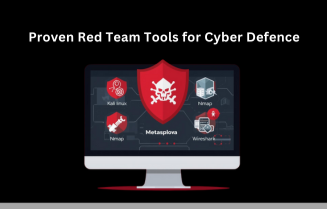
Red teams study how real attackers think. They look for quiet routes, weak controls and overlooked behaviours. Their goal is simple. Understand how an adversary could move across systems and use that insight to strengthen defences.
The tools they use shape everything. Each one offers a different skill. Some help with discovery. Some help with privilege movement. Others help test how well defenders notice suspicious activity. This guide breaks down the red team tools professionals rely on every day. We focus on clarity, real value and practical understanding for security leaders.
Why red team tools matter
Modern environments change fast. Cloud adoption grows. Identity becomes central. Applications scale. These shifts create fresh opportunities for attackers. Red teams use specialised tools to understand how those opportunities appear in real-world scenarios.
Tools also help teams test assumptions. Many organisations believe certain controls work well until a tool shows otherwise. With the right tooling, red teams can model realistic attack paths and help leaders see where blind spots hide.
Categories of red team tools
To keep things simple, we explore the major categories instead of diving into technical jargon. Each category supports a different part of adversarial testing.
- Discovery and reconnaissance tools
Red teams start with information gathering. They look for open services, exposed systems and behavioural clues. Good recon tools reveal what attackers can learn without touching protected systems.
Why these tools matter
They help identify public-facing weaknesses. They also show how much information an attacker can gather before taking more targeted steps.
Common tool types
- tools that scan the attack surface
- tools that discover domains, subdomains and related assets
- tools that collect metadata about systems and people
- tools that analyse certificates, DNS records and open endpoints
These tools build the first map of an organisation’s environment. A quiet recon phase shapes the entire engagement.
- Privilege escalation and movement tools
Attackers rarely succeed with one account. They move across systems, escalate access and chain small gaps together. Red teams use specialised tools to test how these moves could play out.
Why these tools matter
They help identify weak identity paths. They also show how misconfigured permissions can open the door to deeper access.
Common tool types
- tools that analyse local privilege routes
- tools that map domain relationships
- tools that simulate credential abuse
- tools that expose risky trust paths in hybrid or cloud environments
These tools reveal how identity and misconfigurations combine in ways organisations often cannot see.
- Payload and delivery tools
Red teams sometimes need controlled payloads to test how systems respond. These tools help them design and manage those payloads safely.
Why these tools matter
They help teams understand how email filters, endpoint controls and monitoring systems react to suspicious activity.
Common tool types
- tools that create controlled executables
- tools that test endpoint protection responses
- tools that manage payload delivery through common channels
Leaders use these insights to refine detection and tune controls.
- Command and control tools
Once an attacker gains access, they need a way to manage their activity. Command and control (C2) tools help red teams simulate how attackers maintain quiet, stable communication inside an environment.
Why these tools matter
These tools help test how well security teams detect hidden activity. They reveal gaps in network monitoring, endpoint behaviour analytics and identity logging.
Common tool types
- tools that establish encrypted communication channels
- tools that support file transfers and logging
- tools that provide modular frameworks for extended operations
These tools support long-running engagements where realism matters most.
- Social engineering tools
Attackers often target people before systems. Red teams use tools that help them study behaviours, test email defences and evaluate internal awareness.
Why these tools matter
They help reveal how employees handle suspicious messages or requests. They also test how identity processes respond to subtle manipulation.
Common tool types
- tools that craft controlled phishing simulations
- tools that manage communication flows
- tools that test MFA resilience and user responses
These insights help organisations refine training, email controls and incident reporting paths.
- Cloud-focused red team tools
Cloud adoption introduces new risks. Misconfigurations, identity relationships and API behaviour all create unique attack paths. Red teams use tools built for these environments.
Why these tools matter
Cloud workloads operate differently from traditional systems. Specialised tools help teams understand how attackers exploit policies, identity trust and cloud-native controls.
Common tool types
- tools that analyse IAM roles and privileges
- tools that test cloud identity routes
- tools that assess storage policies and exposed endpoints
- tools that study container or serverless behaviour
These tools help leaders ensure cloud growth does not create new blind spots.
- Assessment and reporting tools
The real value of a red team exercise lies in the clarity it provides. Reporting tools help teams track paths, evidence and behavioural notes without overwhelming decision-makers.
Why these tools matter
They translate technical steps into clear insights. They also help create structured, understandable reports for leadership and audit teams.
Common tool types
- tools that track engagement activity
- tools that organise documentation
- tools that help visualise attack paths
- tools that consolidate results into readable assessments
Good reporting turns complex testing into practical guidance.
How red team tools strengthen security posture
Tools uncover patterns. They show how attackers link one weak point to another. They also help organisations understand the difference between theoretical and realistic risk.
When leaders use these insights, they can:
- strengthen identity controls
- tune detection systems
- improve logging and alerting
- refine incident response steps
- remove silent access pathways
- build a stronger security roadmap
The right tools help red teams study behaviour. That behaviour offers clarity for leadership.
How leaders can prepare for a red team engagement using these tools
Red teams bring the tools. Organisations bring the environment. A bit of preparation helps get the most value from the engagement.
Helpful preparation steps
- reviewing asset inventories
- confirming logging coverage
- checking that monitoring systems are active
- aligning objectives with business priorities
- ensuring communication channels are clear
Preparation ensures that the engagement focuses on meaningful insights rather than avoidable obstacles.
Choosing the right red team partner
Tools matter. But experience, planning and communication matter more. A reliable partner like CyberNX knows which tools fit which objectives. The CERT-In empanelled cybersecurity firm adapt their approach to the organisation’s maturity, environment and risks. Tools support the engagement, but strategy defines the outcome. In addition, CyberNX uses a balanced approach. Each tool is selected with intent. Each engagement focuses on clarity, realistic scenarios and business-aligned improvements.
Conclusion
Red team tools play a central role in realistic adversarial testing. They help teams understand attack paths, identity risks and defensive blind spots. With the right tools, organisations gain insight into how threats behave and how their systems respond.