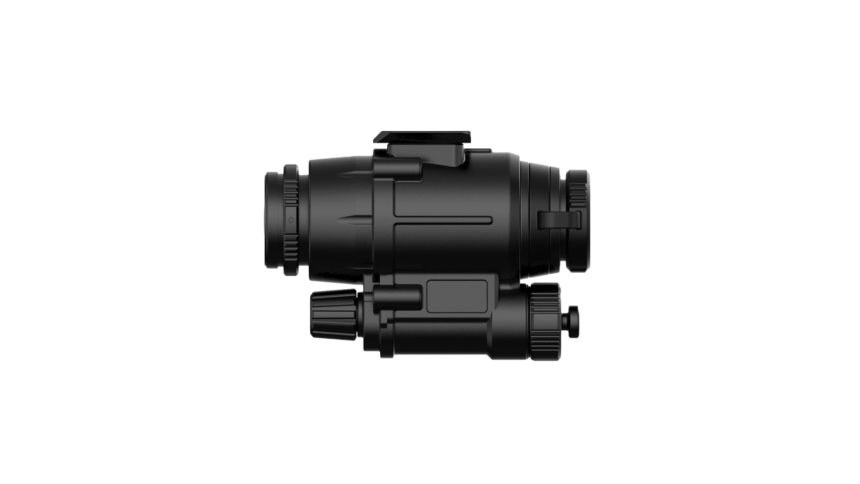
In high-stakes tactical scenarios, the difference between mission success and failure often comes down to one thing: what you can see. Whether navigating low-light environments, tracking fast-moving targets, or coordinating with a team under pressure, clear and reliable vision is non-negotiable. Helmet mounted sights and displays have fundamentally changed how operators perceive and interact with their environment, transforming a simple piece of protective gear into a sophisticated command interface.
Yet achieving superior image quality in these systems is far from straightforward. Dynamic lighting conditions, physical wear, and the growing complexity of integrated data streams all threaten visual clarity in the field. Fortunately, advancements in vision systems, precision optical standards, and smart connectivity are pushing the boundaries of what helmet-mounted technology can deliver.
This article breaks down the core components behind exceptional display performance, explains why optical standards matter more than most enthusiasts realize, and walks through practical steps to get the most out of your gear. Whether you’re a seasoned tactical professional or a dedicated gear enthusiast, understanding these systems at a deeper level will help you make smarter decisions and perform at your best.
Understanding Helmet Mounted Sights and Displays: A Primer
Helmet mounted sights and displays (HMS/D) are optical and digital systems integrated directly into protective headgear, designed to deliver critical visual information without requiring an operator to look away from their environment. At their most fundamental level, these systems serve two purposes: enhancing natural vision and overlaying mission-relevant data directly within the operator’s line of sight. The result is a hands-free interface that keeps attention focused forward, where it matters most.
The technology has come a long way from the bulky, single-function night vision devices of the 1970s and 80s. Early systems offered basic light amplification with limited resolution and significant distortion. Over the following decades, advances in sensor miniaturization, digital processing, and display engineering gave rise to systems capable of fusing thermal imaging, augmented reality overlays, and real-time telemetry into a single, wearable platform. Modern HMS/D units are no longer passive tools — they are active components of a broader tactical network.
For operators in military, law enforcement, and specialized security roles, situational awareness is directly tied to mission outcomes. A display that lags, distorts, or fails under environmental stress can compromise decision-making at the worst possible moment. This is why image quality has emerged as the defining performance metric for HMS/D evaluation — encompassing not just sharpness, but color accuracy, latency, dynamic range, and reliability across varied operational conditions.
The Role of Vision Systems in Enhancing Image Quality
At the heart of every capable helmet mounted display is an integrated vision system — a carefully engineered combination of sensors, optics, and display hardware working in concert to deliver a coherent, actionable image. Each component in this chain contributes directly to what the operator ultimately sees, and a weakness in any single element degrades the entire output.
Sensors are the first point of contact with the environment. Image intensifier tubes amplify available light for night vision applications, while thermal sensors detect infrared radiation to reveal heat signatures invisible to the naked eye. The sensitivity and dynamic range of these sensors determine how well the system handles extreme contrasts — a critical factor when transitioning between brightly lit areas and deep shadow. Modern fusion systems combine both sensor types, giving operators a composite image that captures detail neither source could provide alone.
Optics then shape and transmit that captured data toward the display. Lens quality, coating technology, and alignment precision all influence sharpness, color fidelity, and edge distortion. Even minor optical imperfections compound over distance, turning subtle aberrations into meaningful visual errors at range. Manufacturers such as INFITAC have built their gun accessory lines around this principle, engineering mounting hardware and optical interfaces designed to preserve alignment integrity even under sustained recoil and field stress.
Finally, the display itself — whether a micro-OLED, AMOLED, or waveguide projection panel — determines contrast ratio, refresh rate, and overall brightness. Higher resolution panels reduce pixelation during magnification, while faster refresh rates eliminate motion blur during rapid head movement. For enthusiasts pushing their gear to its limits, understanding these interdependencies is the first step toward demanding — and recognizing — truly superior performance.
Why Precision Optical Standards Matter for Clarity
Precision optical standards are the benchmarks that define acceptable performance thresholds for lenses, coatings, sensors, and display assemblies used in tactical systems. They exist because human perception is unforgiving — even minor inconsistencies in optical quality translate directly into visual errors that operators notice and, in critical moments, cannot afford. These standards govern everything from surface flatness tolerances and anti-reflective coating uniformity to chromatic aberration limits and modulation transfer function (MTF) ratings, which measure how faithfully a lens reproduces fine detail across its entire field of view.
Industry bodies such as MIL-SPEC (Military Specification) and NATO STANAG have established rigorous requirements specifically for defense-grade optics. MIL-PRF-13830, for instance, sets acceptance criteria for optical components including scratch-dig surface quality ratings, which directly affect light scatter and image contrast. Similarly, MIL-STD-810 environmental testing ensures that optical assemblies maintain performance integrity under shock, vibration, temperature extremes, and humidity — conditions that are routine in field operations but devastating to substandard components.
For HMS/D users, these standards carry practical weight. A lens assembly manufactured to precise MTF tolerances delivers sharper imagery at the edges of the display, not just the center — a meaningful difference when scanning peripheral threats. Coatings validated against MIL-SPEC durability requirements resist fogging, scratching, and UV degradation far longer than commercial-grade alternatives. Displays tested to strict contrast ratio and color gamut specifications reproduce thermal and low-light imagery with the fidelity needed for confident target identification.
Ultimately, adherence to precision optical standards is not a marketing distinction — it is the measurable foundation upon which reliable image quality is built and sustained across thousands of operational hours.
Integrating Smart Connectivity into Tactical Gear
Smart connectivity has shifted from a convenience feature to a tactical necessity. Modern helmet mounted displays are no longer standalone optical tools — they are nodes within a broader digital ecosystem, capable of exchanging data with command systems, teammate units, and remote sensors in real time. For operators and enthusiasts pushing the boundaries of what their gear can do, understanding how connectivity enhances HMS/D performance is increasingly essential.
The most immediate benefit is real-time data sharing. Connected displays can receive live feeds from drone reconnaissance, GPS positioning overlays, and biometric monitoring systems, delivering actionable intelligence directly within the operator’s field of view without requiring manual input. Wireless firmware updates allow manufacturers to push image processing improvements, calibration refinements, and new feature sets to deployed units — meaning a system purchased today can perform measurably better six months from now without any hardware change.
Network interoperability is another critical consideration. Systems built around open communication protocols can integrate with existing tactical radios, command software, and allied equipment, reducing friction in multi-unit operations. Proprietary ecosystems, while sometimes offering tighter integration, risk creating compatibility gaps that limit flexibility in the field.
Security cannot be overlooked. Any wireless-capable system introduces potential vulnerabilities — encrypted communication standards and frequency-hopping protocols are baseline requirements for operational environments where signal interception is a genuine threat. Before adding connectivity to a helmet system, operators should verify that both the hardware encryption and the network infrastructure meet current defense-grade security standards. Connectivity amplifies capability, but only when implemented with the same rigor applied to the optics themselves.
Practical Steps to Maximize Image Quality with Advanced Displays
Knowing the technology behind helmet mounted displays is only half the equation — the other half is knowing how to operate and maintain that technology effectively. Even the most sophisticated HMS/D system underperforms when improperly configured, poorly maintained, or used without leveraging its full feature set. The following steps give tactical gear enthusiasts a concrete framework for extracting the best possible image quality from their equipment, regardless of the specific platform they’re running.
Step 1: Initial Calibration and Configuration
Before any operational use, invest time in a thorough calibration session. Start by adjusting brightness and contrast to match the ambient lighting of your primary operating environment — settings optimized for daylight will wash out critical detail in low-light conditions and vice versa. Fine-tune diopter focus adjustments until edges appear sharp without eye strain. Many modern systems offer automatic brightness adaptation, but manually establishing a baseline profile for each environment type — indoor, outdoor daylight, and low-light — ensures the system responds predictably when automatic modes engage.
Step 2: Maintaining Optical Components for Longevity
Optical degradation is gradual and easy to overlook until it becomes severe. Clean lenses and sensor windows with lint-free microfiber cloths and lens-safe solutions only — abrasive materials introduce micro-scratches that scatter light and reduce contrast over time. After field use, store components in sealed cases with desiccant packets to prevent moisture damage. Conduct monthly inspections for coating wear, seal integrity, and mechanical looseness in mounting hardware, addressing minor issues before they compound into performance failures.
Step 3: Leveraging Smart Features for Image Enhancement
Connectivity features are only valuable when actively used. Check manufacturer portals regularly for firmware updates — these frequently include image processing algorithm improvements that meaningfully sharpen output or reduce noise in low-light modes. Where your system supports sensor fusion, experiment with blending ratios between thermal and image-intensified channels to find the composite that best suits your specific mission profile. Tools like companion configuration apps allow fine-grained tuning of overlay brightness, data display density, and color palette selection, all of which directly influence how quickly and accurately you interpret what you see.
Building a Performance Edge with Helmet Mounted Display Technology
Superior image quality in helmet mounted displays is not a single feature — it is the cumulative result of well-engineered vision systems, rigorous optical standards, smart connectivity, and disciplined operational practice working together. Each element reinforces the others: precision-manufactured optics deliver sharper imagery, validated display hardware reproduces it faithfully, and connected firmware keeps the entire system performing at its peak across its operational lifespan.
The practical steps outlined here — thorough initial calibration, consistent optical maintenance, and active use of smart features — give enthusiasts a clear path to extracting every advantage their gear offers. These are not one-time tasks but ongoing habits that compound into measurably better performance over time.
Looking ahead, the trajectory of HMS/D technology points toward even tighter integration between physical optics and digital intelligence. Advances in AI-driven image processing, lighter waveguide architectures, and low-latency mesh networking will continue to raise the performance ceiling. The operators and enthusiasts who understand the fundamentals driving these innovations today will be best positioned to evaluate, adopt, and maximize whatever comes next. Apply this knowledge deliberately, maintain your equipment with the same precision it was built to, and your helmet mounted display will remain a genuine force multiplier — not just a piece of gear.