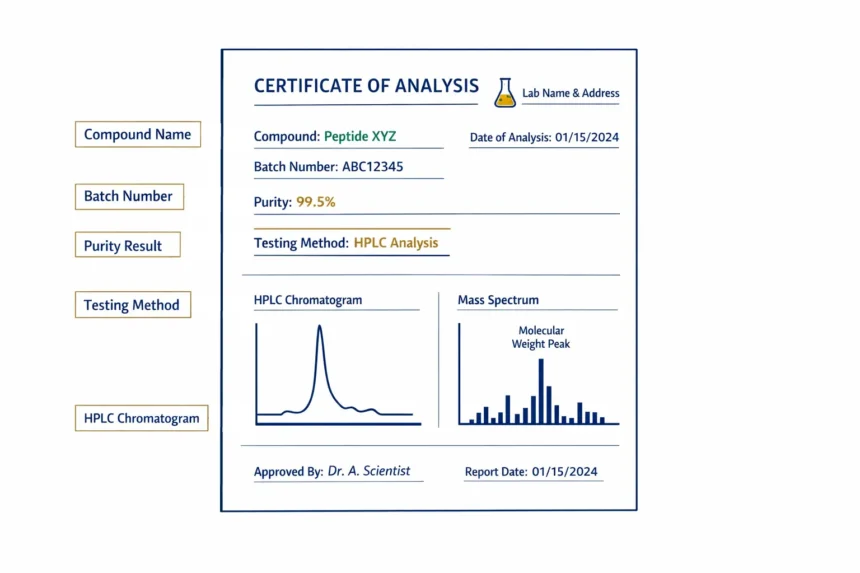
Almost every research peptide supplier in the UK now shows a certificate of analysis, or COA, somewhere on its website. That is a good thing. But a certificate is only useful if it is genuine, independent and relevant to the vial you are actually buying, and not all of them are. Here is how to tell the difference.
What a certificate of analysis should show
A useful COA comes from an independent laboratory and reports three things about a specific sample:
- Identity: confirmation that the compound is what the label says it is.
- Purity: the percentage of the sample that is the intended peptide, usually measured by HPLC.
- Quantity: how many milligrams of peptide were actually in the vial tested.
It should also show the testing laboratory’s name, the date, and a batch or sample reference.
Five checks to run
- Who did the testing? A certificate issued by the supplier itself, or by an unnamed “QA laboratory”, is not independent. Look for a recognised third-party lab, such as Janoshik Analytical, which is widely used in the research peptide market.
- Can you verify it on the lab’s own website? Independent labs often provide a task number and a verification key. Entering these on the lab’s site should bring up the same report. If the code does not work, or there is no way to check, treat the certificate with caution.
- Does the batch match? A certificate from a batch tested last year tells you nothing about the vial on the shelf today. The batch number on the report should match the batch number printed on the product you receive.
- Does the quantity add up? A purity of 99% means little if a “10mg” vial contained 7mg. Check the measured quantity as well as the purity.
- Has it been edited? Look for mismatched fonts, blurred areas around numbers or dates, or a report that looks identical to one used by a different supplier. Copied and altered certificates do circulate.
Why independent checking matters
Suppliers have every reason to show their best results and to reuse a good certificate for as long as possible. Independent checks remove that incentive. Some comparison sites go further and buy products anonymously, as an ordinary customer would, and send them for testing without the supplier knowing. PeptideCheck’s blind lab testing works this way, with results published whether a supplier passes or fails, and it only counts a supplier’s own certificates after confirming them on the laboratory’s website.
Putting it into practice
Before buying, look up the product you need, open the supplier’s certificate, and run the five checks above. If you are choosing between suppliers for a widely studied compound such as BPC-157, it is worth comparing BPC-157 suppliers in the UK side by side on both price and verified testing, rather than on price alone.
The bottom line
A certificate of analysis is only as good as the checks behind it. Independent lab, verifiable online, matched to your batch, with a believable quantity: if a certificate passes all of those, it is worth something. If it fails any of them, keep looking.
This article is for information only. Research peptides are sold for laboratory research use only and are not for human consumption.