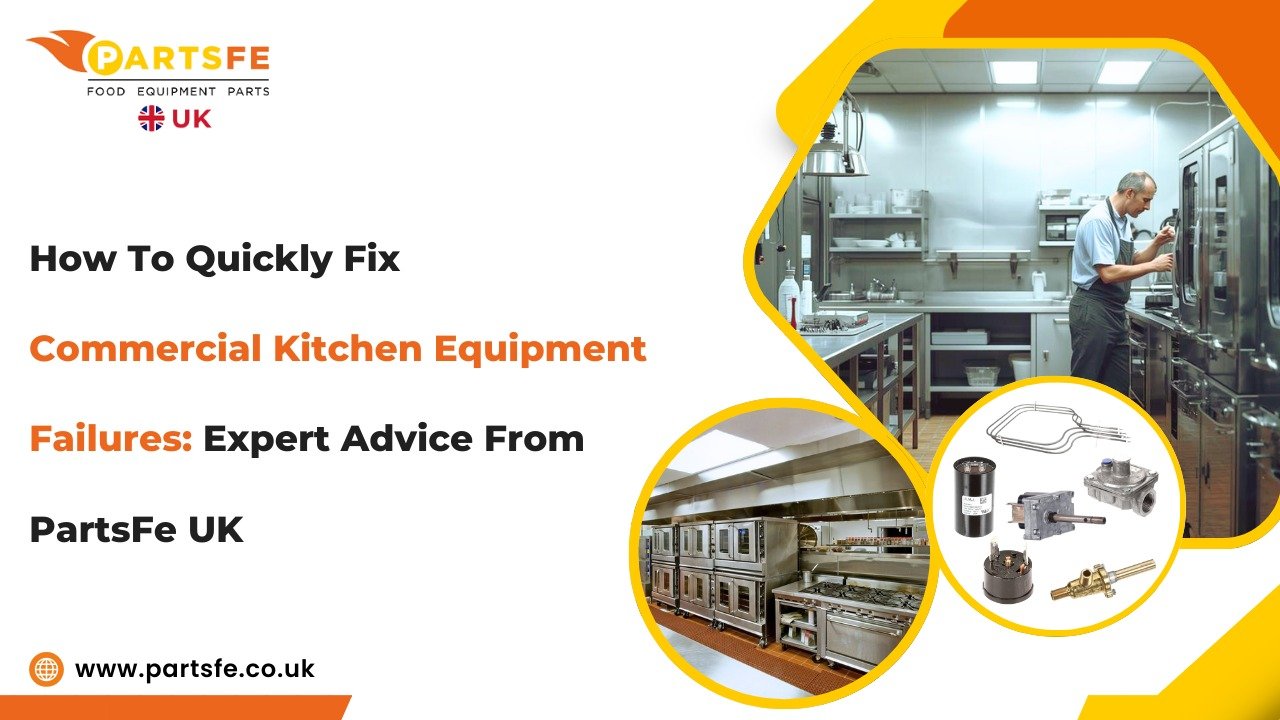
Commercial kitchens across the United Kingdom depend on efficient equipment to maintain smooth operations. However, even durable machines can malfunction unexpectedly, affecting workflow, service speed, and customer satisfaction. A faulty oven, an ice machine that stops producing, or a fryer that won’t heat can quickly disrupt business and cause financial losses.
This guide provides practical troubleshooting steps and preventive maintenance advice from the experts at PartsFe UK. From ovens and fryers to dishwashers and ice machines, learn how to manage breakdowns effectively, reduce downtime, and extend the lifespan of essential kitchen equipment.
Oven and Range Issues: Managing Heat-Related Failures

Ovens and ranges are the key to most commercial kitchens. When they fail, service can be severely delayed. Understanding the common causes and quick fixes helps minimise interruptions.
| Common oven and range problems | Simple fixes |
These problems are often caused by daily wear, poor ventilation, or inadequate cleaning. |
|
When to call a professional
If the issue persists after basic troubleshooting, seek help from a certified technician. Gas and electrical repairs should only be handled by trained professionals.
Tip: Keep spare parts such as thermostats, elements, and door seals on hand. Routine servicing reduces the likelihood of sudden oven or range failures.
More in Home
Dishwasher Downtime: Getting Cleaning Systems Back to Work
Dishwashers are vital in maintaining hygiene and efficiency. When they fail, the impact on service flow is immediate.
| Common dishwasher problems | Quick fixes and maintenance |
|
|
When to seek professional help
If the dishwasher fails to drain, stops mid-cycle, or repeatedly shows error codes, it may require a new pump or electronic board. Engage a qualified technician for diagnosis.
Tip: Keep essential spare parts like dishwasher pumps, filters, gaskets, and spray arms in stock. Regular maintenance training for kitchen staff can significantly reduce breakdown frequency.
Fryer Troubleshooting: Addressing Oil, Heat, and Control Issues
Deep fryers are essential in many commercial kitchens, especially for high-volume operations like pubs and fast-food outlets. A malfunctioning fryer can halt production and reduce output.
| Common fryer failures | Quick fixes |
|
|
When professional help is needed
If electrical issues, leaks, or repeated tripping occur, contact a qualified engineer. Attempting complex electrical repairs without proper tools can be dangerous.
Tip: Maintain a stock of heating elements, filters, and thermostats for emergency replacements. PartsFe UK offers quick delivery and technical advice for commercial fryers.
Griddle and Grill Breakdowns: Restoring Cooking Efficiency
Griddles and grills are essential for high-output service environments such as restaurants and hotels. Performance drops or failures can cause severe delays during busy periods.
| Frequent issues | Basic fixes |
|
|
When professional support is required
If the grill or griddle fails to heat or trips the power, consult a professional engineer. Avoid makeshift fixes that compromise safety or efficiency.
Tip: Keeping certified replacement elements, thermostats, and switches on-site ensures quick recovery during service interruptions.
Ice Machine and Freezer Problems: Handling Cooling System Breakdowns
A malfunctioning ice machine or freezer can cause major disruption, especially during peak hours. These units are vital for food safety and beverage service compliance under UK health regulations.
| Typical ice machine faults | Troubleshooting tips |
Freezers may show symptoms like frost build-up, fluctuating temperatures, or compressor issues. |
|
Cleaning and maintenance
- Descale ice machines regularly to prevent mineral buildup.
- Clean and replace filters as recommended by the manufacturer.
- Ensure freezer door seals are intact and close properly.
When to call a specialist
Persistent temperature problems, refrigerant leaks, or compressor faults should only be handled by an F-Gas certified engineer.
Tip: Keep a maintenance log tracking equipment temperature and performance. Regular cleaning and servicing prevent long-term damage and ensure food safety compliance.
Preventive Maintenance: Reducing Long-Term Equipment Failures
Preventive maintenance is the most effective way to avoid costly breakdowns. Regular inspections and simple upkeep extend equipment life and enhance operational reliability.
- Schedule monthly checks for all major kitchen appliances.
- Keep a detailed maintenance log for each item.
- Train staff to report abnormal sounds, leaks, or performance drops early.
- Stock critical replacement parts, such as seals, thermostats, filters, and heating elements, for quick on-site repairs. Using genuine spares ensures performance and compliance with manufacturer warranties.
- Work with a trusted parts supplier like PartsFe UK, which provides access to a wide range of genuine spares for ovens, fryers, dishwashers, and more.
Commercial kitchen equipment failures are inevitable, but their impact can be greatly reduced through swift action and preventive care. By applying the practical troubleshooting steps and maintenance strategies outlined here, UK kitchen operators can maintain smooth service, reduce repair costs, and safeguard compliance.
Partnering with trusted experts such as PartsFe UK provides access to high-quality replacement parts for restaurant equipment, technical guidance, and reliable support, ensuring every kitchen remains productive and prepared, even in the face of unexpected failures.