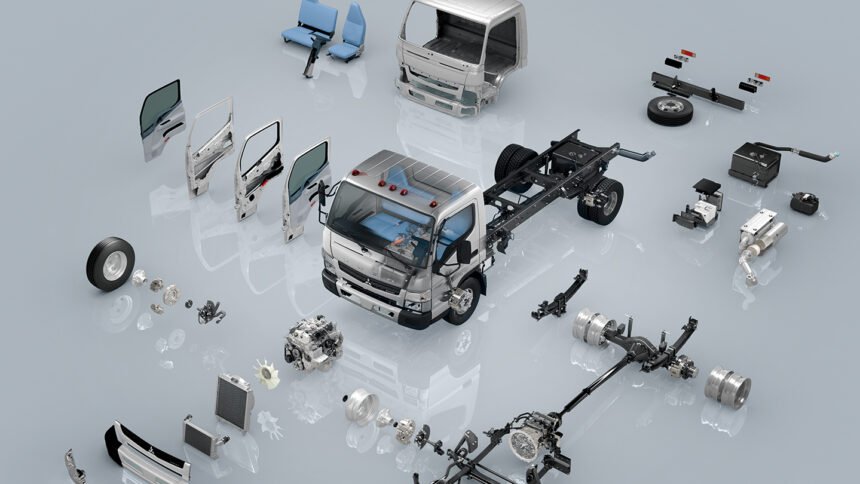
Keeping a commercial vehicle on the road for longer is rarely about one major repair. Longevity is usually determined by hundreds of small decisions made over the life of the truck, particularly around maintenance and component selection. For Fuso owners, choosing the right replacement parts plays a critical role in reducing downtime, controlling operating costs, and preserving performance over the long term.
Whether you operate a single Canter or manage a larger fleet, investing in genuine Fuso parts helps ensure your vehicle continues to perform as it was engineered to, rather than reacting to avoidable failures later on.
Why Component Choice Matters More Than Most Operators Realise
Every truck operates under predictable stresses. Load weight, driving conditions, heat cycles, and stop-start usage all place ongoing strain on key systems. Over time, even minor variances in part quality can compound into premature wear across the engine, drivetrain, braking, and cooling systems.
Genuine Fuso parts are manufactured to match the precise specifications of Fuso vehicles, taking into account tolerances, material composition, and real-world operating conditions. This matters because many components do not work in isolation. A part that is slightly out of spec can place additional load on surrounding systems, accelerating wear elsewhere in the vehicle.
When parts are designed specifically for Fuso platforms, they integrate correctly with existing components, preserving balance, efficiency, and reliability.
High-Wear Areas That Directly Impact Vehicle Lifespan
Some systems influence vehicle longevity more than others. These areas typically experience the highest mechanical stress and are the first to show the effects of poor-quality replacements.
Engine and fuel systems rely on consistent filtration, airflow, and fuel delivery. Injectors, filters, and cooling components must work together under high temperatures and pressure. Using inferior parts in these systems often leads to reduced efficiency, overheating, or gradual power loss long before a fault code appears.
Transmission and clutch components are equally sensitive. Clutch plates, hydraulic systems, and linkages are designed around specific torque loads. When replacement parts do not meet those standards, slippage, vibration, and uneven wear become common, particularly in vehicles used for urban delivery or heavy stop-start work.
Braking systems also demand precision. Pads, linings, and associated components must dissipate heat evenly while maintaining consistent friction. Variations here affect not only stopping performance but also rotor life and braking balance across axles.
Recognising Early Signs of Wear Before Damage Escalates
One advantage experienced operators have is recognising subtle changes before they turn into failures. Vehicles often signal developing issues well in advance if those signals are not ignored.
Changes in throttle response, increased fuel consumption, or reduced pulling power can indicate airflow or fuel system restrictions. Brake pedal feel that becomes inconsistent or requires greater travel often points to hydraulic or pad wear. Unfamiliar noises under load, especially during gear changes, frequently suggest early drivetrain stress.
Dashboard warning systems in Fuso vehicles are designed to flag developing conditions while corrective action is still straightforward. Addressing these warnings early, using correctly specified components, prevents secondary damage that can dramatically shorten vehicle life.
Why Genuine Fuso Parts Deliver Better Long-Term Value
While aftermarket alternatives may appear cost-effective initially, they are typically built to meet a broad range of vehicles rather than the exact requirements of a Fuso platform. This can result in compromises in material quality, heat resistance, or dimensional accuracy.
Genuine Fuso parts are tested under operating conditions specific to Fuso trucks and buses. This ensures consistent performance across varying loads, temperatures, and driving environments. The result is longer service intervals, fewer unexpected failures, and greater reliability under sustained use.
There is also a cumulative effect. When genuine components are used consistently, systems wear evenly. Mixing lower-quality parts into critical systems often introduces imbalance, causing genuine components around them to wear faster than intended.
Maintenance Scheduling That Supports Longevity
Longevity is reinforced through maintenance strategies that reflect real-world use rather than generic schedules. Vehicles operating in dusty environments, high-traffic urban routes, or heavy payload conditions often require earlier intervention than standard intervals suggest.
Air and fuel filtration components may need more frequent replacement to protect engine internals. Brake inspections should reflect usage patterns rather than distance alone. Clutch wear varies significantly depending on route type and driver behaviour, making periodic assessment essential.
Detailed service records help identify patterns early. If one vehicle consistently wears components faster than others, the cause can usually be traced to operating conditions, route demands, or driving style rather than component failure alone.
The Role of Approved Lubricants and Fluids
Lubrication is often underestimated in its impact on vehicle lifespan. Engine oils, transmission fluids, and coolants all play a role in heat management, friction reduction, and internal protection.
According to industry research into transmission systems, high-quality fluids rely on additive formulations to maintain viscosity, reduce internal wear, limit sludge build-up, and protect seals under sustained load and temperature variation.
Using lubricants approved for Fuso vehicles ensures compatibility with seals, bearings, and internal components. Incorrect or lower-grade fluids can accelerate internal wear, reduce thermal stability, and compromise long-term reliability.
Partnering with the Right Parts Supplier
Longevity does not depend solely on the parts themselves but also on the accuracy of supply. Working with a distributor that understands Fuso specifications reduces the risk of incorrect fitment, delays, or mismatched components.
Reliable suppliers maintain consistent access to genuine Fuso parts and can support informed decision-making around replacement timing and compatibility. This helps operators maintain continuity across their fleet and avoid reactive repairs that shorten vehicle lifespan.
A Long-Term Approach to Keeping Fuso Vehicles on the Road
Ensuring vehicle longevity is about consistency. Consistent maintenance, consistent monitoring, and consistent use of components designed for the vehicle’s operating demands.
By choosing genuine Fuso parts, operators protect performance, minimise downtime, and preserve asset value over the full working life of the vehicle. In an industry where uptime directly impacts profitability, that consistency makes a measurable difference.