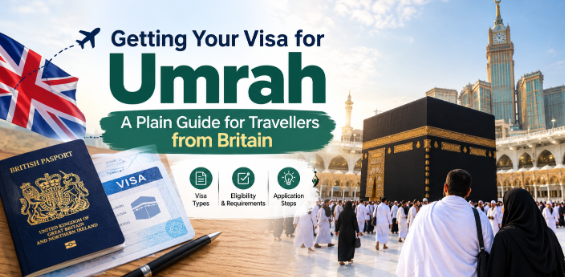
Ask anyone who went for Umrah in the nineties what the worst part of the planning was, and they’ll probably say the visa. Passports were posted off or handed to an agent, and then you waited, sometimes until a few days before the flight. Nearly every family has a story about an uncle whose passport turned up the night before he was due to leave.
It’s a lot simpler now, but the old worry hasn’t gone away. People browsing the cheap Umrah packages UK agents advertise often can’t tell whether the visa is part of the price, or whether they’re supposed to sort it out themselves. Some don’t realise there’s more than one kind. This guide goes through the options in plain English, so you know what to ask and what to do. The rules do get changed from time to time, so treat it as a starting point and check the official sources before you apply.
Do British citizens need a visa?
Yes. You can’t just turn up in Jeddah with a British passport and walk through. You need some kind of permission to enter Saudi Arabia, and you have to arrange it before you fly. What has changed is that it’s now done online, and for most people it’s quick.
The main routes
At the time of writing, British passport holders have a few ways of doing it:
- The electronic visa waiver. This is a simple online permission for British citizens. It covers a single visit, and you apply in the weeks before you travel. It doesn’t come with medical insurance.
- The tourist eVisa. This one usually lasts a year and lets you go in and out more than once, with up to 90 days in the country in total. It includes basic medical cover. You’re allowed to perform Umrah on it, which surprises a lot of people.
- The Umrah visa. This is the traditional one, issued for the pilgrimage itself. It’s arranged through the official Nusuk platform or through an approved travel agent, and it’s normally tied to a package of hotels and transport.
None of these can be used for Hajj. That has its own visa and its own system, and Umrah visitors are expected to be out of the country before the Hajj season begins.
Which one should you pick?
If you’re going with an agent, you probably won’t have to choose. They’ll tell you which visa they use and will often apply for you. Just ask if the fee is in the price you’ve been quoted.
If you’re putting the trip together yourself, think about how often you’ll go. Someone making one trip may be happy with the waiver. A family that hopes to go back within the year, or wants to add a few days somewhere else in Saudi Arabia, might get more from the tourist eVisa. Fees are changed now and then, so look at the price shown on the official site on the day you apply and ignore figures you find on old blog posts.
Applying step by step
Getting an Umrah Visa from UK addresses is mostly a matter of filling in a form carefully. The steps look like this:
- Check your passport. It must have at least six months left on it from the day you arrive.
- Get a digital passport photo. A plain background and a clear face, the same as you’d need for a UK passport.
- Go to the official Saudi visa website, or give your details to your agent. Type the address in yourself. Don’t click on an advert.
- Fill in the form exactly as your passport reads. That means every middle name, and the same spelling.
- Pay by card. The fee is generally not refunded if you make a mistake or change your mind.
- Wait for the email. It often comes within a day or two, but don’t count on that.
- Print it and save a copy on your phone.
If you don’t hold a British passport
This is the bit that trips up a lot of UK households. The easy online routes go by the passport you hold. Where you live doesn’t come into it. So if your wife has a Pakistani passport, or your father still travels on a Bangladeshi one, they can’t use the options meant for British citizens, even if they’ve been here for thirty years.
They’ll usually need an Umrah visa through Nusuk or an approved agent, and the paperwork depends on their nationality. Sort this out before you book any flights. It’s miserable to find out at the last minute that four of you can go and the fifth can’t.
Vaccination and insurance
Pilgrims need proof of a meningitis ACWY vaccination, and it must be given at least ten days before you arrive. Your GP surgery or a high-street pharmacy can do it, though you may have to pay. Ask for the certificate and keep it with your passport.
Only the tourist eVisa comes with medical cover, and it’s basic. Whichever visa you have, take out proper travel insurance. Tell the insurer the truth about any health conditions, especially for older relatives, or the policy may be worth nothing when you need it.
A visa is not a permit
This one confuses nearly everybody. The visa lets you into the country. To perform Umrah you also need a permit, which is a booked time slot, and you get that from the Nusuk app. The same app is used to book a visit to the Rawdah in Madinah. It’s free to download, so set it up at home and don’t leave it until you’re standing outside the Haram.
Mistakes that catch people out
- Copycat websites. Search for a Saudi visa and you’ll find sites that look official and charge a large “service fee” on top. Some are plain scams.
- Names that don’t match. If the name on your visa is different from your passport or your flight ticket, expect trouble at check-in.
- Booking flights you can’t change first. Get the visa side settled, or at least be sure everyone qualifies, before you pay for tickets you can’t get a refund on.
- Travelling too close to Hajj. There are cut-off dates for Umrah visitors each year. Check them if you’re planning a trip in the weeks before.
- Staying too long. Go by the dates on your visa. Overstaying can mean a fine and problems getting in next time.
When to start
A rough plan works well. Three months before, check everyone’s passport and find out which visa each person needs. Six weeks before, book the vaccinations. A month before, apply for the visas if your agent isn’t doing it. In the last week, set up Nusuk and print everything off.
It sounds like a lot when it’s written down, but most of it takes a few minutes on a laptop. For up-to-date rules, look at the foreign travel advice for Saudi Arabia on GOV.UK. If you’re unsure about something, ask a proper travel agent, and don’t rely on a forum post from three years ago.