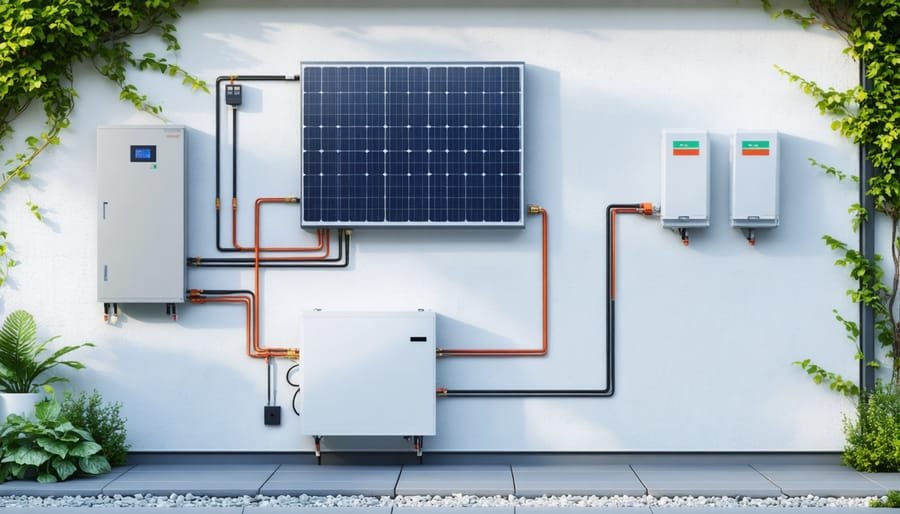
Solar technology has evolved rapidly, from the early days of simple rooftop panels to today’s fully integrated, intelligent energy ecosystems. As more homeowners and businesses embrace solar power, one thing has become clear: the real efficiency of a solar system depends on more than just the panels.
At the heart of modern solar optimization lies smart battery design, which determines how effectively energy is stored, managed, and used. Among the most efficient configurations today are stack mounted and wall mounted batteries, each suited to different needs but both designed to improve storage performance and system longevity.
This guide explores how these battery types work, their benefits, and how smart battery architecture bridges the gap between solar production and energy independence.

From Rooftop Panels to Smart Energy Storage
Solar panels generate electricity only when the sun is shining, but energy needs don’t stop after sunset. This is where smart energy storage comes in.
Batteries store excess solar power during the day and release it when needed, ensuring consistent supply and reducing reliance on the grid. The design of the battery itself plays a crucial role in:
- Minimizing conversion losses
- Improving round-trip efficiency
- Supporting high loads
- Simplifying long-term maintenance
Physical configuration also matters. Whether your battery system is stackable or mounted on a wall affects scalability, cooling, accessibility, and integration with other system components.
Stack Mounted Batteries: Scalable Power for Larger Systems
What Are Stack Mounted Batteries?
Stack mounted batteries are modular energy storage units designed to be physically stacked on top of each other. Each module adds capacity, allowing users to scale their system easily as their energy demands grow.
More in Tech
These batteries are widely used in:
- Commercial buildings
- Industrial facilities
- High-demand residential properties
- Off-grid or hybrid setups requiring large capacity
Key Advantages of Stack Mounted Batteries
1. Modular Scalability
The biggest advantage is flexibility. You can expand storage by simply adding more layers, making stack-mounted solutions ideal for growing energy needs.
2. Improved Cooling and Balance
Stacked systems often feature smart thermal management and even distribution of electrical load, resulting in:
- Higher safety
- Longer battery lifespan
- More stable performance
3. Simplified Maintenance
If a module needs servicing, it can be removed or replaced without shutting down the entire system.
Why Choose Stack Mounted Batteries?
A stack mounted setup is perfect if you need:
- Large, expandable capacity
- Long-term flexibility
- A robust solution for higher power loads
You can explore EPEVER’s range of high-performance, scalable stack mounted batteries designed for reliable, modular solar storage.
Wall Mounted Batteries: Compact and Efficient Home Solutions
Understanding Wall Mounted Design
Wall mounted batteries are engineered for environments where space is limited. They’re fixed vertically to a wall, often in garages, utility rooms, or indoor energy closets, making them ideal for residential solar users.
Core Benefits of Wall Mounted Batteries
1. Space-Saving Design
They maximize floor space, making them suitable for homes with limited room.
2. Easy Battery Installation
Wall-mounted units are lightweight, accessible, and typically quicker to install and service.
3. Clean and Modern Aesthetics
Their slim and compact structure blends smoothly into home environments without appearing bulky.
Best Use Cases
A wall mounted solution is ideal for:
- Small to medium homes
- Apartments with limited storage areas
- Users prioritizing clean aesthetics
- Essential load backup systems
Discover EPEVER’s compact and efficient wall mounted battery series crafted for modern home energy needs.
Smart Design Features That Maximize Efficiency
Modern solar batteries are no longer just storage units, they’re intelligent devices equipped with smart design features such as:
Battery Management Systems (BMS)
A BMS protects the battery from:
- Overcharging
- Deep discharging
- Overcurrent
- Thermal issues
A well-designed BMS significantly improves safety, lifespan, and energy efficiency.
Advanced Monitoring & Communication
Many modern storage systems allow:
- Real-time monitoring
- Performance analytics
- Remote management
- System optimization based on usage patterns
Improved Conversion Efficiency
Intelligent battery architecture ensures minimal energy loss during charging and discharging, improving overall solar ROI.
Installation, Maintenance, and System Integration
Installation Best Practices
For both wall and stack mounted systems, proper battery installation is key:
- Ensure ventilation for cooling
- Keep batteries away from high-humidity areas
- Verify compatibility with inverters, solar charge controllers, and other components
- Follow manufacturer guidelines strictly
Maintenance Tips
Routine care improves system life and performance:
- Inspect wiring and terminals for dust or corrosion
- Keep the area clean and dry
- Update firmware regularly for improved stability and communication
- Monitor system temperature and charge cycles
System Integration Matters
Proper integration with renewable energy systems ensures that:
- Power flows efficiently
- Overload risks are minimized
- Storage capacity is maximized
This leads to smoother operation and predictable long-term performance.
The Future of Battery Design in Solar Systems
The solar storage landscape continues to evolve with innovations like:
- AI-powered performance monitoring
- Modular and hybrid systems
- Faster-charging lithium technologies
- Higher-capacity cells for compact units
- Improved thermal and chemical stability
As energy needs grow, both stack mounted and wall mounted configurations provide flexibility to adapt. Their design versatility ensures compatibility with future technologies, making them reliable long-term investments.
Smart battery innovations will play a central role in enabling homeowners and businesses to achieve true energy independence.
Conclusion
Smart battery architecture is essential for maximizing the performance, scalability, and efficiency of any solar energy system. Whether you choose a stack mounted battery for high-capacity scalability or a wall mounted battery for compact, modern home setups, the right design directly impacts long-term reliability and energy optimization.
To build a future-ready solar storage system, explore EPEVER’s advanced range of wall and stack mounted battery solutions, designed to deliver durability, efficiency, and consistent power for years to come.