The energy price cap January 2027 figure has not been set yet. Ofgem will announce it on or before 25 November 2026, and it will apply from 1 January to 31 March 2027. Until then, the current cap of £1,723 a year for a typical household still applies. Here is what is known, what forecasters are saying, and what you can check before the announcement.
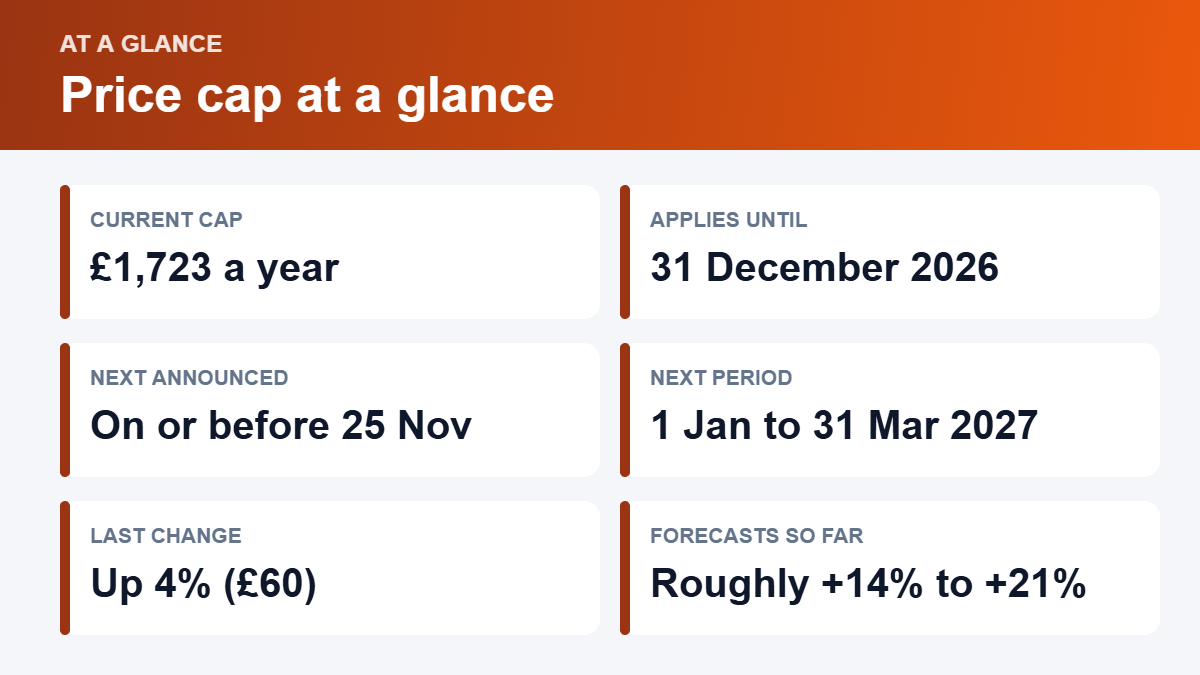
Quick answer: the cap for 1 October to 31 December 2026 is £1,723 a year for a typical dual fuel home paying by Direct Debit, up 4% (£60) from £1,663. The next cap is announced on or before 25 November. Forecasts reported so far point to a rise, but they are estimates and differ by source, so no one knows the real figure until Ofgem publishes it.
Energy price cap January 2027: the key facts
| Question | Answer |
|---|---|
| Current cap (1 Oct to 31 Dec 2026) | £1,723 a year for a typical household, up 4% from £1,663 |
| When is the January 2027 cap announced? | On or before 25 November 2026 |
| Which period will it cover? | 1 January to 31 March 2027 |
| Who is covered? | Around 22 million households on default (standard variable) tariffs in Great Britain |
| Does it apply to fixed deals? | No. The cap applies to default variable tariffs |
| Is it a limit on your total bill? | No. It limits the unit rates and standing charges, so you pay more if you use more |
Current price cap rates
These are the average Direct Debit rates in Great Britain as published by Ofgem and reported by comparison sites. Your own rates depend on your region and payment method.

| Rate | 1 Jul to 30 Sep 2026 | 1 Oct to 31 Dec 2026 |
|---|---|---|
| Electricity unit rate | 26.11p per kWh | 26.32p per kWh |
| Electricity standing charge | 57.19p per day | 54.83p per day |
| Gas unit rate | 7.33p per kWh | 7.97p per kWh |
| Gas standing charge | 29.04p per day | 29.68p per day |
In July 2026 Ofgem updated what counts as typical use. The new figures assume about 9,500 kWh of gas and 2,500 kWh of electricity a year, which is lower than before. If your home uses more than that, your real bill will be higher than the headline number. Reports on the October announcement also said the government’s removal of VAT on electricity from 1 October 2026 to 31 March 2027 kept the headline figure about £45 lower than it would otherwise have been.
What forecasters expect for January 2027
Forecasts are not official. uSwitch reports an average prediction of a 21% rise, based on estimates from British Gas, EDF and E.ON, while Money to the Masses has reported predictions of up to 14%. The cap uses wholesale prices from an assessment window that runs from 19 August to 17 November 2026, so the final number can still move.
To show what a rise would mean, the table below is simple arithmetic on today’s £1,723 figure. It is an illustration, not a prediction.
| If the cap rises by | Typical annual bill would be about | Difference from today |
|---|---|---|
| 5% | £1,809 | +£86 |
| 14% | £1,964 | +£241 |
| 21% | £2,085 | +£362 |
Should you fix before the announcement?
This is a personal decision and we cannot tell you what to do. The facts to weigh are below.
More in News
| Factor | Fixed tariff | Default variable tariff (price cap) |
|---|---|---|
| Price changes | Unit rates and standing charge stay the same for the fixed term | Changes every three months when the cap resets |
| Price today | At the time of the October announcement, Ofgem said fixed deals were available at £100 or more below the cap. Deals change daily, so check current prices | £1,723 a year for typical use |
| Leaving early | Many fixes have exit fees | No exit fees |
| If prices fall later | You stay on your fixed rate | You benefit when the cap falls |
A fixed price is a bet on where prices go. Much of any expected January rise may already be built into current fixed prices. Compare deals on an Ofgem-accredited comparison site, check exit fees and the length of the fix, and make sure you are comparing the same annual usage.
Smart ways to lower your bill this winter
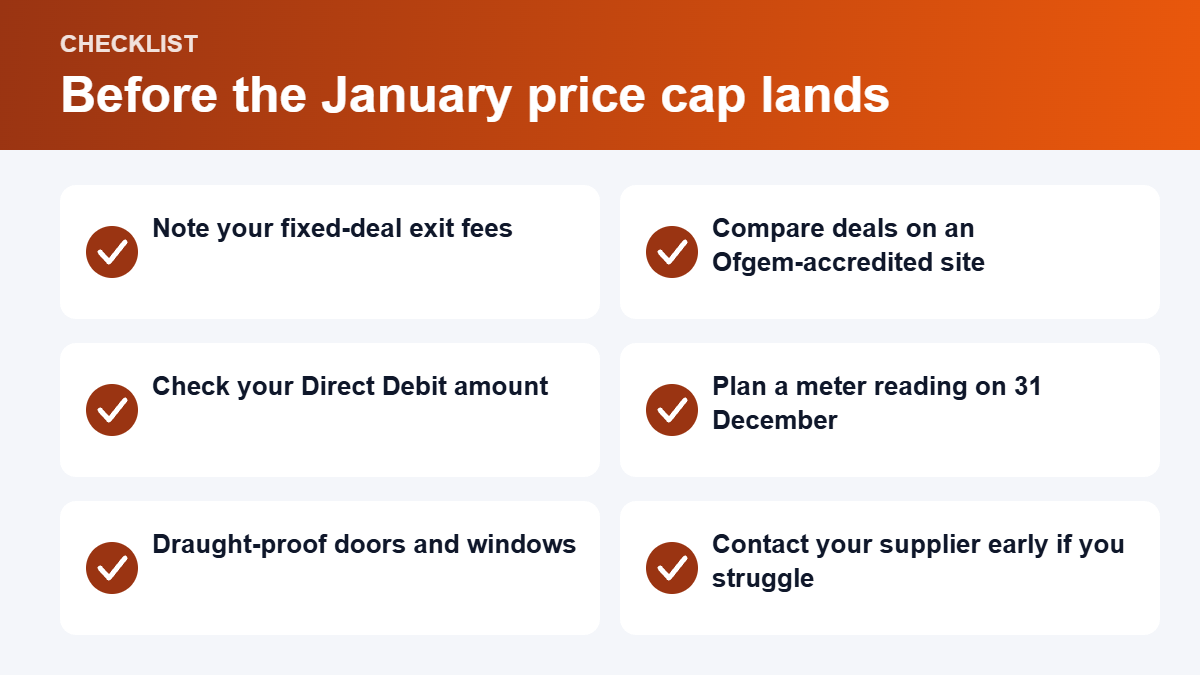
- Take a meter reading on 31 December and send it to your supplier, so the old and new rates are applied to the right usage.
- Check your Direct Debit. If it is far above your real usage you are lending money to your supplier, and if it is too low you may face a catch-up bill.
- Cut heat loss. Draught-proof doors and windows, and close curtains at dusk.
- Look at your heating settings. A slightly lower thermostat or flow temperature can reduce gas use without leaving the home cold.
- Cut other bills too. Our guide to cutting streaming and subscription costs frees up cash elsewhere.
- Buy smart. If you need a new appliance or a heated throw, our Black Friday 2026 shopping tips help you avoid fake deals.
If you struggle to pay
Contact your supplier early and ask about payment plans and support. Citizens Advice can help with energy debt and bills. Do not ignore letters, because most problems are easier to fix before they become arrears.
Energy price cap January 2027 FAQ
When will the January 2027 energy price cap be announced?
Ofgem is due to announce it on or before 25 November 2026. It covers 1 January to 31 March 2027.
Will the price cap go up in January 2027?
Forecasts reported so far point to a rise, but no forecast is certain. Ofgem will publish the real figure on or before 25 November.
Is the price cap the most I can pay?
No. It limits the unit rate and daily standing charge on default tariffs, so your bill still depends on how much energy you use.
Does the cap apply if I am on a fixed tariff?
No. A fixed tariff has its own prices for the length of the deal, and the cap does not change them.
Does the cap apply in Northern Ireland?
The Ofgem cap covers Great Britain. Northern Ireland has a different energy regulator and different rules.
What was the price cap in October 2026?
For 1 October to 31 December 2026 it is £1,723 a year for a typical dual fuel household paying by Direct Debit, up 4% from £1,663.
The bottom line
The energy price cap January 2027 will be known within weeks. Until then, you can compare fixed deals, check your Direct Debit, and plan to send a meter reading on 31 December. This article reflects information available in early November 2026 and will be out of date once Ofgem announces the new cap, so check Ofgem for the latest figures.