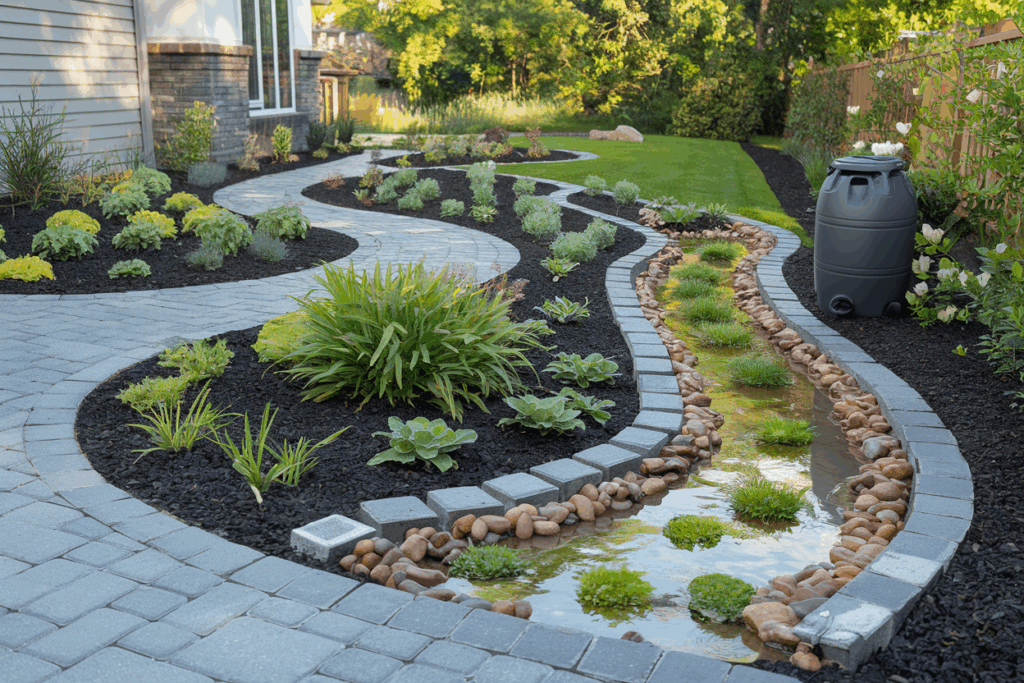
Poor drainage can turn your beautiful yard into a soggy mess — or worse, cause costly damage to your home’s foundation. Whether you’re dealing with puddles after every rainfall or struggling with erosion on a sloped lawn, the right landscape drainage solutions can make a world of difference. In this guide, we’ll break down the most common drainage issues, explain why they matter, and show you how to fix them with smart landscaping techniques.
Why Landscape Drainage Matters
When water isn’t properly directed away from your yard or home, it doesn’t just sit there looking unsightly. Over time, it can:
- – Damage your home’s foundation
- – Kill plants and grass due to root rot
- – Attract pests like mosquitoes
- – Erode topsoil and mulch
- – Lead to mold or mildew problems
Common Yard Drainage Problems
Before you can fix a problem, you need to identify it. Here are a few tell-tale signs that your landscape has drainage issues:

- – Standing water after rain or irrigation
- – Soft, soggy spots in the lawn
- – Soil erosion in garden beds or on slopes
- – Water stains or leaks near your home’s foundation or basement
Top Landscape Drainage Solutions
French Drains
A French drain is a gravel-filled trench that redirects water away from problem areas using a perforated pipe. It’s one of the most popular drainage systems and works well for:
– Diverting water away from foundations
– Solving soggy lawn issues
– Dealing with surface runoff on slopes
Pro tip: Line the trench with landscape fabric to prevent clogs and extend the drain’s lifespan.
Dry Creek Beds
Dry creek beds are both functional and decorative. They mimic the look of a natural stream and are ideal for directing rainwater across your yard.
– Excellent for managing runoff on hilly properties
– Reduces erosion
– Can be enhanced with stones, boulders, and native plants
Proper Grading
Sometimes the simplest fix is re-sloping your yard. Proper grading ensures that water flows away from your home instead of pooling around it.
– A slope of 2% (about 1/4 inch per foot) is ideal
– Works best when done during initial landscaping or renovation
More in Business
Catch Basins and Drain Pipes
For areas with heavy water flow, consider installing catch basins that collect water and connect to underground drain pipes.
– Quickly removes surface water
– Prevents flooding in low-lying areas
– Often used in combination with other systems like French drains
Rain Gardens
Rain gardens are a sustainable solution that uses plants and soil to absorb and filter runoff.
– Great for eco-conscious homeowners
– Attracts birds and pollinators
– Reduces pressure on municipal stormwater systems
Choose native, deep-rooted plants that thrive in wet conditions for the best results.
Permeable Pavers
If you’re planning a new patio, driveway, or walkway, consider permeable pavers. These materials allow water to seep through instead of running off.
– Controls surface runoff
– Helps recharge groundwater
– Looks just like regular pavers but performs much better in rainy conditions
DIY vs. Hiring a Professional
Some minor drainage issues can be tackled with DIY fixes, such as:
– Extending your downspouts
– Adding a gravel-filled swale
– Adjusting soil or mulch levels around your foundation
But for more complex problems like foundation drainage or major regrading, it’s smart to consult a landscape or drainage contractor. They’ll assess your property, design a custom solution, and ensure everything is up to code. Proper yard drainage can help protect your foundation, preventing standing water, soil erosion, and damage to your landscaping. Addressing these issues early can save you from larger repairs in the future.
Maintenance Tips for Long-Term Success
Once your drainage system is in place, a little upkeep goes a long way:
- – Clear out leaves and debris from drains and grates
- – Inspect pipes and basins after storms
- – Watch for new pooling or erosion over time
Conclusion
Whether you’re dealing with a soggy lawn, foundation leaks, or erosion on a hillside, there’s a landscape drainage solution that can help. From French drains to rain gardens, each option comes with its own set of benefits. The key is understanding your yard’s unique challenges and choosing the right fix for long-term success.
Don’t wait for the next downpour to do damage — take action today to protect your property, preserve your landscaping, and enjoy a dry, healthy yard.