
If you searched for “Cyanová”, you have probably met the word on a website or in a design discussion and want to know what it means. The honest answer is that Cyanová is not a standard color name, a recognized scientific term or a widely known brand. It is a stylized spelling that appears online mostly in connection with the color cyan. This guide explains how the name is used and then gives you reliable facts about cyan itself.
What Does “Cyanová” Mean?
The word looks like “cyan” with a decorative ending. Several websites use it as a title for articles about a blue-green color, and some use it as a brand-style name. Because there is no single official definition, treat it as a creative variant of cyan rather than a separate, formally defined color. If you see it attached to a product or company, check that business’s own website for what it actually offers.
What Is the Color Cyan?
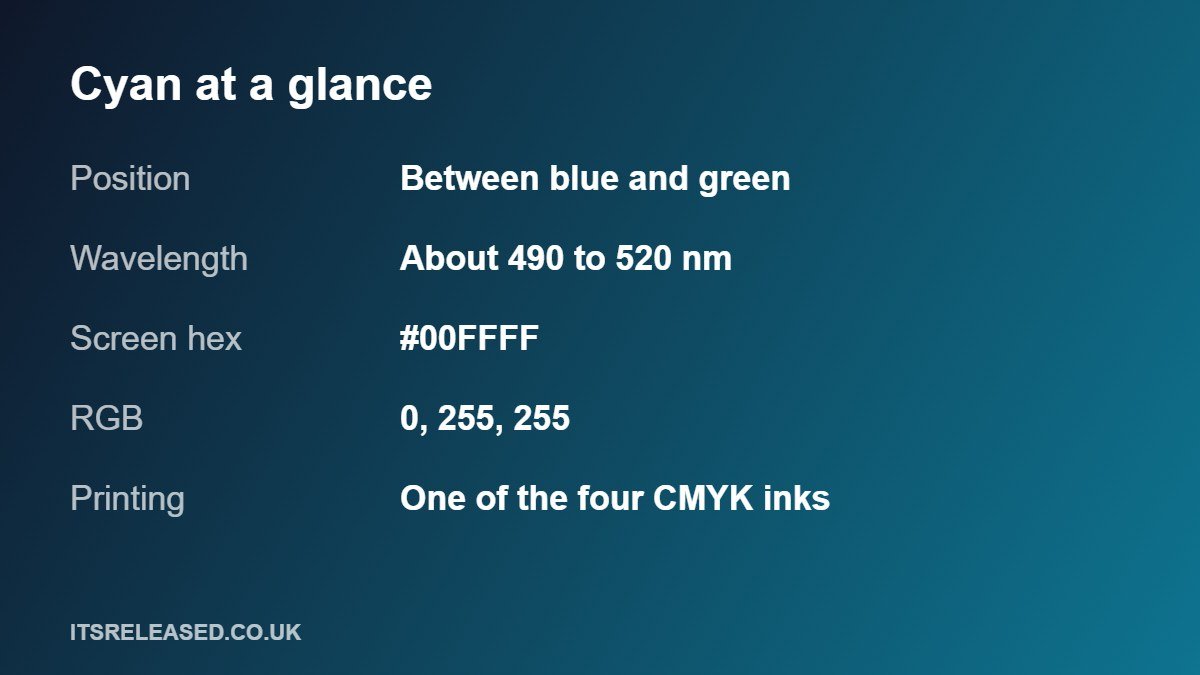
Cyan is a color that sits between blue and green. The name comes from a Greek word meaning dark blue. In the visible spectrum, cyan is commonly placed at wavelengths of roughly 490 to 520 nanometers.

Key Technical Facts
- Hex code: pure cyan on screens is #00FFFF.
- RGB: 0 red, 255 green, 255 blue.
- CMYK: cyan is one of the four primary inks in color printing, along with magenta, yellow and black.
- Complementary color: red sits opposite cyan on the color wheel.
Cyan in Printing and Screens
On screens, cyan is made by mixing green and blue light at full strength. In print, it is an actual ink that absorbs red light. This is why cyan is essential to the CMYK process used for magazines, packaging and posters, and why very bright screen cyan can look slightly different when printed.
What Does Cyan Communicate?
Color psychology is not an exact science and responses vary by culture, but cyan is generally linked with clarity, freshness, calm and technology. Designers often use it to suggest water, cleanliness and modern digital products. Paired with white or dark navy, it feels crisp and professional; paired with warm colors such as orange, it creates a lively contrast.
Design Tips for Using Cyan
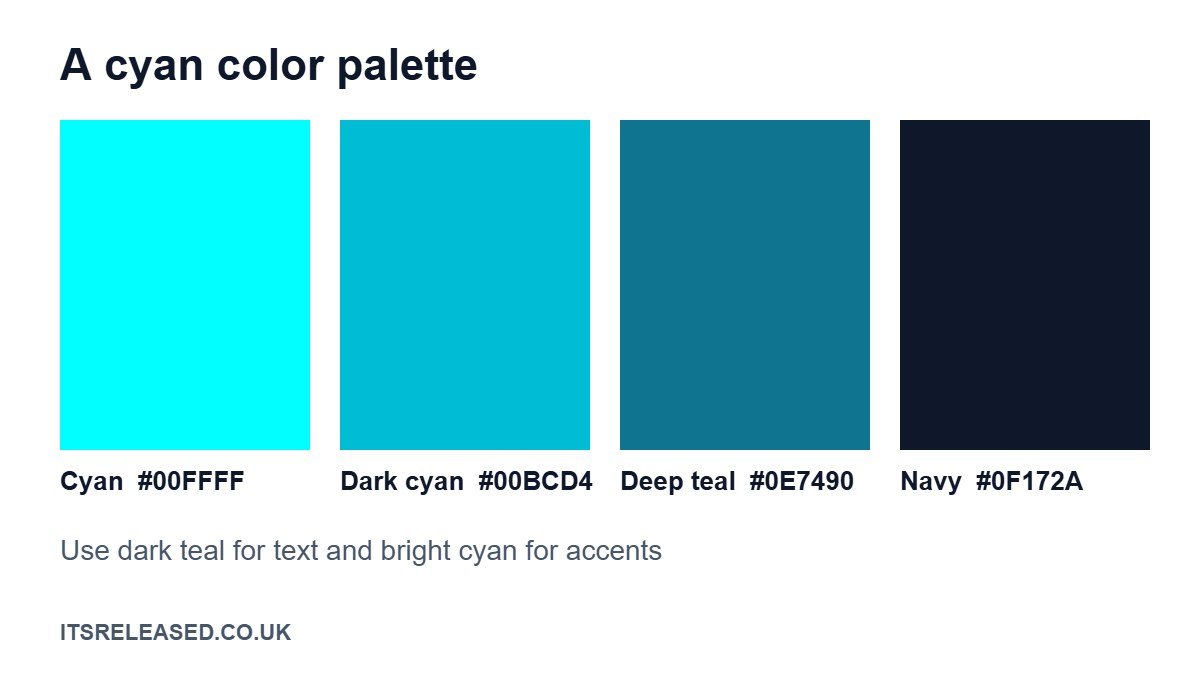
- Mind contrast: bright cyan text on a white background is hard to read, so use a darker teal for text.
- Use it as an accent: a small amount of cyan for buttons and links draws attention without overwhelming the page.
- Test on different screens: saturated cyan can shift between displays.
- Check accessibility: make sure important information does not rely on color alone.
Where You See Cyan
Cyan appears in swimming pool water, tropical seas, some gemstones and many brand logos and app interfaces. If you work on a website or small business, a consistent color palette is part of a strong identity. Our guide to a one-page business plan is a good place to start planning your brand, and how to create a startup budget helps you plan the cost.
Frequently Asked Questions
Is Cyanová a real color?
It is not an official color name. It is a stylized form of cyan used by some websites.
More in Blogs
What is the hex code for cyan?
#00FFFF.
Is cyan a primary color?
It is a primary color in the CMYK printing model and a secondary color in the RGB light model.
Which colors go well with cyan?
White, navy, gray, and warm accents such as orange or coral.
Final Thoughts
Cyanová is best understood as a creative spelling around the color cyan. The color itself has clear, well-documented properties and plenty of practical uses in design, print and screens. Use the name with care, and rely on the facts about cyan when you make design decisions.