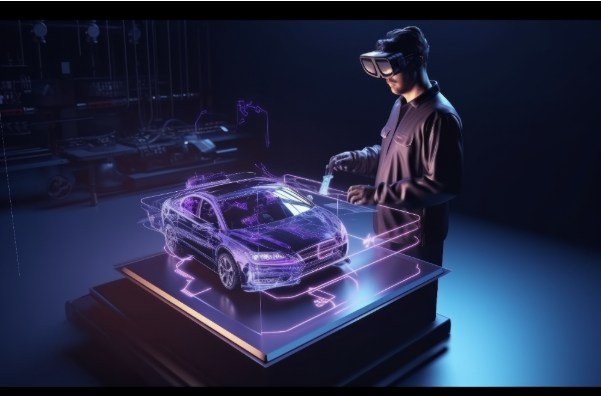
As we approach 2025, the automotive industry is poised for significant transformation, driven largely by advancements in automotive software development. The role of software in modern vehicles is more critical than ever, enabling innovations that range from autonomous driving to enhanced in-car experiences. Automotive software development is no longer limited to basic vehicle functionality but is now integral to almost every aspect of a car’s operation, design, and user interaction. With the rising demand for smarter, safer, and more connected vehicles, the need for advanced automotive software design solutions has never been more pronounced.
The Rise of Electric and Autonomous Vehicles
The automotive industry is undergoing a paradigm shift with the rise of electric vehicles (EVs) and autonomous driving technologies. By 2025, it is anticipated that these technologies will dominate the market, reshaping the way consumers view and interact with cars.
Electric vehicles (EVs) rely heavily on software to manage their intricate systems, from energy management to motor control. In fact, a significant portion of an EV’s performance and efficiency is dictated by its software. With the development of new battery technologies, EVs will require even more sophisticated software solutions to manage energy consumption, optimize battery life, and integrate charging networks. As these vehicles become more mainstream, automotive software design solutions will need to address challenges like real-time monitoring, predictive maintenance, and enhancing driver comfort through intelligent user interfaces.
On the other hand, autonomous vehicles (AVs) are arguably the most disruptive force in automotive software development. The shift toward full autonomy requires massive amounts of software integration, machine learning algorithms, and artificial intelligence (AI) to enable vehicles to navigate and make decisions without human intervention. By 2025, it is expected that the industry will see more advanced levels of autonomy, with many vehicles on the road featuring autonomous features like lane-keeping assist, adaptive cruise control, and even full self-driving capabilities in certain scenarios.
The development of AVs brings together diverse software elements, including sensor fusion (combining inputs from cameras, radars, LIDAR, and ultrasonic sensors), deep learning models, and vehicle-to-vehicle (V2V) communication. This presents a unique challenge for software developers, as they must work to integrate these systems into a seamless user experience that ensures safety, efficiency, and performance.
Software-Defined Vehicles (SDVs)
Another key trend in automotive software development by 2025 is the rise of Software-Defined Vehicles (SDVs). In an SDV, software takes center stage in controlling and optimizing nearly every aspect of the vehicle’s operation, replacing traditional mechanical and hardware-based systems. From infotainment and climate control to safety and driver-assistance systems, SDVs allow for far more flexibility, customization, and functionality than traditional vehicles.
In SDVs, updates to the vehicle’s software can be delivered over-the-air (OTA), eliminating the need for customers to visit service centers for upgrades. This not only provides consumers with access to the latest features but also offers automakers an ongoing opportunity to improve the vehicle’s performance and safety without the need for physical recalls.
By 2025, OTA updates will become standard for most vehicles, enabling automakers to improve vehicle functionality, fix bugs, and introduce new features remotely. This trend will not only change the way vehicles are maintained but also how they evolve over their lifespan. Developers will need to work on enhancing the security and reliability of these systems to prevent cyber threats and ensure that updates are delivered in a manner that does not interrupt vehicle performance or safety.
Enhanced Connectivity and IoT Integration
As more vehicles become connected, integrating them into the broader Internet of Things (IoT) ecosystem will become a major challenge for software developers. By 2025, automotive software will need to support a vast array of connected devices, enabling vehicles to communicate with smart cities, other vehicles, traffic infrastructure, and even other IoT-enabled objects like home appliances.
This connectivity is not only vital for autonomous driving but also for improving user experience. Imagine a scenario where your car recognizes your location and the time of day and adjusts its settings to ensure that you have a personalized, comfortable ride, with your favorite music playing, the climate adjusted to your preferences, and directions optimized for minimal traffic. This is the future of the connected car, and it will require innovative software solutions to ensure that communication between vehicles and other connected systems is seamless and secure.
The demand for automotive software design solutions will increase in this space as developers work on integrating wireless communication protocols, vehicle-to-everything (V2X) technologies, and secure data transmission systems. The challenge will be to ensure that these systems are robust and can handle massive amounts of data generated by connected vehicles without compromising safety or privacy.
Cybersecurity Challenges
As the automotive industry becomes increasingly reliant on software, the risks associated with cybersecurity also grow. A breach in automotive software could lead to catastrophic consequences, from theft of personal data to full vehicle control hijacking. By 2025, automotive cybersecurity will be one of the top priorities for automakers and software developers alike.
Automotive software systems will need to be designed with advanced security features, including multi-layer encryption, secure boot processes, and continuous monitoring to prevent cyberattacks. Furthermore, the increased reliance on OTA updates and V2X communication systems will introduce new vulnerabilities that developers will need to address.
The challenge lies in balancing security with the convenience and functionality expected by consumers. As vehicles become more connected, software developers will need to stay ahead of hackers and ensure that cars are as safe from cyber threats as they are from physical dangers on the road. This will require a new generation of automotive cybersecurity experts who can design robust software solutions to counter emerging threats.
Challenges in AI and Machine Learning
Artificial intelligence (AI) and machine learning (ML) are integral to the development of autonomous vehicles, smart features, and predictive systems. However, the complexity of implementing AI in automotive software presents unique challenges. By 2025, automakers will rely more heavily on AI to enhance safety features, optimize driving behavior, and even predict maintenance needs before they occur. The adoption of machine learning algorithms will make vehicles smarter, but developers will face challenges in ensuring that these systems are trained with enough data to make accurate decisions in real-world scenarios.
One of the primary challenges is creating AI systems that are capable of making safe, ethical decisions when faced with unexpected situations, such as pedestrians crossing the road unexpectedly or adverse weather conditions. Developers must also address the concerns surrounding the transparency and explainability of AI decisions, as users and regulators alike will demand to understand how decisions are made in critical moments.
The Path Forward: Automotive Software Development Services
The challenges and trends outlined above present both opportunities and hurdles for the automotive industry as it heads into 2025. To stay competitive, automakers will need to work closely with automotive software development services to navigate the complex landscape of EVs, AVs, SDVs, cybersecurity, AI, and connectivity.
These services will provide the expertise and resources required to design, develop, and deploy the innovative software solutions that will shape the future of the automotive industry. As software becomes the backbone of modern vehicles, the demand for skilled developers, cybersecurity experts, AI specialists, and system integrators will only grow.
Automotive software development services will play a critical role in helping automakers overcome the challenges of creating secure, efficient, and high-performing vehicles. By leveraging cutting-edge technologies, they will help drive innovation, improve safety, enhance user experience, and ensure that vehicles are ready to meet the demands of the rapidly evolving automotive landscape.
In conclusion, the automotive software development industry is on the verge of an exciting and transformative period. The trends shaping 2025 are paving the way for smarter, safer, and more connected vehicles. As automotive manufacturers race to keep up with these advancements, working with reliable automotive software development services will be essential to achieving success in this fast-paced, technology-driven environment.