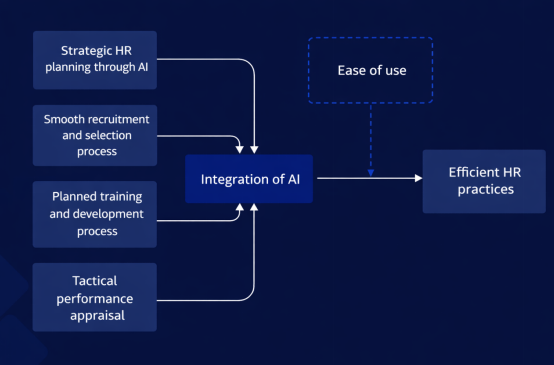
Human resource management is undergoing a fundamental transformation as organizations adapt to rapid digital change, evolving workforce expectations, and increasing competition for skilled talent. Traditional HR processes—often manual, time-consuming, and reactive—are no longer sufficient to support data-driven decision-making or scalable workforce strategies. This is where AI in HR is emerging as a critical enabler, helping organizations modernize how they attract, manage, and retain talent while improving operational efficiency and employee experience.
The Strategic Importance of AI in HR
Artificial intelligence is reshaping HR from an administrative function into a strategic business partner. By leveraging machine learning, natural language processing, and predictive analytics, HR teams can move beyond intuition-based decisions to evidence-driven workforce planning.
Organizations adopting AI in HR are better positioned to manage large volumes of employee data, uncover actionable insights, and respond proactively to workforce challenges. This shift is not about replacing HR professionals, but about augmenting their capabilities with intelligent systems that improve accuracy, speed, and consistency.
Streamlining Job Description Management with ZBrain HR JD Builder
As enterprises scale their hiring efforts, job description (JD) management becomes increasingly complex and operationally demanding. While generative AI is transforming multiple HR functions, JD creation and maintenance often remain manual, fragmented, and inconsistent. To address this challenge, LeewayHertz operationalizes its advanced generative AI capabilities through ZBrain, its flagship enterprise AI enablement platform designed to support intelligent, scalable, and secure HR workflows.
ZBrain HR JD Builder is an AI-powered solution that automates and manages the complete job description lifecycle—from draft creation and internal review to approval and publishing across connected HRMS, HRIS, and HCM systems. Built for enterprise-scale hiring and workforce planning, it enables HR teams to produce standardized, compliant, and compensation-ready job descriptions with greater efficiency and consistency.
By embedding governance, compliance support, and system integration into a unified workflow, ZBrain HR JD Builder significantly reduces manual effort while maintaining a centralized system of record for job descriptions across the organization.
Core Capabilities of ZBrain HR JD Builder
Prebuilt JD Template Library
The platform offers more than 150 ready-to-use JD templates, enabling HR teams to standardize drafting and accelerate job description creation across roles, departments, and business units.
Duplicate and Similar JD Detection
Brain HR JD Builder identifies duplicate or near-duplicate job descriptions during creation and validation, helping prevent JD sprawl and reduce redundancy across the organization’s JD repository.
Automated Customization and Quality Controls
The solution automatically aligns job descriptions with organizational rules and role-specific requirements. It detects anomalies, flags biased language, and enforces consistency to ensure fairness and quality across all JDs.
Compensation-Ready JD Creation
HR teams can include salary ranges, benefits, and perks directly within job descriptions, supporting transparent and competitive job postings aligned with modern hiring practices.
Compliance Support and Language Alignment
The platform assists organizations in meeting regional compliance requirements and internal standards by aligning JD language with applicable regulations and policies.
Role-Based Workflows and Governance Controls
ZBrain enables controlled access, predefined approval workflows, and secure publishing rights, ensuring governance and accountability throughout the JD lifecycle.
Versioning and Controlled Iteration
Built-in version control allows HR teams to manage updates efficiently while maintaining consistency and historical traceability of job descriptions over time.
Direct HRMS, HRIS, and HCM Publishing
Seamless integration with enterprise HR systems eliminates manual updates, improves data accuracy, and ensures job descriptions remain synchronized across platforms.
Together, these capabilities empower HR teams to manage job descriptions more efficiently while maintaining governance, compliance, and organizational alignment—making JD management a strategic enabler rather than an administrative burden.
Core Technologies Powering AI in HR
Machine Learning for Predictive Workforce Insights
Machine learning models analyze historical and real-time HR data to identify patterns related to employee performance, attrition, and engagement. These insights enable HR leaders to predict turnover risks, optimize hiring strategies, and plan future workforce needs more effectively.
Natural Language Processing in HR Interactions
Natural language processing (NLP) allows HR systems to understand and process human language. NLP-powered tools are commonly used in resume screening, employee sentiment analysis, and AI-driven chatbots that handle routine HR queries, improving responsiveness and employee satisfaction.
Data Analytics for Evidence-Based HR Decisions
Advanced analytics transforms raw HR data into actionable intelligence. By integrating data from recruitment platforms, performance systems, and learning tools, AI helps HR teams measure outcomes, track KPIs, and align people strategies with business objectives.
Key Use Cases of AI in HR
AI-Driven Talent Acquisition
Recruitment is one of the most impactful areas for AI adoption. AI-powered systems automate resume screening, match candidates to job roles based on skills and experience, and reduce unconscious bias in hiring decisions. This leads to faster hiring cycles, improved candidate quality, and a more consistent recruitment process.
Employee Engagement and Experience Management
AI tools analyze employee feedback, surveys, and communication data to assess engagement levels and workplace sentiment. These insights help organizations identify issues early, personalize engagement initiatives, and foster a more inclusive and supportive work environment.
Learning and Development Optimization
AI enables personalized learning pathways by assessing employee skills, performance gaps, and career goals. Intelligent learning platforms recommend relevant training content, helping employees upskill continuously while aligning development efforts with organizational priorities.
Performance Management and Productivity Analysis
AI-enhanced performance management systems provide objective, data-backed evaluations by analyzing multiple performance indicators. This supports fair assessments, continuous feedback, and more effective goal setting, while reducing manual bias in reviews.
Benefits of Implementing AI in HR
Improved Operational Efficiency
By automating repetitive and administrative tasks, AI allows HR professionals to focus on strategic initiatives such as talent development, leadership planning, and organizational culture.
Enhanced Decision-Making Accuracy
AI-driven insights reduce guesswork in HR decisions. Predictive analytics helps organizations anticipate workforce trends and make proactive adjustments rather than reactive fixes.
Better Employee Experience
AI-powered self-service tools and chatbots provide employees with instant access to information and support, improving satisfaction while reducing HR response times.
Scalable HR Operations
As organizations grow, AI enables HR functions to scale without proportionally increasing costs or complexity, making it especially valuable for enterprises with large or distributed workforces.
Challenges and Ethical Considerations
While AI offers significant advantages, responsible implementation is essential. Organizations must address data privacy, algorithmic bias, and transparency to ensure ethical AI use in HR. Human oversight remains critical to validate AI-driven recommendations and maintain fairness in people-related decisions.
The Future Outlook of AI in HR
The future of HR lies in intelligent, adaptive systems that continuously learn and evolve. As AI technologies mature, HR functions will become increasingly predictive, personalized, and strategic. Organizations that invest early in AI-driven HR transformation will gain a competitive advantage by building resilient, data-driven, and employee-centric workplaces.
Conclusion
AI in HR is no longer a forward-looking concept—it is a practical, transformative force reshaping how organizations manage their most valuable asset: people. By integrating AI across recruitment, engagement, performance, and learning, enterprises can unlock higher efficiency, smarter decision-making, and improved employee experiences. As adoption accelerates, success will depend on combining advanced technology with ethical practices and human expertise to create sustainable, future-ready HR ecosystems.