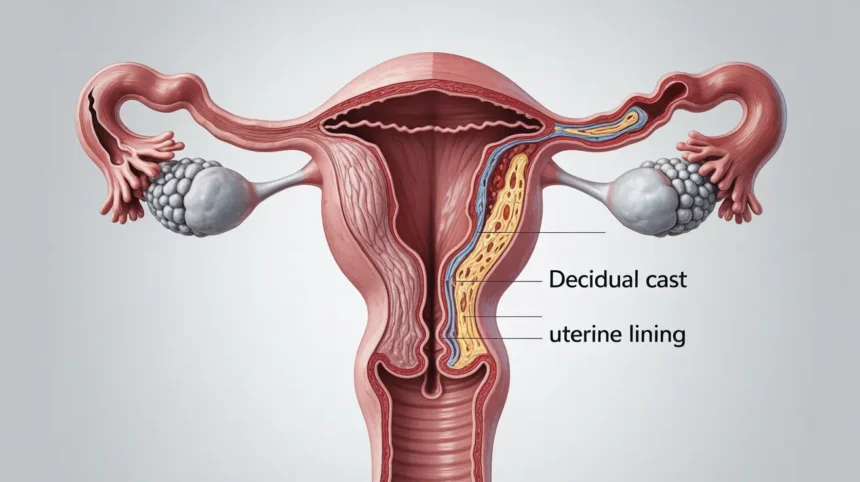
A decidual cast is a rare but significant medical phenomenon that occurs when the lining of the uterus, called the decidua, is shed in a form that resembles a cast or a membrane. This event can happen during or after a missed miscarriage, or sometimes as part of an irregular menstrual cycle. For those who experience it, it can be both alarming and puzzling. In this article, we’ll dive into what a decidual cast is, its causes, symptoms, and potential treatments, providing a comprehensive understanding of this condition.
What Is a Decidual Cast?
A decidual cast refers to the shedding of the uterine lining in the form of a large, recognizable tissue. This membrane is typically made up of the decidua, which is the lining that thickens in preparation for pregnancy. When a pregnancy does not occur or a miscarriage happens early in gestation, the decidua can be expelled from the body in a way that forms a cast-like structure.
The Decidua and Its Role in Pregnancy
During pregnancy, the decidua plays a critical role in nurturing and supporting the embryo. It provides a nutrient-rich environment and helps in the implantation process. If the pregnancy does not progress as expected, whether due to a miscarriage or another complication, the decidua may be shed.
In cases where a decidual cast forms, it can be passed out of the body through the cervix, leading to a distinct experience of bleeding and tissue passage that can resemble a miscarriage. The expelled tissue may be grayish in color and have a smooth, membranous appearance.
What Causes a Decidual Cast?
A decidual cast usually occurs when the uterine lining is shed prematurely. However, there are several possible causes for the formation of a decidual cast, and it’s important to differentiate between the potential underlying conditions.
Miscarriage
One of the most common causes of a decidual cast is a missed miscarriage. This happens when a pregnancy stops developing, but the body does not immediately recognize the loss. The decidua continues to thicken, preparing for the pregnancy that is no longer viable. Eventually, the body expels the decidua in the form of a decidual cast.
Ectopic Pregnancy
An ectopic pregnancy, where the fertilized egg implants outside the uterus (typically in the fallopian tube), can also lead to the shedding of the decidua. In some cases, an ectopic pregnancy may not be recognized until the body expels the tissue, leading to the formation of a decidual cast.
Hormonal Imbalances
Hormonal imbalances can disrupt the normal process of menstruation or pregnancy, potentially leading to irregular shedding of the uterine lining. Conditions such as polycystic ovary syndrome (PCOS), thyroid disorders, and low progesterone levels can result in the premature shedding of the decidua, which may lead to the passage of a decidual cast.
Uterine Abnormalities
Certain uterine abnormalities, such as fibroids or polyps, may lead to irregular shedding of the uterine lining. These conditions can sometimes result in the formation of a decidual cast.
Infections or Inflammatory Conditions
In rare cases, infections or inflammatory conditions within the uterus can cause premature shedding of the uterine lining. Conditions like endometritis or pelvic inflammatory disease (PID) may lead to abnormal uterine shedding and the formation of a decidual cast.
Symptoms of a Decidual Cast
The main symptoms of a decidual cast revolve around vaginal bleeding and the passage of tissue. These symptoms can vary in severity, and the experience may be different for each individual.
Vaginal Bleeding
The first noticeable symptom of a decidual cast is often vaginal bleeding. This bleeding may be heavier than a regular period and may last for several days. Unlike a typical period, the bleeding may be accompanied by the passage of tissue, which is when the decidual cast may be expelled.
Passage of Tissue
The expulsion of tissue is the hallmark symptom of a decidual cast. This tissue may appear in clumps or as a solid, membranous mass. It can be grayish or pale in color, and may resemble a miscarriage.
Abdominal Cramps
Mild to moderate abdominal cramping can also occur as the uterus sheds the tissue. These cramps may feel similar to those experienced during a heavy period or early miscarriage.
Fatigue
Some individuals may experience fatigue during or after passing the decidual cast, likely due to the blood loss and hormonal changes that occur during the process.
Pelvic Pressure
In some cases, there may be pelvic pressure or a feeling of fullness in the lower abdomen as the uterus sheds the decidual tissue.
How Is a Decidual Cast Diagnosed?
If you experience symptoms such as heavy bleeding, abdominal cramps, and the passage of tissue, it’s important to consult a healthcare provider for diagnosis. A healthcare professional will typically perform a pelvic examination and may recommend ultrasound imaging to assess the uterus and check for any abnormalities or pregnancy-related issues.
A blood test may also be conducted to measure hormone levels, which can help determine if a miscarriage, ectopic pregnancy, or hormonal imbalance is contributing to the shedding of the uterine lining.
In some cases, if the cast is passed without complications, further testing may not be necessary. However, if a miscarriage or other underlying condition is suspected, your doctor may recommend additional tests or a follow-up ultrasound to ensure that the uterus is completely cleared.
Treatment Options for a Decidual Cast
In most cases, a decidual cast will pass naturally, and no medical intervention is required. However, if complications arise or if there is concern about the underlying cause of the decidual cast, treatment may be necessary.
Medical Management for Miscarriage
If the decidual cast is a result of a miscarriage, a healthcare provider may recommend medical management, such as misoprostol, to help expel any remaining tissue from the uterus. In some cases, surgical intervention may be needed, particularly if there is retained tissue that could lead to infection or other complications.
Hormonal Treatment
For individuals with hormonal imbalances or conditions like PCOS, hormonal treatments such as birth control pills or progesterone therapy may be prescribed to help regulate the menstrual cycle and prevent further irregular shedding of the uterine lining.
Surgical Treatment for Uterine Abnormalities
If uterine fibroids or polyps are contributing to the shedding of the decidua, surgical intervention may be necessary. Procedures such as hysteroscopy can be used to remove fibroids or polyps and restore normal uterine function.
Antibiotics for Infections
In cases where infections are identified as the cause of the decidual cast, antibiotics may be prescribed to treat the infection and prevent further complications.
How to Cope with a Decidual Cast
Experiencing the passage of a decidual cast can be physically and emotionally challenging. If you are dealing with this condition, here are some ways to manage:
Seek Emotional Support
Passing a decidual cast can be an emotional experience, especially if it is related to a miscarriage. Talking to a trusted friend, family member, or counselor can help you process your feelings.
Monitor Your Symptoms
Keep track of your symptoms, including the amount of bleeding, pain, and tissue passed. If you notice anything unusual, such as heavy bleeding or fever, contact your healthcare provider immediately.
Rest and Hydrate
Ensure you get plenty of rest and hydration during the process. This can help your body recover and cope with the physical stress of shedding the uterine lining.
Follow Up with Your Doctor
If you have concerns or experience complications after passing a decidual cast, be sure to follow up with your healthcare provider to ensure everything has been cleared from the uterus.
Conclusion
A decidual cast can be a confusing and distressing experience, but it is important to understand that it is typically a result of a miscarriage, hormonal imbalance, or other underlying reproductive health conditions. While most cases resolve naturally, it is essential to seek medical attention if you experience symptoms of a missed miscarriage or other complications.
By understanding the causes, symptoms, and treatment options available, you can better navigate the experience and seek the appropriate care. Always consult with your healthcare provider if you have concerns, and remember that emotional support is just as important as physical care during this challenging time.