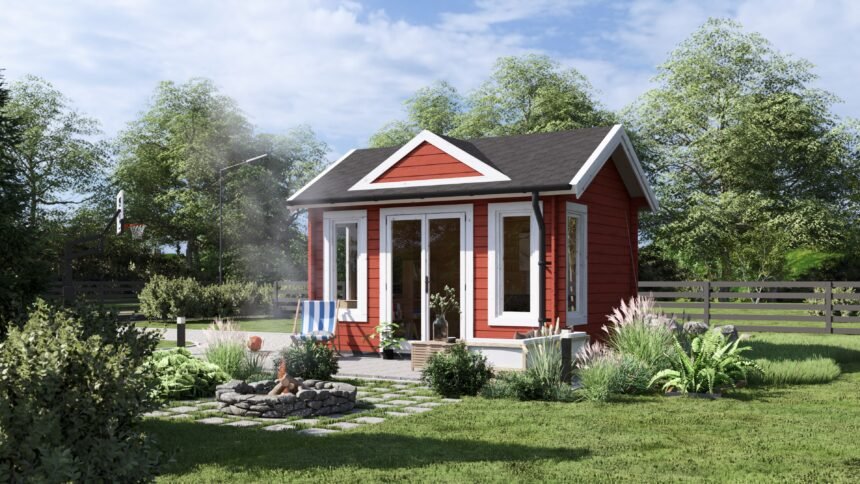
An increasing number of homeowners in the UK are hoping to convert their garden spaces into something more versatile, be it a home office, gym, studio or guest accommodation. Of the different types of garden buildings, the garden log cabins UK are certainly among the most attractive, sturdy, and warm throughout the entire year. However, simply buying a garden office does not automatically make it suitable for year-round use in all weather conditions.
This guide outlines the essential specifications you should consider when choosing a log cabin. It should also remain comfortable and functional throughout every season.
Garden log cabins are perfect for year-round use
Garden log cabins give homeowners a permanent, relaxing space just outside their homes. The wood they are made from offers natural insulation, which can be improved for all-year living.
The global log cabin market is expected to reach USD 15.3 billion by 2031, at a CAGR of 8.6%. People in the UK are looking for garden rooms more than ever, their online searches have increased by 27% in the past year.
- Aesthetic appeal blends with garden surroundings.
- Provides solid and high-quality build.
- When insulated properly, it has great thermal mass.
- Can be used as a home office, gym, or studio.
Must-Have Elements for Year-Round Garden Log Cabins
To be usable throughout most months of the year in the UK, a garden log cabin must include certain features. Adding these elements can boost thermal efficiency, weather resistance, and structure strength.
Insulation quality relies on wall thickness. Walls that are 28mm are fine for summer use but the recommendation for extended or all-year use is 44mm and 70mm.
Energy efficiency largely depends on double glazing! Double-glazed windows today normally have mid-U-values of 1.2–1.4 W/m²K, which may meet current building regulations for replacement windows.
Foundations must provide a solid base which is level and damp-proof. Most people choose a concrete slab or a solid timber frame affixed to concrete pads. Moreover, ventilation should be adequate to avoid moisture and condensation.
The roof construction uses tough and waterproof materials such as EPDM rubber or high-quality felt that can withstand the heavy rainfall and wind in the UK.
Insulation and Heating Solutions for the Climate of the UK
If you want to ensure comfortable temperatures without excessive energy costs, effective insulation at your year-round log cabin is essential. Insulating the floor, walls, and roof of a fully insulated 40m² cabin can set you back around £3200-4200, but saves you a lot more in heating fees down the line.
Floor insulation prevents heat loss deep into the ground. You can use rigid foam boards or mineral wool between joists.
Solid log walls (for example 70mm thick) may still require additional internal insulation to meet modern U-value standards, depending on usage.
Having roof insulation is critical, as heat can escape through the roof about 26% of the time.
There are several heating options available, including electric panel heaters, underfloor heating, wood-burning stoves, and air source heat pumps electric panel heaters, underfloor heating wood burners and air source heat pumps among others. In a well-insulated space, for example, underfloor heating may cost £290–£500 per year to run. When using an insulated space, your condensation and dampness issues will need to be prevented with ventilation.
Materials and construction quality
The lifespan of a garden log cabin depends to a great extent on the quality of materials and build. Most high-quality timber garden buildings use pressure-treated timber and can last between 15 and 40 years, depending on maintenance and exposure depending on the climate in the UK.
NNordic spruce is commonly used for log cabins as they typically grow slowly. This also makes the timber dense which, in turn, reinforces stability. Nordic spruce in its natural state is rated as slightly durable to not durable (classes 4-5). Therefore, it will need preservative treatment for outdoor UK conditions.
Pressure treated wood is timber that has been infused with preservatives under high pressure. This timber will be more resistant to rot, insect damage, and moisture damage. This means that your timber will have a greater life span. In fact, pressure treated timber can last 10-15 years longer than untreated timber. Factory-finished timber provides assured quality and defence from the start.
Planning Approval and Construction Standards
If you are planning a garden log cabin project in the UK, it is important to know planning permission and building regulations. Most garden log cabins can be built under permitted development rights. Provided certain criteria are met, your garden log cabin won’t need full planning permission.
The key permitted development rules are:
- In the case of pitched roofs, eaves must be 2.5 metres.
- Can be as high as 4 metres for dual-pitched roofs.
- If the cabin is within 2 metres of a boundary, its height must not exceed 2.5 metres.
- The original house’s total curtilage cannot be exceeded 50%.
- Only one storey building.
You need planning permission if the cabin is to be used for permanent residential accommodation, if it is a holiday let, or if it is in a conservation area or Area of Outstanding Natural Beauty. Even if you don’t need planning permission, Building Regulations apply to any building over 15m² that is heated or used for sleeping, and to most buildings over 30m² regardless of use.
What’s it Worth and Does it Cost Right?
In the UK, the price of a garden log cabin can vary significantly depending on size and specification. A small garden log cabin kits can run from £1,000–£3,000 meanwhile medium garden office models can range from £2,500–£8,000. High quality residential grade cabins can go over £60,000.
Winter Garden installation expenses are priced between £125–£275 per square metre. DIY assembly, however, provides some extra savings to this price. Proper insulation lowers heating and maintenance running costs significantly. For example, a fully insulated 40m² cabin costs around £3,200 – £4,200 which saves you a lot in the long run. Log cabins typically work out cheaper than brick-built garden rooms, especially when you consider the kit options Timber Log Build has on offer.
In conclusion, choose the best solution for your garden
A garden log cabin for year-round use in the UK is certainly a sound investment that can improve your property. By making sure that your cabin is built with wall thickness, double glazing and insulation that performs, you can be assured of comfort in summer or winter.
Make sure to check with your local authority about the planning permission needed and choose suppliers that offer quality materials and construction.
Choose a well-specified log cabin and you will enjoy it for many years. It will have high comfort, durability and value for money. And you can enjoy it for many years.