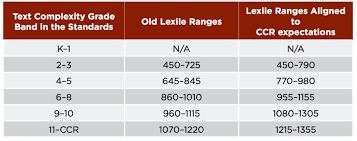
lexile levels by grade are a valuable tool for assessing and measuring a reader’s ability. Developed by MetaMetrics, the Lexile Framework helps parents, teachers, and students understand reading proficiency. Lexile levels are based on the difficulty of the text and a reader’s ability to comprehend it. The system assigns a score to both readers and texts, allowing for a clearer understanding of what type of books will match a student’s reading abilities. Unlike grade-level expectations, lexile levels by grade offer a more personalized approach, offering flexibility and precision in matching books to readers. This framework is widely used in schools and educational settings to track reading progress and ensure that students are reading at an appropriate level for their abilities.
Lexile Levels by Grade: What You Need to Know
Understanding Lexile levels by grade helps to better align reading expectations with students’ abilities. While traditional grade levels might offer a rough guideline, Lexile levels provide a clearer picture of a student’s reading capability. For example, a first-grade student might typically be expected to read texts with a Lexile range of 200 to 400, while by the time they are in third grade, they might be reading at a Lexile level of 500 to 800. Lexile levels track both comprehension and text complexity, ensuring that students are challenged enough to grow without becoming overwhelmed. By understanding the range for each grade, parents and teachers can more effectively choose reading materials that support development while also keeping students engaged.
How Lexile Levels Are Assigned
Lexile levels are assigned based on a variety of factors related to text complexity and reader proficiency. For texts, the level is determined by evaluating aspects such as sentence length, vocabulary difficulty, and overall content complexity. For individual readers, Lexile levels are assessed using standardized tests that measure how well students comprehend texts at various difficulty levels. The process behind assigning Lexile scores involves algorithms that take these variables into account. This data helps categorize texts into a numerical range, which allows students to find reading materials that match their comprehension levels. For educators and parents, understanding how Lexile levels are assigned provides insight into why certain books or texts are recommended for particular grade levels or reading abilities.
Lexile Reading Level Chart: A Grade-by-Grade Breakdown
A Lexile reading level chart provides a clear, easy-to-read guide for understanding the expected reading levels for each grade. Typically, the chart shows the Lexile range for students from kindergarten through 12th grade. For example, kindergarten students may be reading books within the range of 0 to 200 Lexiles, while high school seniors might be reading texts in the 1200-1500 range. This chart is essential because it helps teachers and parents identify where a student is in terms of reading proficiency and allows them to select appropriate reading materials. By using the Lexile reading level chart, educators can ensure that students are consistently challenged while also ensuring that the material they are reading is within their ability to comprehend.
Average Lexile Ranges by Grade
Lexile ranges by grade help provide a clear benchmark for expected reading development. For example, at the start of kindergarten, students may have a Lexile range of 0 to 100, representing basic recognition of letters and sounds. By the time students are in 5th grade, their Lexile range may be between 600 to 900, showing improved comprehension skills and more complex vocabulary. As students progress into middle and high school, their Lexile ranges continue to rise, with high school seniors typically reading books within the 1100 to 1300 Lexile range. Knowing these average ranges allows educators to better assess where a student stands in terms of reading ability and whether they are progressing as expected for their grade level.
What Does “BR” Mean in Lexile Levels?
In Lexile measurements, “BR” stands for Beginning Reader. This designation is used for students who are just starting to learn to read and for books that are at the most basic levels of literacy. A BR level indicates that a reader is still in the early stages of developing foundational reading skills, focusing on simple words, sounds, and short sentences. It’s not associated with a specific numerical Lexile score but is instead an indicator of readiness to engage with more complex texts. BR levels are typically used for children in preschool or kindergarten, providing guidance to parents and educators on the most appropriate material for new readers.
Using Lexile Levels to Support Student Growth
Lexile levels offer an effective way for teachers and parents to track and support a student’s reading development. By using Lexile levels, educators can assess a child’s reading proficiency and determine whether they are reading books that align with their current abilities. For students who are struggling, Lexile levels can be used to find simpler, more accessible texts that can help build confidence. For advanced readers, Lexile levels can guide educators in finding more challenging books to continue pushing their development. As students grow, Lexile levels provide a way to monitor progress over time and ensure that they are reading material that will help them improve their skills and comprehension.
Determining Your Child’s Reading Level
Determining your child’s reading level is essential for understanding how they are progressing in their reading skills. There are several ways to assess your child’s reading level. One of the most straightforward methods is through a standardized test that evaluates reading comprehension, which many schools administer annually. Alternatively, parents can use Lexile’s free tools online to check their child’s current Lexile level by entering recent reading materials or their child’s test scores. Another way to determine reading level is by observing what types of books your child enjoys and finds challenging. By finding the right tools and methods to assess reading level, parents can make sure they are providing their child with appropriate books to support growth.
Finding the Right Book for Your Child’s Lexile Level
Once you know your child’s Lexile level, selecting the right books becomes easier. Lexile measures are helpful in matching students with reading material that is both appropriate and challenging. Parents and educators can search for books that fall within the child’s Lexile range, helping to ensure that the books are neither too difficult nor too easy. Many book lists are categorized by Lexile level, and tools like the Lexile website allow you to search for specific texts by entering a Lexile score. Finding the right book that aligns with your child’s current level will ensure they remain engaged and build their reading skills over time without becoming frustrated by texts that are too challenging or too simplistic.
Encouraging Reading Growth Across the Grades
Fostering a love for reading is key to supporting reading growth across the grades. As children progress through their educational journey, it’s essential to maintain an environment that encourages reading. Parents and teachers can support reading development by selecting books that align with the student’s Lexile range while also considering their personal interests. Encouraging students to set reading goals, celebrate milestones, and explore a variety of genres can help keep them motivated and engaged. Promoting regular reading habits—such as daily reading sessions and joining book clubs—can significantly enhance a child’s reading proficiency and foster a lifelong passion for books.
How to Check a Book’s Lexile Level
Checking a book’s Lexile level is simple and accessible. There are multiple online resources available, including Lexile’s official website, where you can search for specific books and find their corresponding Lexile score. Many libraries also provide access to databases that allow you to search for books by Lexile level. Some educational platforms and apps also offer the ability to scan or enter book titles to find their Lexile range. Knowing a book’s Lexile level helps ensure that it matches the reader’s abilities and provides the right amount of challenge to promote learning and growth.
Benefits of Using Lexile Charts for Parents and Educators
Using Lexile charts provides a range of benefits for both parents and educators. For one, they offer a clear, objective way to assess a child’s reading level, making it easier to select age-appropriate and skill-appropriate reading material. Lexile charts also help track a student’s progress over time, providing insights into areas where improvement is needed. Additionally, by using Lexile charts, educators can differentiate instruction to meet individual students’ needs, ensuring that all students are being challenged at the right level. Parents can use Lexile charts to engage in meaningful conversations with their children about reading and encourage positive reading habits.
Limitations of Lexile Levels: What You Should Know
While Lexile levels are incredibly useful, they have limitations that parents and educators should keep in mind. First, Lexile levels do not account for all aspects of reading. They focus primarily on text complexity, but they do not measure a reader’s actual understanding of content, interest in the material, or the motivation to read. Lexile scores also don’t take into account a reader’s critical thinking abilities, creativity, or cultural background, which are vital aspects of literacy development. As a result, it’s important to use Lexile levels as a tool rather than the only measure of a child’s reading ability. A balance of qualitative assessments, including comprehension and engagement, should always be considered.
Reading Level Conversion: Lexile vs. Other Systems
Lexile levels are not the only system for measuring reading ability. Other frameworks, such as Fountas and Pinnell or DRA, are also commonly used in schools. Each system categorizes reading levels differently, so it can be helpful to understand how they compare. Lexile, for example, provides a numerical range, whereas Fountas and Pinnell assigns letters (A-Z) to books. Tools exist to convert between different reading systems, which can help parents and educators align their child’s reading progress with different scales. Understanding these various systems can ensure that you select the most suitable books for a student’s reading level and needs.
Final Thoughts: Supporting Reading Development
In conclusion, Lexile levels provide an invaluable resource for guiding reading development. By understanding and using Lexile charts, parents and educators can support students in selecting appropriate reading materials that encourage growth, challenge their skills, and build their confidence. However, it’s important to remember that reading development is a complex process that goes beyond any one measure. By fostering a love of reading, offering support, and encouraging regular practice, we can help students become lifelong readers who are not only proficient but also passionate about the world of books.