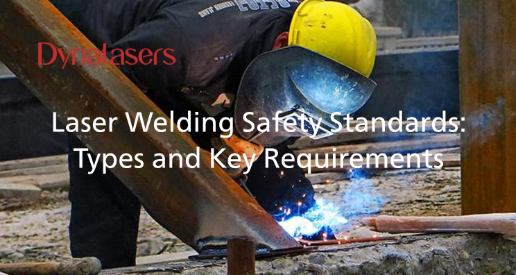
Preface
Laser welding has become one of the most precise and efficient methods of metal joining. However, with its high-intensity beams and powerful energy output, laser welding safety is not optional because it is absolutely essential.
This guide will provide a detailed explanation of the main safety standards and classification types, and introduce the best practices that operators should follow. At the same time, we will also show you the equipment that complies with international laser welding safety standards to ensure the safety of every user’s usage.
Why Laser Welding Safety Standards Is Necessary
The energy released by laser welding is highly concentrated, capable of melting metal within just a few seconds. Without proper protective measures, this energy could cause severe eye injuries, skin burns, and even electrical accidents.
Safety standards such as IEC 60825-1 and ANSI Z136 are designed to protect operators, nearby personnel, and the surrounding workspace from direct or indirect laser radiation hazards. These regulations define exposure limits, warning labels, protective eyewear requirements, and essential engineering control measures. Dynalasers laser welding machines are developed in full compliance with these international safety standards, ensuring stable performance and maximum operator protection in every application.
Different Types of Laser Welding Safety Standards
The laser equipment is classified based on the potential risk level. The following is a simplified classification description for industrial laser welding machines, which helps users understand the control requirements and protective measures corresponding to each level more intuitively.
| Class | Risk Level | Description | Typical Use |
| Class 1 | Safe under normal use | Fully enclosed system, no exposure risk | CD players, barcode scanners |
| Class 2 | Low risk | Visible laser beams (400–700 nm); brief exposure safe | Alignment tools |
| Class 3 | Moderate risk | Direct eye exposure hazardous | Laser pointers, small engravers |
| Class 4 | High risk | Dangerous for eyes and skin, may ignite materials | Industrial laser welders and cutters |
Most industrial fiber laser welding machines (including products from Dynalasers) are classified as Class 4 laser devices. These devices have high power and strong energy, and therefore must follow relevant safety regulations when in use.
Major International Laser Welding Safety Standards
Different regions have developed safety frameworks to regulate industrial laser use. The following table summarizes the most recognized standards worldwide:
| Standard | Organization | Scope |
| IEC 60825-1 | IEC | Product classification & labeling |
| ANSI Z136.1 | ANSI | Laser use and personnel protection |
| EN 60825-1 / EN 207 | EU | European market safety compliance |
| GB 7247 / GB 10320 | China | Radiation safety for laser products |
| ISO 11553 | ISO | Industrial laser machine safety |
| FDA 21 CFR 1040 | U.S. FDA | Laser import & sales regulation |
Key Safety Requirements for Laser Welding Operations
The safety of laser welding not only depends on the equipment itself, but also on the correct usage method.
Key Requirements:
- Proper PPE: Certified laser protection glasses should be worn, with the lens color matching the laser wavelength. (usually 1070 nm for fiber lasers).
- Enclosure and Shielding: Install protective screens or shading curtains in the working area to block the reflected laser light.
- Controlled Zones: Clearly marked laser work areas with restricted access.
- Ventilation: Exhaust systems to remove fumes or particulates during welding.
- Emergency Stop Systems: The laser welding machines of Dynalasers include instant cut-off switches for immediate shutdown.
- Training: Operators must understand both the laser process and safety regulations before operating any Class 4 laser.
How Dynalasers laser Welder Ensures Compliance and Operator Safety
Safety is built into every Dynalasers best laser welder, with each model tested to meet international standards and ensure reliable operator protection.
Dynalasers’ Safety Highlights:
- Air-Cooled Enclosure System: Maintains optimal temperature between -15°C and 40°C, preventing overheating and electrical risk.
- Automatic Interlock Detection: When the welding gun is detached from the equipment, the system will immediately cut off the laser output to prevent accidental exposure.
- Smart Energy Control: It can automatically adjust the beam intensity to ensure a stable welding process and prevent overexposure or material burning.
- PPE and Training Support: Each device comes with a detailed operation manual and offers online training resources to assist users in safely and efficiently getting started with its use.
Customer Insight:
“Dynalasers helped our team to confidently introduce the fiber laser welding technology. It is equipped with comprehensive safety designs and training support, ensuring a smooth, safe and worry-free transition process.” – Production Engineer, USA.
Frequently Asked Questions (FAQs)
1. What safety gear is required when operating a laser welder?
Operators should wear laser-specific goggles, gloves, and flame-resistant clothing. Dynalasers provides wavelength-matched eyewear recommendations for every model.
2. Are handheld laser welding machines more dangerous than traditional welders?
No, as long as they meet IEC 60825-1 standards and are used with proper protective gear. Dynalasers handheld units feature multiple interlocks and cooling systems for safety.
3. How can I verify if a laser welding machine meets safety standards?
Check for certifications like IEC 60825-1, CE, or ANSI Z136. All Dynalasers products are fully certified and tested for industrial use.
4. What are the common mistakes new operators make?
Skipping PPE, ignoring reflective surfaces, or using incorrect power settings. Dynalasers offers guided setup procedures to avoid these issues.
5. Can laser welding be performed outdoors?
Yes, but additional precautions are necessary to prevent beam reflection and maintain beam stability. The air-cooled Dynalasers machines are designed to handle a wide temperature range from -15°C to 40°C, making it suitable for controlled outdoor use.
Conclusion
Laser welding safety standards are not intended to restrict innovation, but rather to ensure the safety of personnel and enhance production efficiency.
If you are looking for a laser welding equipment that meets international safety standards and has excellent performance. Please contact Dynalasers today. This intelligent fiber laser welding equipment will provide you with a certified solution, helping you experience a new level of efficiency and safety in welding.