
You have probably noticed that the internet has become the central hub for our daily lives. From connecting with family on video calls and streaming your favourite shows in high definition to working from home and managing smart devices, a lot of what you do day to day often relies on a strong, reliable connection.
But when you start to look at all the different packages on offer, it can feel like you are trying to solve a complicated puzzle. You see all these numbers and technical terms, but how do you really know what you need to keep your household running smoothly without paying for a service you will never fully use?
What Speeds Are You Actually Paying For?
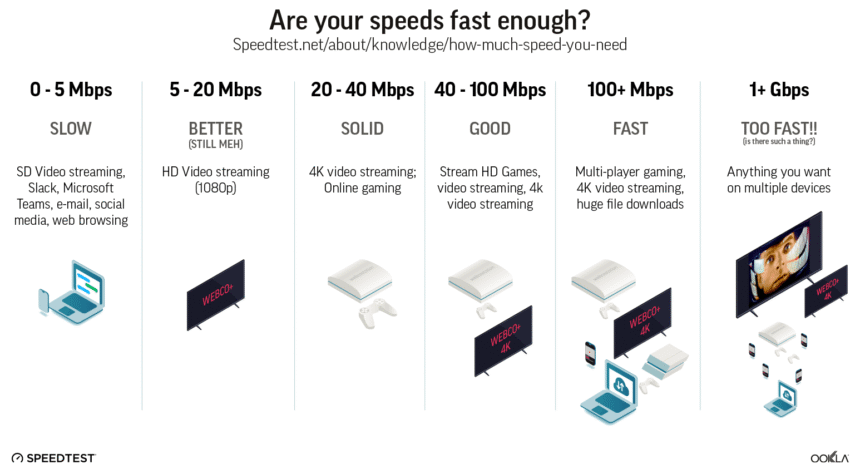
When you sign up for a broadband package, providers typically quote speeds in megabits per second, or Mbps. This figure represents the maximum download speed you can expect, but it does not guarantee a minimum.
You will find that most providers categorise their services, with superfast broadband generally offering speeds from 30 to 80 Mbps. This is more than enough for a couple of people to stream Netflix and browse the web without issues.
If you have a larger family or a household with multiple people gaming or streaming in 4K, then you might consider ultrafast speeds, which begin at 300 Mbps and go much higher. Some providers even offer gigabit services at 1 Gbps, which is 1,000 Mbps.
How Fast Is Broadband in the UK—and in London?
The broadband landscape across the UK has changed a lot in recent years. Nationally, the average download speed has climbed significantly, reaching around 73 Mbps in 2024. A big part of this growth comes from the rollout of full-fibre broadband, which uses fibre optic cables all the way to your home, offering far more reliable speeds.
Naturally, urban areas lead the way. London, for instance, consistently outpaces the national average. In the capital, you are more likely to find a wider selection of full-fibre and gigabit services, meaning Londoners can typically get average speeds of over 100 Mbps, giving them a much faster and more responsive experience than people in other parts of the country.
Avoiding Overpaying: What the New Ofcom Rules Mean for You
You may have noticed that providers often increase their prices mid-contract. Many companies have linked these increases to inflation, leaving you with an unexpected bill. Fortunately, Ofcom has introduced new rules from January 2025 to tackle this issue.
The new regulations mean that providers must now show you the exact price increase you will pay, in pounds and pence, at the beginning of your contract. This change eliminates the vague, inflation-linked price hikes that made it difficult to predict your future bills. The new rules give you much more clarity and control.
Practical Tips to Save: Choosing the Right Plan in London
To get the best deal, you should consider a range of different broadband and phone deals available from various providers. Finally, you should time your switch to coincide with special promotions.
If you receive certain benefits, you might also qualify for a social tariff, which is a cheaper plan designed to help people on a low income. These plans provide speeds that are more than adequate for most households at a significantly reduced cost.
You should always look for these introductory offers and set a calendar reminder to review your contract before the price increases. Taking these simple steps will help you secure the best possible value for your needs.

