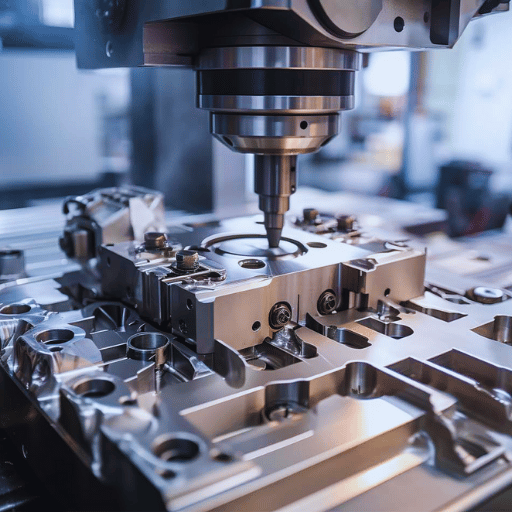
The automotive and aerospace industries generate over 1.9 billion tons of metal waste annually—enough to circle the Earth 45 times with scrap metal. In CNC machining, this crisis hits harder: 50–80% of raw materials become chips during cutting, draining resources and bloating landfill waste.
But there is a breakthrough. Sustainable CNC Machining transforms these “waste” chips into high-value resources through closed-loop recycling. Adopting Sustainable CNC Machining practices reduces landfill waste by 95%, as proven by industry leaders like Tesla.
Using an online CNC service, businesses can recycle waste chips sustainably, lowering costs and meeting environmental standards. This article reveals how chip recycling slashes costs, conserves energy, and meets eco-regulations, turning an environmental liability into profit.
Waste Management and Recycling Systems
Closed-loop systems achieve 95% recycling rates (e.g., Tesla) by converting CNC chips into reusable materials. Automated sorting (magnetic/AI tech) ensures purity, cutting landfill waste by 60% and raw material costs by 50%. This reduces CO₂ emissions by 9 tons per recycled ton while meeting circular economy standards.
Sustainable CNC Machining Through Closed-Loop Systems
Closed-loop recycling transforms metal chips from waste into reusable raw materials. This system collects, processes, and reintegrates chips back into production cycles. It starts with vacuum conveyors or magnetic scrap systems gathering chips directly from CNC machines. Next, centrifugal filters decontaminate chips by removing coolants and lubricants, which can be reused via closed-loop systems.
Sorted chips undergo compaction into dense briquettes, reducing storage needs by 80% and simplifying transport to foundries. There, chips are remelted and cast into new billets for machining. Tesla’s factories exemplify this approach, achieving 95% aluminum chip recovery for new automotive components.
Automated Chip Collection & Sorting Technologies
Automated systems replace manual handling to boost efficiency and purity. Magnetic separators with 5,000-Gauss rollers extract iron-based particles from coolant streams, while AI-powered spectral sorting (like Cimbria’s BRAIN™ software) identifies alloy types using hyperspectral imaging. This technology achieves 97% sorting accuracy.
Centrifugal units such as the FOODIE II further filter sludge down to 5 microns, separating non-ferrous metals and enabling CNC chip recycling without machine downtime. These technologies ensure chips meet aerospace-grade purity standards for reuse.
Economic and Environmental Impact
Implementing these systems slashes raw material costs by 50% and landfill fees by 60%. For example, an Illinois machine shop saved $25,000/year through briquetting and material-specific sorting. Environmentally, recycling 1 ton of aluminum chips cuts 9 tons of CO₂ emissions by bypassing mining and smelting. Closed-loop systems also align with circular economy regulations like the EU’s Digital Product Passports, which track material origins and carbon footprints.
Energy Efficiency Optimization
Smart technologies reduce power use in CNC machining. This cuts costs and lowers environmental impact.
Smart Machining for Reduced Power Consumption
Regenerative drives capture braking energy from spindles and feed axes. They convert this energy into reusable electricity. This slashes net power demand by 15–20% in modern CNC systems. For example, Okuma’s power regeneration feeds deceleration energy back into the grid. This avoids waste common in older machines. IoT-enabled idle shutdowns automatically power down peripherals during pauses. Sensors detect inactive states.
Then systems turn off the coolant pumps, hydraulics, and lights. This reduces standby energy by up to 40%. Real-time monitoring tracks machine states like “basic,” “ready,” and “cutting.” This data optimizes non-productive energy use. Permanent magnet synchronous motors (PMSMs) also help. They use 25% less electricity than standard motors. Variable speed drives adjust motor output to match machining loads. This avoids fixed high-energy modes.
Renewable Energy Integration in CNC Facilities
Solar and wind power directly fuel machining centers. Facilities install rooftop solar panels and wind turbines. These supply 30–60% of total energy needs. Government incentives boost adoption. Tax credits offset setup costs for renewable systems. Energy-efficient machining pairs with green infrastructure. For instance, solar-powered plants like Okuma’s carbon-neutral factories make CNC equipment. These sites use 100% renewable electricity. They cut the supply chain’s carbon footprint by 9 tons per machine annually.
Energy-efficient CNCs cut operational costs by 30% when combined with renewables. This comes from lower utility bills and tax benefits. Wisconsin facilities using wind power report faster ROI on new machines. Energy recovery systems further enhance gains. They store surplus solar/wind power in batteries. This powers night shifts without grid reliance.
Material Utilization Strategies
Advanced methods maximize raw material use in CNC machining. These techniques cut waste and boost efficiency. They turn excess into assets.
AI-Driven Nesting for Maximum Yield
AI nesting software analyzes part geometries and stock dimensions. It calculates optimal cutting paths automatically. This material optimization fits more parts per sheet or billet. For example, Siemens NX CAM software reduces scrap by 22% through algorithmic layout adjustments. The system considers grain direction and clamping points. This prevents material warping during machining. Real-time simulations detect collisions before cutting starts. This avoids costly errors and rework. Waste reduction reaches up to 40% compared to manual nesting. Aerospace suppliers using this tech save 18 tons of titanium annually per facility.
Near-Net Shape Manufacturing Techniques
Precision casting and forging create parts closer to final dimensions. This minimizes machining requirements. Investment casting produces aluminum components with just 0.5mm excess material. This cuts milling time by 65% compared to traditional blocks. Forged steel parts require only finish machining. This reduces metal removal by 70% and tool wear by 45%. Material optimization extends to hybrid methods. 3D-printed near-net shapes in Inconel need 80% less machining than solid billets. This approach slashes energy use and waste reduction simultaneously. Automotive crankshaft makers confirm 30% lower material costs using near-net forging.
Solid-State Recycling Techniques
Innovative methods reshape CNC chip recycling without melting. These processes conserve energy and preserve material properties. They enable high-grade metal reuse.
How Friction Stir Processing Revolutionizes Chip Recycling
Friction stir processing welds metal chips through intense mechanical deformation. A rotating tool generates frictional heat below the melting points. This bonds aluminum or magnesium chips into dense billets. Unlike melting, this solid-state recycling avoids oxidation and alloy segregation. Cold compaction presses chips at room temperature into basic shapes. But hot extrusion heats chips to 500°C before forcing them through dies. Hot extrusion enhances bonding strength by 60% versus cold methods. Both techniques skip energy-intensive smelting. Friction stir processing creates aerospace-ready blanks in one step. It cuts energy use by 85% compared to conventional melting.
Quality Control in Recycled Metal Chips
Recycled chips require strict quality checks for critical applications. Porosity testing uses CT scans to detect internal voids. X-ray fluorescence analyzers verify alloy composition within 0.5% accuracy. Oxide mitigation employs argon shielding during processing. This prevents surface contamination that weakens parts. For metal scrap recycling in aerospace, chips undergo hydrogen degassing. This removes trapped gases, causing porosity. Boeing-approved recycled aluminum chips show equal performance to virgin material. Each batch gets mill certifications for traceability. These protocols enable reuse in structural aircraft components.
Economic and Environmental Impact Analysis
Recycling CNC chips generates major cost savings and ecological benefits. These advantages make sustainability profitable for manufacturers.
Cost Savings from Waste-to-Resource Conversion
Metal scrap recycling converts waste into revenue streams. Reprocessing chips costs 40% less than buying new materials. Economic impact includes quick ROI: most systems pay back in 6–18 months through reduced disposal fees and material costs. Coolant management boosts savings further. Filtering and reusing coolants from chips cuts fluid expenses by 70% annually. Automated briquetting presses shrink scrap volume by 10:1. This lowers storage and transport costs. Toyota’s closed-loop system demonstrates this. It saves $8 million yearly by recycling aluminum machining waste.
Carbon Footprint Reduction Metrics
ISO 14044 life-cycle assessments prove recycling’s environmental value. Reprocessing 10 tons of chips equals removing 25 cars from the roads for a year. This economic impact stems from bypassing mining and smelting. Making aluminum from recycled chips uses 95% less energy than virgin production. Coolant management prevents toxic fluid leakage. This protects groundwater and avoids cleanup fines. Switching to biodegradable coolants cuts pollution risks by 80%. These practices help manufacturers meet carbon neutrality goals faster.
Conclusion
Sustainable CNC machining turns waste chips into profit through recycling, with CNC services using blockchain to track chips for ethical sourcing and compliance, ensuring a resource-efficient future via chip audits and automated sorting.
FAQs
Is CNC biodegradable?
CNC machines aren’t biodegradable, but coolant management systems now use plant-based, biodegradable fluids. These break down naturally within 28 days, preventing soil contamination.
What is a new method for recycling metal chips?
Friction stir extrusion bonds chips without melting, saving 85% energy. This solid-state recycling creates aerospace-grade billets with zero material loss.
Are wood chips recyclable?
Wood machining chips become particleboard, biomass fuel, or garden mulch. Non-treated varieties decompose naturally, supporting circular economies.