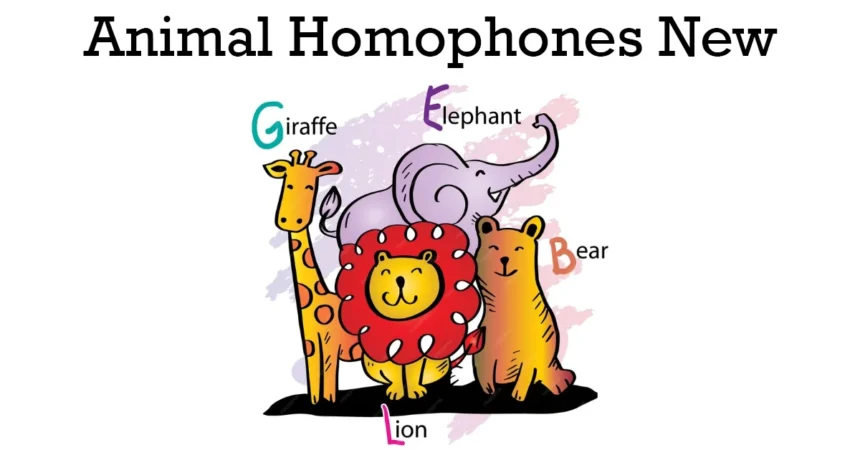
Introduction to animal homophones
Language is a playful beast, filled with quirks and twists that can spark joy or confusion. One delightful aspect of it is the world of homophones – words that sound alike but have different meanings. When you add animals into the mix, things get even more interesting! Imagine a “deer” meeting a “dear,” where one grazes in the meadow while the other holds sentimental value. Animal homophones not only amuse our tongues but also enrich our communication.
But what if we could delve deeper? What if there are new animal homophones waiting to be discovered? Let’s embark on this exciting journey together and see how these linguistic gems can enhance our vocabulary and creativity!
Examples of commonly known animal homophones
Animal homophones can be a fun and quirky aspect of language. They play with sounds while offering rich imagery. Here are some well-known examples.
Consider the pair “bear” and “bare.” The former refers to a large mammal, while the latter means to uncover or reveal something. This playful distinction showcases how words sound alike yet convey different meanings.
Another classic example is “deer” and “dear.” A deer is a graceful creature found in forests, whereas dear expresses affection or endearment. Such pairs enrich our vocabulary with layers of meaning.
Then there’s “fowl” and “foul.” Fowl includes birds like chickens or ducks, but foul relates to unpleasantness or violations of rules. These homophones highlight the creativity inherent in language.
Each pairing not only entertains but also encourages us to think about context when we communicate.
Importance of using animal homophones in language and communication
Animal homophones add a playful twist to language. They spark creativity in speech and writing, making communication more engaging.
Using these quirky terms can clarify meaning while entertaining the audience. For example, “bare” (without covering) versus “bear” (the animal) creates vivid imagery and sparks curiosity.
In education, animal homophones serve as effective teaching tools. They help learners grasp phonetics and enhance vocabulary retention through fun associations.
Moreover, using these playful words fosters connections among speakers. It encourages laughter and shared understanding, which strengthens bonds between people.
In literature and poetry, they evoke emotion. Animal homophones weave a tapestry of sound that captures imaginations and enhances storytelling depth.
By integrating them into our daily conversations or creative expressions, we enrich our language experience significantly.
Exploring lesser-known animal homophones
When we think of animal homophones, the obvious pairs often steal the spotlight. But there’s a treasure trove of lesser-known gems waiting to be discovered.
Consider the words “flea” and “flee.” While one refers to a pesky insect, the other captures the act of running away. This quirky connection adds depth to language.
Another interesting pair is “hare” and “hair.” The playful nature of rabbits contrasts sharply with our daily grooming concerns. How can such simple words create so much imagery?
Then there’s “bass”—the fish—and “base,” which brings musical connotations. Such dual meanings breathe life into conversations.
Exploring these uncommon relationships encourages creativity in communication. Each word evokes distinct images that enhance storytelling or casual chats alike, making them memorable for listeners and readers alike.
How to incorporate new animal homophones into daily vocabulary and writing
Incorporating new animal homophones into your daily vocabulary can be both fun and enriching. Start by identifying a few that pique your interest. For instance, consider words like “bear” and “bare.” Use them in simple sentences to reinforce their meanings.
Next, challenge yourself to write short stories or poems featuring these homophones. This exercise not only enhances creativity but also deepens your understanding of the nuances between the terms.
You could keep a journal where you note down any interesting animal homophones you come across during reading or conversations. Revisiting this list regularly will help solidify them in your memory.
Engaging with friends or family in word games can spark discussions around language play. Try quizzes centered on animal-related puns and homophone challenges to make learning enjoyable for everyone involved.
The role of technology in discovering and spreading new animal homophones
Technology plays a pivotal role in uncovering new animal homophones. With the rise of social media platforms, language enthusiasts share their discoveries widely. These digital spaces foster creativity and collaboration among users.
Online dictionaries and apps have also made it easier to explore language nuances. They provide instant access to word meanings, pronunciations, and even playful variations like homophones.
AI-powered tools analyze text for linguistic patterns that humans might miss. This technology can identify potential new homophones based on phonetic similarities.
Additionally, forums dedicated to linguistics encourage discussions about emerging terms. As people interact and exchange ideas, fresh animal homophones enter the lexicon effortlessly.
Podcasts and video content further popularize these gems by engaging audiences visually and aurally. The blend of diverse media formats allows for richer communication around language evolution.
Conclusion
Animal homophones are a fascinating aspect of language that can add depth and creativity to our communication. They are not just fun wordplay; they serve as bridges between ideas, making conversation more engaging.
By exploring both common and lesser-known animal homophones, we find opportunities for enrichment in our vocabulary. From the obvious “bear” and “bare” to obscure pairs like “deer” and “dear,” there is much to discover. These words help us play with meanings, creating layers that enhance storytelling or everyday dialogue.
Incorporating new animal homophones into daily usage can be simple yet rewarding. Start by challenging yourself or your friends with word games focused on these pairs. Writing poetry or short stories using them will also push you creatively while solidifying their place in your lexicon.
Technology plays a pivotal role in this discovery process. Online resources such as blogs, social media platforms, or apps dedicated to language learning make it easy for anyone to find fresh examples of animal homophones. Sharing these newfound treasures online encourages others within your network to join the exploration.
Engaging with new animal homophone variations enriches our conversations and broadens our linguistic horizons. It’s an ongoing journey filled with playful surprises waiting at every turn.